We Got Interviewed By TechRaptor!

This is so exciting – we can finally show off something that’s been in the works for a few weeks now. Since PlayNYC, Robert Adams at TechRaptor has been hard at work on an interview we did in the week leading up to the event.

In it, we discuss the origins of Game Revenant, my tragic corporate backstory, the game’s art direction, our progress over the past two years, mobile vs Steam, VR, release dates, price, and why Jack is our hero.

FULL LINK: https://techraptor.net/content/play-nyc-2017-a-conversation-with-frank-dicola-about-where-shadows-slumber

Check out the full article here! We’ll return to our usual blogging schedule next week, but this was too cool not to share.


= = = = = = = = = = = = = = = = = = = = = = = = = = = = = = = = = = = =

Are you a member of the media? If you’d like to interview the developers, reach out to us directly! You can find out more about our game at WhereShadowsSlumber.com, ask us on Twitter (@GameRevenant), Facebookitch.io, or Twitch, and feel free to email us directly at contact@GameRevenant.com.

Frank DiCola is the founder of Game Revenant and the artist for Where Shadows Slumber.

State Of The Art – August 2017

Welcome to State Of The Art, August 2017 edition! This monthly progress report is written by Frank DiCola and is focused entirely on how the game’s visuals have improved in the past month. Without further ado, let’s explore the major leaps forward we took in August!


Rekt

Obe’s Feline “Friends”

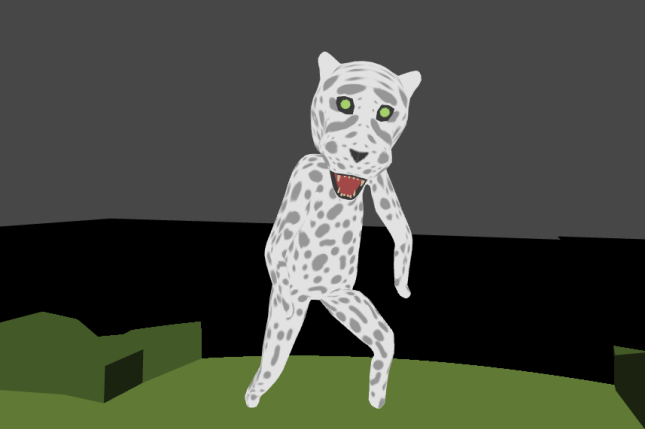
This part of the update is directly tied to the cutscene discussed below, but I wanted to give it special attention just because I like how they turned out. I modeled some cats! They really only appear during a few short cutscenes during the game, but making each one took quite a long time. Here’s the Leopard:

Leopard

The spots on his coat came out way better than expected, although the top of the head is a bit off.

And the Lion:

Lion.PNG

The way his mane frames his face gets me every time!

I especially like the Lion’s mane. It was a struggle to get it to look as simple as it does. I kept making overly detailed 3D hair but it just looked wrong. At one point I considered using Cloth to simulate a glorious flowing mane, but I knew Jack would probably kill me so I backed off. I ended up going with a simple cylinder with a rotated back and it just looked right as soon as I saw it. I stepped out of my comfort zone and ended up with something super cool! Throw on Jack’s shader and voila – a glorious, friendly* Lion.

Astute observers will notice a few things about these models. For simplicity, they’re actually using the humanoid torso + limbs combo that Obe uses! But the reuse doesn’t end there. The Leopard and the Lion both have the same Head model, just with a different texture. The Lion’s mane does even more to differentiate them. A+ if you noticed this without me telling you!

* Watch the cutscene.


Rivah.PNG

World 2 (River)

The River World took a giant leap forward during the month of August. I’d show you a bunch of screenshots, but I made a pledge last month to show more videos of the game in action instead of just screenshots. This is part of pushing ourselves to be better – if the game doesn’t look good in video format, we need to work harder! You’ll notice of course that there’s still no sound, but we’re working on that.


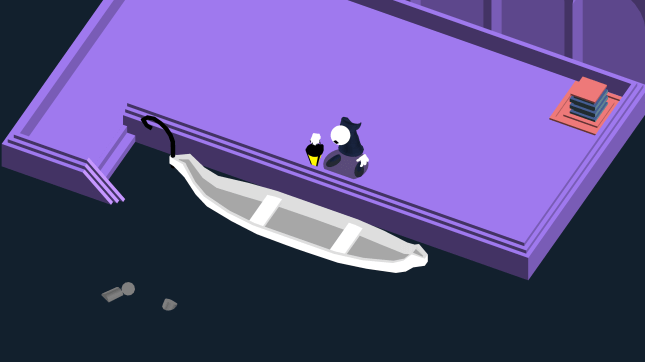
The core pillars of the River’s design are its gross yellow water, jet black dirt, log wall structures, and rickety boardwalks. There’s a really cool interplay here between the water and the black foliage – it makes it look like more things are in shadow than there really are. I love how the trees look, stretching out into the water / sky. This is one of my favorite Worlds!

Enjoy the highlight reel of all five Levels in World 2, above. Don’t worry – there’s no spoilers for puzzle solutions, just a walking tour of what each Level looks like.


Cutscener.PNG

“Wardens” – The First Cutscene

You walk through the forest, alone and lost. You come to an intersection… which path to take? Suddenly, a Lion appears from behind the shadowy veil. To your left, a Wolf! As they bear down on you, you wonder if they are friend or foe. And what’s that sound behind you?

This cutscene is not quite 100% finished yet, but I’ve reached the point where it’s time to leave it and move on. I’m going to throw some facial animations in there, but I’d like those to coincide with sounds (roaring, laughing, screaming) so I’m avoiding it for now. Of course, as a final pass, we’ll need to add sound effects.

There are also minor touch-ups to his clothing that I need to do. I didn’t have to animate his robe or his chasuble, which was a godsend. But with automated animation comes other issues… notice how his clothing clips through his body and the ground sometimes. It’s possible to fix this – and it’s possible it won’t even be noticeable on an iPhone – but it’s one of those things you need to leave until the end of the project. Focusing all my energy on it now means neglecting the rest of the work on my plate, so it’s not an option.


Enjoy the cutscene (above) and look forward to a 100% version later, with sound!


CityWIP

What To Expect From September

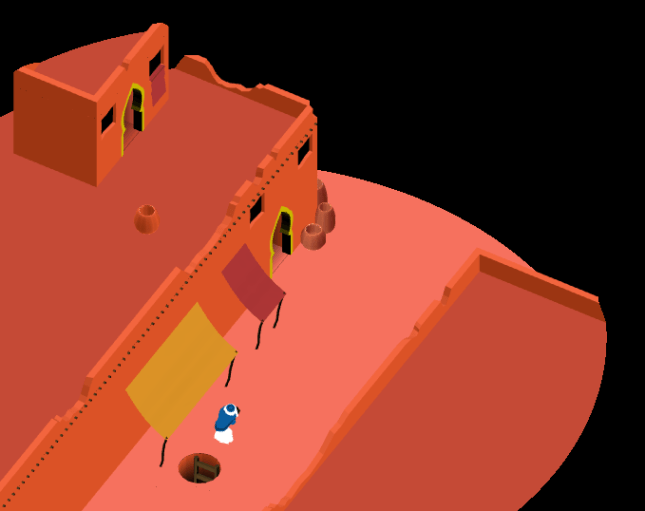
This coming month, my first task is going to be World 3 – the Aqueduct. We’re pretty much going chronologically here, so that’s next. I’d also love to move on to World 4 – the City. The City has been started, so one Level is already basically done. Getting those two Worlds finished would be awesome! Time will tell.

I’m satisfied with how I animated the Wardens cutscene, which means I might take a break from cutscenes for now. I really just wanted to get that first proof-of-life cutscene done so our audio crew can have something to work on as a reference for how cutscenes work.

Speaking of audio, that will also be my focus this month. I won’t be working on audio per se, but I’ll be paving the way for an audio person to come in and start adding stuff. That means some light scripting and a lot of brainstorming. It’s not visual, but it counts as “aesthetic”. Maybe I should rename this monthly post State of the Aesthetic? Is greater accuracy worth wasting one of the greatest puns of all time? Surely not…


See you again in October!


= = = = = = = = = = = = = = = = = = = = = = = = = = = = = = = = = = = =

We hope you enjoyed this update about the game’s artwork. Have a question about aesthetics that wasn’t mentioned here? You can find out more about our game at WhereShadowsSlumber.com, ask us on Twitter (@GameRevenant), Facebookitch.io, or Twitch, and feel free to email us directly at contact@GameRevenant.com.

Frank DiCola is the founder of Game Revenant and the artist for Where Shadows Slumber.

In The News – Beginning Publicity

If you’ve been a regular reader of this Tuesday blog post, you’ve probably noticed a shift in our marketing strategy in the past few weeks. This space used to be reserved for an inside look at what it’s like to be an indie developer working on this game – of late, we’ve been using it more for shorter updates about the game itself.

The game is speeding along like a runaway train, and although we have tons of work to do, it’s important to begin a crucial step in the development process: publicity! There’s no point in working hard to release a game that no one knows about. Expect to see Jack and yours truly on more podcasts, gaming websites, and YouTube shows going forward.

It’s not just that we love to hear ourselves talk. (Okay, a little bit) Publicity is an important part of creating a game. Don’t call us sellouts just yet! In the spirit of total honesty, here’s some articles that have been written about us in the past few weeks, mostly surrounding the hubbub about Play NYC.


boat

Nerdier Tides

Thanks to Cecile Pauling of Nerdier Tides for writing this quick recap of Where Shadows Slumber! Cecile played our demo (multiple times, [0_0 ]) and the development build we showed off at Play NYC. I especially enjoyed this bit:

“Walking home at night, you’re always worried about the shadows that lurk near you. You never know what it is, but what if it’s the path you’ve been looking for all along?”

Full article here: https://nerdiertides.com/2017/08/25/whereshadowsslumber/


Green

TechRaptor

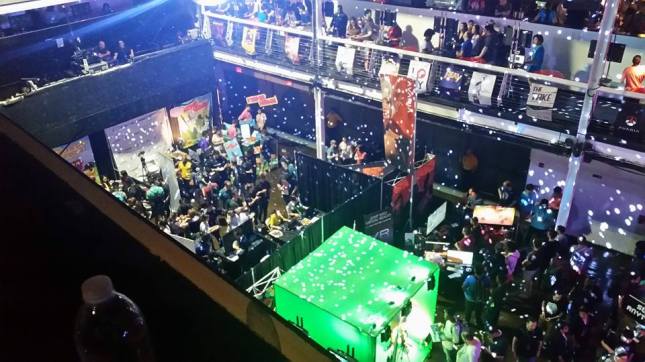
Robert Adams of TechRaptor attended the show and we reached out to him beforehand. We actually did a long-form interview with him that’s coming out pretty soon. To tide you over, check out his full recap of Play NYC, below!

Full article here: https://techraptor.net/content/play-nyc-2017-recap


Contact Us For An Interview!

Okay, now for the REAL reason for this blog post. Do you have a podcast? A gaming website? A YouTube channel about gaming? Perhaps you have a blog where you talk about games, iOS apps or Android stuff? We’d love to be on your website. We really do need all the help we can get to advertise the game. In return, we’ll give you juicy details about what it’s like to develop an indie game. We may even reveal the secret of Grongus? If you ask nicely…

The best way to contact me is contact@GameRevenant.com, and we can set up a Skype interview, phone call, or long distance shouting interview. (Sound carries across water, so this works better than expected.)


Expect more short form updates like this in the future. As we ramp up development and publicity, we’re trying to focus more on working on the game itself rather than long blog posts. If we missed something important that you wanted us to address, just find us online and ask! Details below.

See you next week!


= = = = = = = = = = = = = = = = = = = = = = = = = = = = = = = = = = = =

Looking to write an article about Where Shadows Slumber? You can contact us directly at WhereShadowsSlumber.com, talk to us on Twitter (@GameRevenant), Facebookitch.io, or Twitch, and feel free to email us directly at contact@GameRevenant.com.

Frank DiCola is the founder of Game Revenant and the artist for Where Shadows Slumber.


The Name Of The Game

As you (probably) know, Frank and I have been working for a while on a certain game-development project. And, as you also (most likely) know, the name of that project is Where Shadows Slumber. For as long as any of you have known about it, that’s what we’ve called it, so it might seem strange to think of calling it something else at this point. But the name wasn’t always Where Shadows Slumber – for quite a long time, our game didn’t even have a name. How did we get from there to here?

When I first came up with the idea for the game and we started on the proof-of-concept, we didn’t have any particular name in mind. We weren’t thinking about it at all, and we didn’t even have an idea of what kind of name we might want. That apathy followed us through the early phases of the game, up to the point where we started going to smaller events, showing it off to people, and getting feedback. We discussed different naming options, but we never considered it a huge priority, and didn’t dedicate much time to it. Before too much longer, we came to the realization – we need a name for this thing!


Why Do You Need a Name?

We were just getting started with a new, unknown game, and, against all odds, it was actually going well! People seemed to really enjoy playing our game. They seemed interested in our process as a small team. We had been perfecting our ‘pitch’ at every event we went to, and we know exactly what to say to people when we showed them our early prototypes. That’s when we realized the mistake we had made.

People liked the game, and they wanted to know more about it. They wanted to hear about updates, they wanted to know when it came out. The problem was, the game didn’t have a name – how can someone keep up with it if there’s no name to search by? That was when we stopped messing around. Making a game is hard, and making a successful game involves making the correct decision at every point in the process. This was a place where we had screwed up, but we resolved to fix that mistake immediately, and I think that our fast action was an excellent decision that did a lot to move us toward success. The decision we made was to meet up in person the following week. We would sit down and figure out a name, and neither of us would be allowed to leave until we had decided on one.


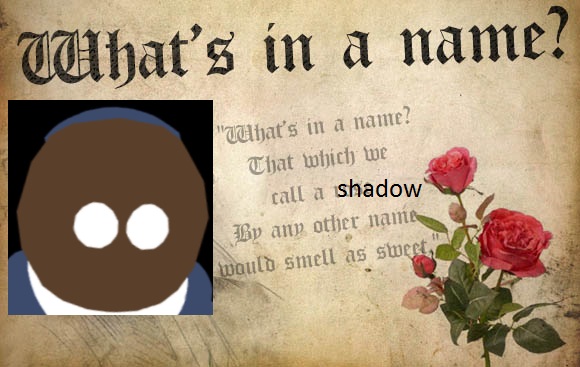
What’s In A Name?

Now, choosing a name is a surprisingly difficult thing to do. The biggest hurdle for us, I think, was the dedication that it implied – once you pick a name, once people start using it, you can’t really go back. What if we chose wrong?
whatsinaname

MS Paint forever!

While this was a scary proposition, it was also one of the things you want most out of your name. You want people to remember it and recognize it – you want it to last, and you don’t want to go back. Which just means you have to be that much more careful about choosing it. So lets look at all the things you want from your chosen name.

Recognition – The most important part of your name is that people associate it with your game. For us, when people think of the words Where Shadows Slumber, we want them to think of our game, and only our game. This is associated with having ownership over the name – nothing else is named in a way that’s too similar to Where Shadows Slumber. Take my name for example – Jackson Kelly. Go ahead, give it an image search, I’ll wait.
Do you get a bunch of pictures of my beautiful face smiling back at you, or a bunch of guitars? That’s right, the name Jackson Kelly is already ‘owned’, to some extent, by a guitar company. If I were choosing a name for a company or product, I definitely wouldn’t choose Jackson Kelly, because people (and Google) already associate it with something else.

“Pre-loading” Information – When people sit down and play your game, they won’t always know what to expect. There are some people who aren’t part of your target audience, and they might not like your game. Some games require the right mood or mindset. These are all good examples of how your game’s name can “set the mood”. If your game sounds like a puzzle game, then puzzle gamers will know that it will be good for them. If your game sounds like an endless runner, people will know what to expect. This leads, perhaps even subconsciously, to people more often playing your game when they’re interested in the style of the game, and when they’re in the mood for it. This also applies to people following your progress and keeping up with your development.

Telling a Story – Every game has a narrative of some sort – not necessarily a story in the conventional sense, but something you want your players to experience, outside of the mechanics themselves, when they play your game. For a game like Where Shadows Slumber, this is a literal story – something is happening in the world of the game, and the player gets to watch it happen. Other narratives aren’t so straightforward; take Candy Crush, for example. I’ve never played it, but I assume there isn’t really a huge storyline. Rather, what you want the user to experience are the rules of the candy world, and why the player should be connecting the candies.

Whatever the narrative, everything about your game should speak to it, should play a part in making it happen. The name, as the first part of your game users will interact with, is a vital piece. It’s where the journey begins, and you want to make sure that it helps tell your story.

Representing Your Game – Every part of your game should be great, but the most important part of your game is the beginning – can you get a user “hooked”? The name of your game is the first part of your game a potential user will experience, so it should, arguably, be the best part of your game. If you clearly didn’t put a lot of thought into the name, how can people trust that you put any effort into the game itself? [Editor’s note: see “Mr. Game!” for reference] The name is part of the game, and it should be treated as such.


How We Came Up With the Name

As I mentioned earlier, the way we came up with the name was to have a few rough ideas in our heads, and then to sit down and get it all done in one session, cagematch-style. Perhaps this wasn’t the most efficient way to get this done, but it stopped us from dragging our feet, which had been the biggest problem. So, we met up at 10 am on a Saturday, and got into it!
naming5

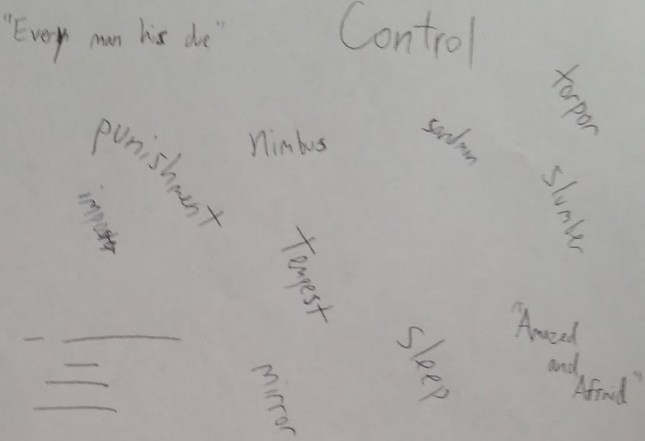
A spattering of words and concepts we considered using.

The first thing we did was to brainstorm – not for names, but for emotions. People buy most of their entertainment products based on emotion, and games are no different. What emotions do we think players will feel while playing, and what do we want them to feel? What kinds of emotions will motivate them to buy it and to keep playing it? By answering these questions, we started to figure out the tone our name should have. The emotions we decided to shoot for, to various degrees, were mystery, fear, suspense, and hope.

Once we had some emotions, we started to focus on the actual content of the name. Our name should be indicative of the things in the game, and, in particular, of the story players will find within. What are our main mechanics and story points? What words can we find for those things that fit within the emotions we chose? Again, we’re not thinking about actual names yet (for the most part), but just building up a collection of words. We ended up with quite a few, but some of the major ones were umbra, nimbus, slumber, wraith, and plenty of others.

After that, we finally got started on actually choosing a name. We tried to combine the words we had come up with into sensible, interesting names. We came up with quite a few, decided on our top four favorites, and made a little bracket. We discussed each of the names at length – what will people think, will it help us connect with players, are there other games with similar names – and eventually narrowed the search down to Where Shadows Slumber!

naming4

The final four!

This whole process took upwards of eight hours. It was an exhausting day, but I think we ended up with a pretty good name at the end of it all.


Aftermath

When we first decided on the name Where Shadows Slumber, I was pretty apprehensive, and I think Frank was too. We didn’t want to commit to a name that might not have been 100% perfect. That said, we knew we had to make a decision, so we did.

In the end, I’m really glad we settled on Where Shadows Slumber. I think the name does a lot to describe what our game will be like, we have good ownership over the name, and it really just seems to fit. It was a heck of a process, but I think we made the right choice at the end of the day!


= = = = = = = = = = = = = = = = = = = = = = = = = = = = = = = = = = = =

If you want to know more about our naming process, feel free to contact us! You can always find out more about our game at WhereShadowsSlumber.com, find us on Twitter (@GameRevenant), Facebookitch.io, or Twitch, and feel free to email us directly with any questions or feedback at contact@GameRevenant.com.

Jack Kelly is the head developer and designer for Where Shadows Slumber.