Fake It Til You Make It

Alright people. There’s something that’s been bothering me for a while, and I think it’s time we come clean. For the last two years, ever since the first prototype of Where Shadows Slumber, Frank and I have been lying to you.

“What?!” you ask incredulously, affronted dignity ablaze. “How can this be? What have you lied to us about? I must know!”

Well, never fear – we’ve never lied about the game. All of our screenshots are from the actual game, we’ve represented our progress pretty accurately, and we love you as much as we always have. Rather, inside the game, within Obe’s world, basically everything is a lie.


2

The video game Hydrophobia was criticized for focusing too much on its water physics and not enough on other forms of gameplay.

Faker!

This phenomenon is not unique to Where Shadows Slumber – in fact, it’s one of the defining features of video games. If you have experience with video game development, you know exactly what I mean. Think about the real world and the way things actually work. Molecules, fluid dynamics, physics – it’s just way too much stuff to simulate. Even if we get rid of all the stupid sciencey stuff and just consider things like gravity, friction, momentum, and basically anything else from classical physics, the real world is far too complicated to quickly and reliably reproduce on a phone (or a supercomputer, for that matter).

And the best part about this is that it’s not a problem. In fact, even if phones could handle all of physics, we would probably continue faking it. After all, if we do a good enough job of faking it, why would we bother actually implementing it?

This brings me to the actual point – when developing a game, we’re not trying to create a world for you to look at and interact with. Instead, we’re trying to create something that looks enough like a world that you can interact with that you think we actually did create a whole world. This is a very fine line to ride – too far toward realism, and your game will lag, but too far toward fake-ism, and people will be able to tell and won’t like it.

lava

How did you even get there? …How are you not dying?!

Think about a character walking on relatively flat ground. You could spend all of your time designing a system which allows you to near-perfectly imitate physics. Every time the character takes a step, you calculate exactly how their foot hits the ground, and how it changes their path. This process has eaten up most of your development time, and is so intensive that your game can’t run at more than 15 frames per second. But hey, those perfect physics are worth it, right?

Well, no. I mean, in this case, the ground is relatively flat, so you could have the character just walk along a straight line. Sure, his feet might hover above the ground or clip through it at times, but it’s close enough. Even if the ground isn’t flat, the point is that a simplification of what actually happens is always ‘good enough’ for your game, and it helps you save where you really need to – both development time and processor time.


NoShadow

Wait, what’s making that shadow?

Where FAKE Shadows Slumber

Now, when it comes to Where Shadows Slumber, there are two big areas in which we consistently lie.

Physics. This is the case that applies to most, if not all, games, and Where Shadows Slumber is no exception. Everything you see when you’re playing is a carefully constructed illusion. Obe is never standing on the ground – the ground is conveniently and strategically placed so that it looks like he’s standing on the ground. “Physics” covers any physical interactions or representations of objects. This leads to a huge disconnect between what things look like, and how they work. In fact, nothing in the game serves the dual purpose of actually doing something and actually looking like something. In every case, we simply have two game objects – one which interacts with other objects according to the rules of our game (our simplified “physics”, if you will), and the other which is just there to look pretty.

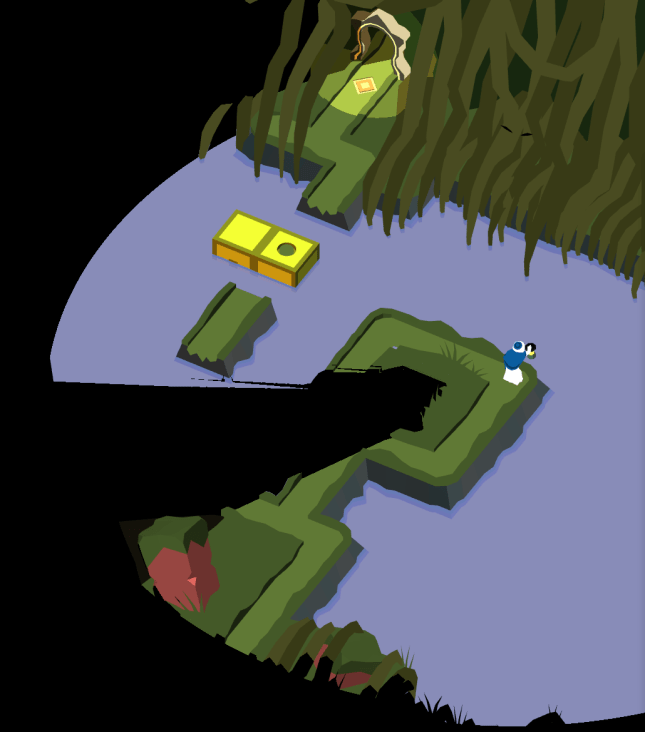
Shadows. Where Shadows Slumber is, obviously, based on shadows. Someone who has played the game would tell you that “shadows change things”. However, this isn’t exactly true – in fact, the shadows in Where Shadows Slumber have literally no effect on the gameplay whatsoever! This is another instance of the decoupling of an object and its visual representation. We show the dark black shadow as it moves across the world, but using that shadow’s location is far too computationally intense to be doing every frame. We could do it, but this is another case where we don’t need to be 100% realistic, as discussed in my blog posts on how our shadows work (part 1 and part 2), we use a much simpler algorithm to determine if something is in shadow. This saves computation time while not sacrificing quality. It’s all about that trade-off!

 

8rgt8bamhlnvicvzsd3pfjof

Otherwise known as “what happens when two hacks collide.”

Potential Pitfalls of Constantly Lying

While I strongly advocate for this type of simplification, there are cases where it can cause some trouble. A great example of this came up when we were doing the finishing touches on the original demo for the game.

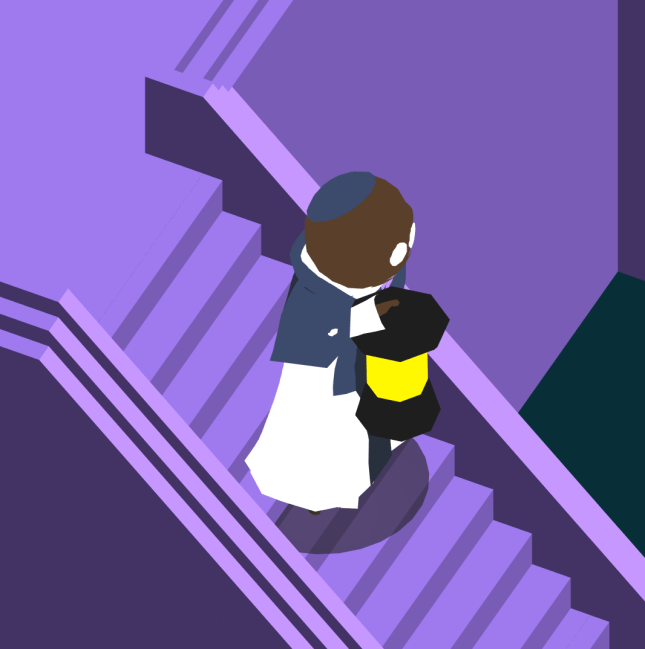
We had added ramps that Obe could walk on to some levels, to give them a little more depth. It  was working very smoothly, and made the world feel less game-y. Separately, we also came to a decision to have a drop shadow for Obe. It felt weird that Obe himself didn’t cast any shadows, but it didn’t make sense for him to, or everything behind him would be in shadow. We ended up with a circular shadow underneath him. Even though it didn’t make sense from a literal standpoint (since the light wasn’t directly above him), we found that players simply knew what it was, and it added realism, since they were so familiar with the concept of shadows being ‘underneath’ something.
StairShadow

Something looks just a little off…

This was all fine and good – both of these ideas were strong ideas (in fact, the latter is a great example of a place where simulating a very fake shadow was much better than attempting to use a realistic one). However, it was when we combined these ideas that we ran into trouble. You see, the drop shadow we made assumed a flat floor – we just plopped it down with a little transparency, and it looked great! Until Obe got to the stairs, that is. Once he started up a ramp, half of the drop shadow ended up being invisible (because it was underneath the ramp), and the other half was at the wrong angle. We had come up with a great simplification, but it ended up totally ruining the illusion!

These situations do come up, and pretty often – two great ideas can combine to form one horrible edge case. However, this situation in particular came about due to a bad design process. At some point near the end of the demo’s development period, we realized “Oh shoot, Obe needs a shadow!” We hacked together the drop shadow solution without considering the long-term design implications. The important thing about making this type of simplification is to understand that it is inherently “wrong” on some level, since it doesn’t perfectly respect the way the world works. This is fine, until it comes up against other things, which are themselves “wrong”. In these cases, you must be extra careful to think through your design decisions with respect to everything they’re going to interact with. This is yet another reason why it’s important not to make design decisions or changes toward the end of your project.


= = = = = = = = = = = = = = = = = = = = = = = = = = = = = = = = = = = =

I hope this gave you a bit of an insight into what’s actually happening in Where Shadows Slumber! If your confidence in us is shaken and you have any questions about what else we’re lying about, feel free to contact us! You can always find out more about our game at WhereShadowsSlumber.com, find us on Twitter (@GameRevenant), Facebookitch.io, or Twitch, and feel free to email us directly with any questions or feedback at contact@GameRevenant.com.

Jack Kelly is the head developer and designer for Where Shadows Slumber.

What Happens When You Forget to Write A Blog Post?

“Yo Frank, what upppp?!” I ask once he answers the phone call and his face shows up, larger than life, on my screen.

“Ey boii!” he replies, his voice booming through my headphones. The line falls silent for a few seconds, before we both speak up in unison:

“So, you’ve got a blog post planned for tomorrow, right?”

We stare at each other (well, as much as you can over the internet), our faces slowly transforming into masks of horror as we realize the ultimate fate we have incidentally worked together to bring upon ourselves.

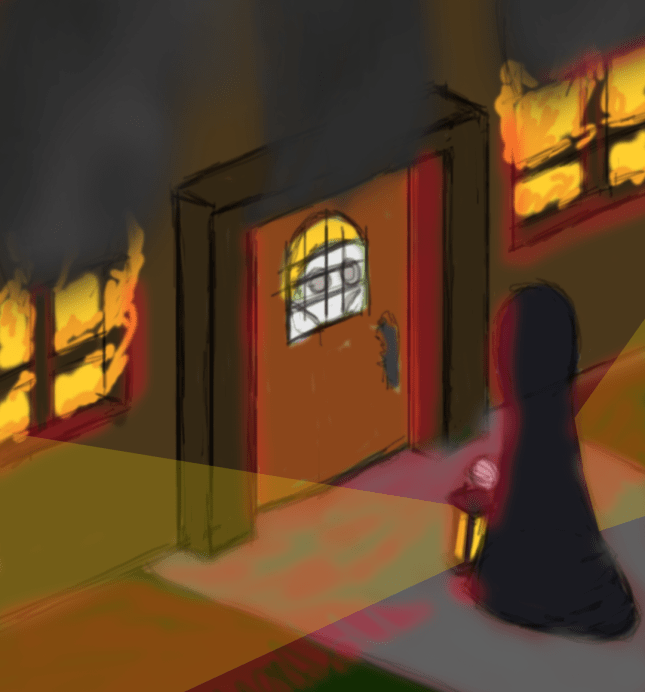
“What will our millions of fans think?!” Frank cries, as the room around him is engulfed in flame.

“How will we ever persist without the precise instrumentation and scheduling that our weekly blog posts bring into our lives?!” I ask of the world in general, falling to the floor, unable to go on.

Then I meet Frank’s eye. I climb back into my chair as he slowly lifts his  hand, making both a fist and intense eye contact. I raise mine as well, shaking it in the air as we chant:

“Rock, paper, scissors, shoot!”

And that’s the story of how I got stuck spending last night writing this blog post.

ConceptArt-Murder_Arson

We all know how it feels to forget about a responsibility…

Not Really Though…

I really spent the whole week writing this post, not just last night (wink), but that story does a good job of showing how it feels to be behind, especially when it comes to our blog. We’ve made the conscious choice to involve ourselves in indie game development, without any real outside motives other than a love for games and development. Because of that, we do a lot of interesting and difficult things, and we talk about them a lot on this blog. But you know what interesting, difficult thing we do every week that doesn’t really get talked about that often?

That’s right – every week, one of us writes a blog post. Some of them are pretty good – a lot of them show interesting choices we made, or maybe they provide insight to other developers out there. But the point of writing this blog isn’t to write the best blog out there, or to prove ourselves as ultimate authorities on game development (hint: we’re not).

The point of writing this blog is to connect with people. We want to let people know about the struggles we’ve gone through to make our game as great as possible. We want to help other developers make their games as great as possible. We want to get feedback from anyone reading these posts, so that our game can be as great as possible.


How Hard Can It Be?

This is a fair question, and the quick answer to it is actually one of the reasons we ended up starting the blog in the first place – it should be easy, right?

And for a while, it was! We had spent a year and a half creating a game and only sharing the details of it with each other. We had a whole boatload of topics to talk about! We were itching to discuss artistic direction, algorithm implementations, and design decisions. I think there was a point when we had a full two months worth of posts already written.

However, that was the easy part, the colloquial ‘honeymoon’ period. Of course it’s easy at the beginning! But as the months have worn on (and we’re still less than a year into it), the obvious topics have started to dry up. “What’s our game about? Shadows? Well I already wrote that one…” You end up having to weave thinner and thinner topics into a real story – I mean, I’m writing a blog post about writing a blog. That’s when you know you’re at the bottom of the barrel.

Running out of ideas

Running out of ideas!

That said, game development and Where Shadows Slumber are both pretty interesting, so we’ve been able to manage coming up with enough topics. The real hard part of this blog is the opportunity cost. We spend a few hours throughout the week writing, revising, and proofreading, and then another few hours finding and creating the perfect images to include. The problem with this is pretty clear – every day we have less and less time left for the game, and every minute spent on something else is a minute we’re not spending on the game. Spending a few hours a week, especially when you have other responsibilities, is a large portion of time to commit. Is it really worth it?


Then Why Bother?

When I pictured myself as a game developer, I never pictured myself writing a blog. Even when Frank and I were pretty far into the development of Where Shadows Slumber, I never even considered it. I mean, we’re making a game, right? Shouldn’t we just, you know, make the game?

Blogging

Obe does not engage in blogging. He engages in Gronging.

It turns out that, despite the fact that we could make a game without writing a blog, there are still some places where it’s pretty important. When the idea of the blog first came up, we weighed the positive against the negative, and decided to do it – we must have some reasons, right? And we do!

1.) Getting Noticed. One of the hardest parts of indie game development is publicity. How do you get people to notice your game? If you somehow manage to build a fanbase during development, how do you keep a hold of them until your production release? Thanks to Frank’s orchestration of our process (which you can read about in his blog post about it), we found ourselves with a pretty good demo of our game, and we were still pretty far from a production release. Between a few conventions, a timely release, and an insane amount of luck, we have managed to garner over 200,000 downloads! The problem is, we’re still around 8 months away from a real release. What happens to all of the people antsy for more Where Shadows Slumber?

This is where the blog comes in – anyone who has played the demo and is interested in the game can find out more about it here. They can keep track of our progress and get updates about the game. They can get an idea of when the game will be ready, and they can keep it in mind. They can even hack into WordPress, figure out our home addresses, and then force us to finish the game, if they really want to!

2.) Marketing. Being open about our development process helps us to ‘build a brand’, and writing a blog is one of the best ways for us to do so. Our brand is something that’s very important for us to cultivate – when people think of Frank and Jack, we want them to think of two awesome guys, who are sharing their process and trying to be a part of the indie game development community. We don’t want the general perception of us to be that we’re secretive or shady. Would you rather buy a game from Sir Awesome Coolguy or Creepy McCreeperson?

3.) Helping Ourselves and Others. The biggest aspect of the blog, and the reason that we’re still doing it, is that it’s rewarding for us, selfish as we are. We were part of a panel on indie game development at PAX (which you can read about here), and that’s still one of the most rewarding parts of working on Where Shadows Slumber for me. It really means a lot to me to be able to answer questions or give advice that helps someone else with their game. I truly love game development, and if this blog helps a single person or team bring their ideas to life and complete a game, then it’s all worth it.


So, Why The Where Shadows Slumber Blog?

There are a lot of blogs out there. I mean, there are a lot of blogs out there. That’s one of the beautiful things about the internet (*cough* plug for net neutrality *cough*) – pretty much anyone can put something together and get their message out. So why are you, dear reader, reading this blog, of all of the blogs out there?

We aren’t trying to be the best blog on the internet. We aren’t trying to be the most insightful game designers. We aren’t trying to be the best at teaching programming or art. There are other blogs out there, and there are great ones for learning about anything you want to learn about.

ConceptArt-Inhabitants_Citizens

We want to share Where Shadows Slumber with all of the citizens of the world!

What the Game Revenant blog, at least as it pertains to Where Shadows Slumber, is all about is our progress. We’re a small indie development team, going through this process for the first(ish) time, and we want to let you all know about it. Whether you use it to keep tabs on our game, get tips on your own, or just learn more about us and our process, is up to you. Either way, we really appreciate you reading!


= = = = = = = = = = = = = = = = = = = = = = = = = = = = = = = = = = = =

Thanks for reading! If you want to know even more about our process, or have any questions about blogging in general, feel free to contact us, and you can always find out more about our game at WhereShadowsSlumber.com, find us on Twitter (@GameRevenant), Facebookitch.io, or Twitch, and feel free to email us directly with any questions or feedback at contact@GameRevenant.com.

Jack Kelly is the head developer and designer for Where Shadows Slumber.
Keeping it All in Your Head

When you study computer science, or first get into toying around with it in your spare time, you find yourself working on a lot of small projects, just to get your feet wet. ‘Hello World’, a program which simply prints the text ‘Hello World!’ is perhaps the most-written program of all time. As your projects get bigger, the code behind them gets more complex, and you, as the software architect, have to keep track of everything that’s going on. This seems like a pretty easy task when working on a guess-the-secret-number game. But what happens when your codebase becomes BIGGER THAN YOUR ENTIRE BRAIN?!


Untangling The Web

In case you couldn’t tell from all the words about code, computer science, and programming, this post is gonna be one for the more technical folks out there. However, that doesn’t mean that there aren’t lessons to be learned by anyone else – keeping track of complex systems is a skill that applies to any project management task!

Real-world systems are incredibly complex – even more so than they appear, even after working with them for a while. As you add features, fix bugs, and increase the overall complexity of your code, you suddenly find yourself stuck in a tangled web of your own design. Now, the best way to combat this is simply to write good, clean code and follow good design patterns. However, if you want some advice other than “just do everything exactly right”, then read on!

Where Shadows Slumber isn’t the most complex game, but the implementation behind it is very intricate, and I definitely didn’t do everything exactly right. As the only developer on the project, I have to keep track of everything, which is a lot of stuff. Here are some tips I’ve developed for not going crazy trying to understand a system that you yourself created!


Tip 1: Divide and Conquer

The first application of divide and conquer is exactly what it sounds like – take the whole system, divide it up, and give a different part of it to each team member. While this doesn’t really apply to the development of Where Shadows Slumber, it’s still worth mentioning. If you’re in charge of one part of your project, and someone else is in charge of another part, there’s less minutiae for you each to keep track of. You only have to know how the pathfinding (for example) works on a higher level – the intricate details of the exact implementation are left for the ‘pathfinding team’. And if you do need to understand how pathfinding works, there’s someone who knows all about it – and that’s what teammates are for!

The other application of dividing and conquering is what I’ve heard referred to as ‘the Google Maps approach’. When you’re looking at a map of the world, you don’t need to be able to see every single city. But if you’re looking at a map of a state, you probably do want to see them all. So, the amount of detail you get depends on the context in which you’re examining it.

How can we apply this to project management? It’s really just a state of mind. When you’re thinking about your whole project, try to think of it from a more abstract point of view, rather than considering all of the details of the implementation. This kind of thinking happens naturally, but we want to actively embrace it. You want to think of the smaller parts of your project as a ‘black boxes’ – you give them some input, and they give you some output. You don’t know (or care) how it gets figured out, until you need to look at that code – at which point, you shouldn’t be thinking about the rest of the project. By only caring about the part of the project you’re currently working on, you free up a lot of space in your head.


Tip 2: Keep It Simple

The best way to prevent your project from becoming too complex is, obviously, to keep it simple!

Honor Societies

This comic is a comic [Image credit: xkcd.com]

“But how do you keep your project simple?” I can hear you asking. The key is in how you think about your code. For the most part – and there are notable exceptions – you should be able to think about or describe the function of different parts of your code with ease. Doing so might require the context within which that piece is working, but given that, it should be relatively simple.

Now, don’t get me wrong – your code itself will probably be very complex. However, it’s important that any code has a specific purpose. If some piece of code doesn’t have an easy-to-determine purpose, consider why it’s there and what it’s doing. If possible, see if you can move parts of it into the appropriate parts of your project.

Additionally, when describing the purpose of a section of your code, make sure it’s a relatively simple purpose – the best way to do this is to avoid the word “and”. If the purpose of a file is “to perform pathfinding and determine nearby enemies”, it would probably be best to split that into two different files.

By keeping your code as simple as possible, at least from an organizational perspective, you won’t have to strain yourself every time you try to remember what your code is trying to do.


Tip 3: Organization

Speaking of organization, keeping your project organized is one of the best ways to keep it under control. This can be tricky and surprisingly time-consuming, which is why people so often shy away from it, but it can also be crucial to your success. The key here is to create sensible patterns, and then follow them.

ORGANIZED

Everything is right where it should be!

The easiest way to apply this is in directory structure. Make a decision toward the start of your project how you’re going to organize everything, and then stick to it. For Where Shadows Slumber, as you can see, we sort most things by world. All of the levels, materials, and textures for World 1 are in the same folder, since they all apply to the same levels.

However, notice that there are some folders which are not organized by world. Scripts and prefabs are examples of things which span across worlds. While a model or texture might be specific to a certain world, the shadowCharacter.cs script, or the pathfinding node prefab are not, so why should they be sorted by world?

Thinking through your project and deciding on a directory structure that makes sense can make it a lot easier to understand what’s happening in your project. And, every so often, you should re-examine your organization, make sure it still makes sense, and make sure you’re actually following it. In this way, you can be organized, stay organized, and know that your organization is actually effective.

There are also organizational paradigms that you can apply to your code to keep it clean. One of my favorites is the idea of data ownership. The idea is that every piece of data in your project (the location of the character, a bullet’s speed, the number of points a player has, etc.) should have an owner. It’s usually pretty easy to figure out who the owner should be, but sometimes it can be tricky – and it’s in those cases where it’s important to know. If my shadowCharacter.cs script is the owner of the character’s position and velocity, then no other code should be allowed to mess with those values. That way, if there’s a problem with the character’s position, you know exactly where to look.

This is just one example of an organizational coding pattern, but the concept behind them all is pretty similar – at every point, you want to make it easier to understand what your code is doing. It’s a whole lot easier to make changes, fix bugs, and implement new features when the things that your code is doing actually make sense to you.


Tip 4: Not Too Complex… Yet

Every project starts out small and simple, and yet we constantly find that our projects have gotten out of hand, growing into sentient monsters, taking over our lives and ruining any chance we had of success – who knew that project management was so much like parenthood?

Incredibly clever comments aside, if our project starts out simple and ends up complex, there has to be some point when it started to go awry, right? And if so, there’s probably a point when we could have noticed it going wrong and steered it back on track. Thus, it’s important, as you’re working, to be constantly considering the state that your codebase is in. Every so often, ask yourself; is this code still clean? The more often you ask yourself this question, the sooner you’ll know when you start heading in the wrong direction – it’s much easier to fix this problem if it’s only just started to go wrong!

This is the concept of technical debt – every so often, you add in some bad code, just so that you can meet a deadline, or get some functionality off the ground. Every time you do that, you’re increasing your technical debt – and if you don’t pay that debt, it adds up until your code is unmanageable. It’s always good to keep your technical debt in the back of your mind, and address it as often as possible.

In my experience, there’s one really good way to determine if your technical debt is getting to the point where it’s impairing your development. If you ever find yourself writing overly complex code, it probably means that you have an overly complex system.

The longer the conditional the better

Genius!

Again, I’m not advocating against complex code in general, as it has its place. But if you find yourself writing complex code to do something simple, or repeatedly thinking “it should be easier to do this”, that’s a big red flag. If you ever fix a bug by ‘trying something’, but you don’t know exactly why it fixed the problem, that’s a sign that you don’t fully understand your code, and code that has exceeded your grasp is exactly what leads to very subtle (read: hard to fix) bugs.

When you get to this point, you should take a step back (and maybe a break), get a fresh look at your code, and spend some time cleaning it up. No one likes spending time on housekeeping tasks, but trust me, it’s a lot more fun spending an hour here and there cleaning up your code than it is mucking through an overgrown garden of technical debt.


…And Beyond

This is by no means a definitive list, nor will every part of it apply to you or your project. Rather, these are just some of the philosophies I try to keep in mind as I’m coding and software architect-ing. There are plenty of others, but hopefully adding these to your repertoire will help you reign in your projects and keep them from becoming too complex!


= = = = = = = = = = = = = = = = = = = = = = = = = = = = = = = = = = = =

If you have questions about managing complex systems, or want to share your own tips, feel free to contact us! You can always find out more about our game at WhereShadowsSlumber.com, find us on Twitter (@GameRevenant), Facebookitch.io, or Twitch, and feel free to email us directly with any questions or feedback at contact@GameRevenant.com.

Jack Kelly is the head developer and designer for Where Shadows Slumber.


Level Design

We’ve put a lot of work into designing, building, and testing our levels. In particular, now that we’ve got a lot of the other pieces in place and a good amount of user-testing done, we’ve been focusing quite a bit on level design. After all, as a puzzle game, the most important part of our gameplay is the puzzles themselves. An incredible game can end up flopping due to bad puzzle design, and a mediocre one can actually do really well, if the level design is good.

But how does level design actually happen? We have a bunch of levels, but how did we come up with them? What’s the process?


Design Process

4-3 design

Design of an upcoming level, Fountain!

The problem with level design is that it’s an inherently creative endeavor. I’ve always had trouble with this type of task – if I sit down and work on something for an hour, I want to see some measurable progress. But if I try to work on level design for an hour, I could literally just be sitting there thinking the whole time, with nothing to show for it. This (at least for me) is one of the reasons that level design often gets pushed to the proverbial back burner. I always want to work on game features, because I know I can make some progress on them, so I opt to do that rather than level design. However, this can be a dangerous prospect, as this is a great way to end up scrambling for levels, putting too little thought into their design, and releasing a great game with bad puzzles.

You can’t just say “I’m gonna go design a level!” I mean, you can (and sometimes I do), but that’s not the best way to go about it. Unfortunately, you’re really at the whim of your own brain – you have to be struck with inspiration. The best levels I’ve designed didn’t happen during a ‘level-designing brainstorm’. They happened when I was walking down the street, or sitting down at dinner, or pretty much anywhere, when I noticed something that made me think of a cool level. Inspiration isn’t something you can schedule, work hard at, and then just do. It has to come to you, which, for me at least, is terribly annoying.


Designing for Where Shadows Slumber

All of this gets even more difficult when it comes to designing puzzles specifically for Where Shadows Slumber. Any innovative puzzle game has a sort of quirky concept, a hook to get users to take notice and to make the puzzles more unique and interesting. For us, of course, it’s the shadows and the ever-changing nature of the world, and those aspects of the game are what make it the hardest to design for.
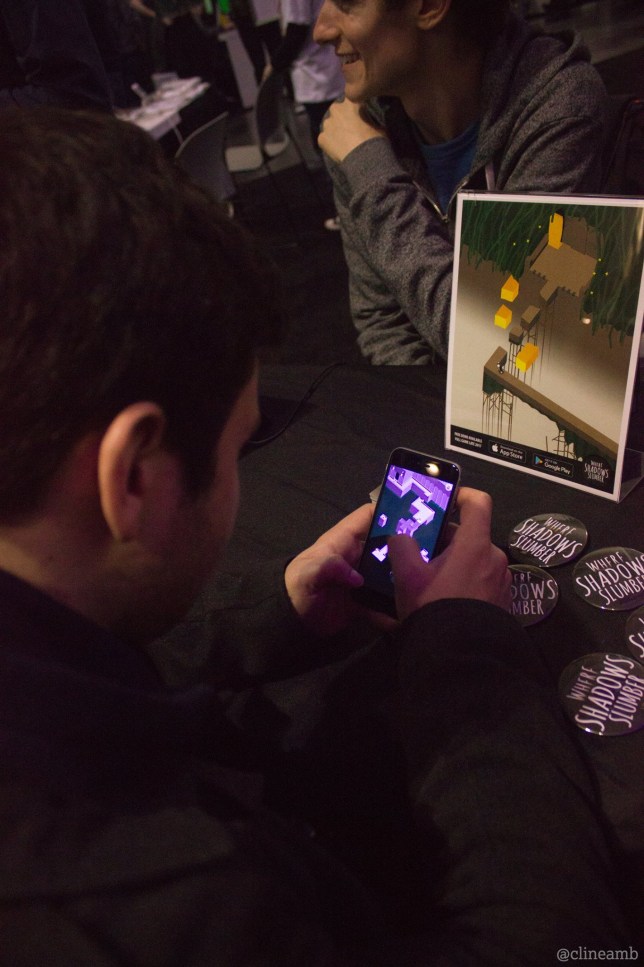
So you sit down and design a level. It looks pretty cool, it’s got a nice flow, it seems challenging and fun. You show it to your team, or you start to implement it, and suddenly you realize – it just doesn’t work. There’s one small thing that prevents the level from working, whether it be a light in the wrong place, an object that should cast shadows but can’t, or maybe it’s just too difficult for a user to get. These aren’t great examples, but this type of situation comes up all the time. We designed around 30 levels for Where Shadows Slumber at the beginning of the year, and now we only have around 15. What happened to the other half? There was something small that prevented them from being good levels – and it’s hard to notice any of these issues until you implement the level and test it out.

The other difficult part of designing these intricate levels is actually communicating them to each other. Every level design, no matter how great, needs to withstand the feedback of its peers. The problem is – how can we show these crazy levels to each other?

IMAG0625

Notice how my drawing style is a more clinical, overhead view than Frank’s (above)

We’ve tried drawing them and sending them to each other, but they’re often too intricate to really ‘get’ from a drawing. In the end, the only process we’ve found for sharing levels is to sit down in the same room together and talk through what the level consists of, along with the drawings. Even this isn’t good enough for a lot of the more complex levels – sometimes the only way to show your team the level is to build it! This is very frustrating, especially when you build a level that’s no good, and you have to throw it out, but sometimes it’s a necessary part of the process.


Taking the User into Account

Of course, the real judge of level design is the user. It doesn’t matter if every one of your levels is a masterful blend of elegant design and game mechanics if your users don’t enjoy playing it. This is a pitfall that I continually see people falling into, and, as I recently realized, one in which I lived for a good portion of the development of Where Shadows Slumber. But no longer! Throughout our testing, the users have spoken, and we are listening!

feedback

Getting some feedback on level design!

What does it meant to design for the user? How do we know what they will and won’t like? That’s a difficult question without an easy answer, but I will share some of the tips that I try to stick to.

Listen to your users. This should be obvious, but sometimes it’s not. You have to get your game in the users’ hands, get them playing the game, hear their feedback, and actually listen to it! You’ll never know that users don’t like one of your levels unless you let them test it out, and your level design won’t be good if you disregard their feedback.

Difficulty/learning curve. If your game has a crazy mechanic or concept, the user isn’t going to know how it works – it might seem intuitive to you, but that’s because you’ve been working on the game for so long! You have to make sure that you gently introduce them to the mechanic, in a way that shows how it works while also keeping them hooked. And you have to make sure the difficulty ramps up before too long, or they’ll just get bored of your everlasting tutorial.

Remember that the user doesn’t know what you know. Some people phrase this rule as “treat the user like they’re stupid”, but I think that’s an overstatement. Your users aren’t stupid, they just don’t understand the subtleties of your game the same way you do. They will never do exactly what you expect, and they will never understand the level as well as you do. You need to keep that in mind, examine your level design with an objective eye, and make sure that the experience is enjoyable for the user no matter how they go about solving your puzzles.

Users want to feel smart. The people who pick up and play a puzzle game are usually pretty smart people, and they want to feel smart. This leads to an important design philosophy – make your levels hard, but not too hard. The user doesn’t want to just play an endless parade of easy levels – they won’t feel any satisfaction from beating them. On the other hand, the user doesn’t want to hit a near-impossible level – that’s just frustrating! Beating a level should be easy enough that your users will beat it without getting frustrated, but hard enough that they feel accomplished when they do.

Iterate and Re-use. Sometimes, your users won’t like a level – it happens. In this case, you shouldn’t simply throw the level out. An important part of design is iteration – if your users don’t like a level, figure out why. Figure out what you can do to improve the level. There are parts they don’t like, that you’ll probably end up taking out, but there are most likely some good things about the level, and you don’t want to waste them. Try to fix what the users disliked, and then head back to them and get another opinion.


If I Had to Skimp on Level Design…

Creating a game takes a long time, and there’s a lot to do. Sometimes, you just don’t have the time to pour your heart and soul into every level you design. Sometimes, you just have to put in a few ‘filler’ levels. When is it okay to do that, and what’s the best way to go about doing it?

20170627_124251

“Okay, hear me out: we open on a completely blank screen…”


As much as I’d like to say “all levels are created equal”, I can’t, because it’s not true. Frankly, there are some levels that are a lot more important than others. Which levels are most important? The early ones.

One of the biggest hurdles for a game is what I call the barrier to entry. If I pick up a new game, and the second level is really annoying, there’s a chance I’ll just put it down and never play it again, even if the rest of the game is phenomenal – I have no way of knowing that, and I assume the rest will be just as annoying. However, if I play the exact same game, but it’s the seventh level that’s really annoying, I’ve already played through six awesome levels. The game has earned some credit with me, so I’m willing to let one annoying level slide.

This is doubly true for puzzle games where the user has to learn the mechanics. If you don’t teach the user your mechanics very well in the first few levels, they’re not going to enjoy the rest of the game, because they won’t have learned how to solve the puzzles.

The third argument for this is simply a mathematical one. Every user who plays your game will play the first level. No matter how good your game is, there’s some rate of falloff – some people just stop playing. That means that almost every user plays level two, and most users play level three, and so on. So, the levels that will see the most playtime overall are the first levels, hands down (for any statistics nerds out there, this is basically the same premise as Benford’s Law).

So, if you’re running out of time for level design and you need to skimp on some levels, you should make it levels later in the game. Anyone who has gotten that far already likes the game (presumably), so you don’t need to sell it to them, and they’ll give you a little more leeway.

Now that we’ve tested some of our levels, we’re ramping up into more level design, and I though it would be a good opportunity to show you a little bit of our process. Hopefully you learned something about our level design process, and maybe you can even use it in your own projects!


= = = = = = = = = = = = = = = = = = = = = = = = = = = = = = = = = = = =

If you have questions about our game design process, feel free to contact us! You can always find out more about our game at WhereShadowsSlumber.com, find us on Twitter (@GameRevenant), Facebook, itch.io, or Twitch, and feel free to email us directly with any questions or feedback at contact@GameRevenant.com.

Jack Kelly is the head developer and designer for Where Shadows Slumber.