MAGFest 2017 Rocked!

Jack and I have just returned from a wild weekend at MAGFest 2017, and I have nothing but positive things to say about the experience. Back in late September, we applied for MIVS – the MAGFest Indie Videogame Showcase. After multiple rounds of judging, we ended up making it all the way! We were one of many indie game studios that were invited to demo our game at MAGFest.

By invited, I do mean invited. One of the best parts of this convention was that there was no booth price for indie developers. Ticket sales from the convention were used to pay our way, and it meant a lot. MAGFest ended up being one of the less expensive shows Game Revenant has done so far… by comparison, my dalliance to Chicago for Mr. Game! cost me a number that rhymes with gour-gousand.

The most valuable part of these events is getting feedback from players. It isn’t always easy to hear constructive criticism from your fans, but it is necessary. (Jack is going to be writing about this subject next week!) We specifically asked people at our booth to give us “tough love” as we near completion of the demo and move on to production. Without hearing some negative feedback, you’ll never escape the indie thought bubble.

“My game is the best game that’s ever been created. My game. Me. Haha… everyone else must be stupid for not making it first. Not me though. Hahaha…”

– The Indie Thought Bubble

So just to show you we’re listening, here’s three big lessons we learned about our game’s demo (which you can download) that we’ll keep in mind as we start final production this month.


img_2696

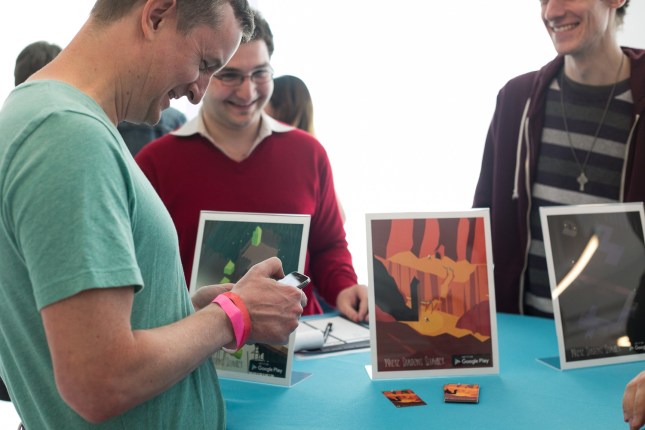
A blue-haired tester at MAGFest plays Level 3, “Canyon” on our iPhone.

1. Make The Game More Difficult

Right now, the demo is a bit too easy. This was something 90% of our testers told us. People would marvel at our cool idea, beautiful artwork, immersive sound (for those that could actually hear it in the crowded convention hall) but stop short before discussing the puzzles.

The most common feedback was that it felt like we had 5 or 6 tutorial levels instead of the 3 we were aiming for. Players don’t like feeling “led” by puzzle games, whether that leading is overt (tap HERE to move! HERE! Right over HERE!) or subtle. We’ve got a subtle thing going on right now, where there are too many easy levels in a row. Players find that to be boring.

We vow to make the game physically relaxing, but mentally challenging! Just because the game is supposed to give you a “moment of zen” on your daily commute doesn’t mean it can’t really make you think. Harder levels, and more compact tutorials, are on the way!


img_2727

The booth got so packed we had to use our phones to demo the game as well!

2. More Narrative Elements

This feedback usually came in the form of a question. “Will there be a story?” It was always a hopeful question, like “I really hope you guys have a story planned.” We would tell people that although the demo won’t have too much (we’re working on a final cutscene for it now) the final game definitely will have a cool story.

Our goal is to tell a story without using words. My passion is animation, and I think body language is an incredibly useful tool for communicating ideas. I don’t think we need dialogue bubbles or text to tell the story of a man’s solitary journey through a dark and strange world. The other reason is because avoiding the use of text will make it easier for our game to launch in other regions where English is not the official language.

So, don’t worry! A story is on the way. Once it arrives, maybe the 18+ rating on the game will seem a bit more obvious…
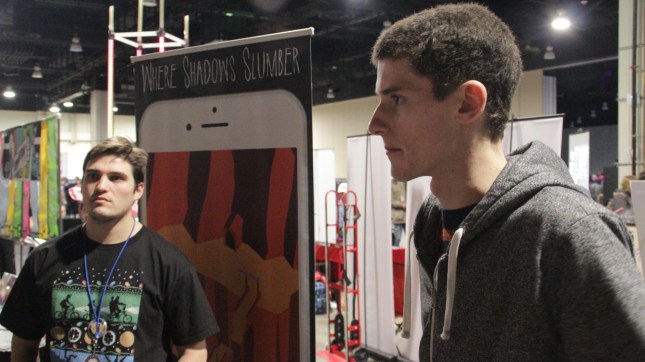
 

img_2701

Jack stares off into the distance, permanently scarred by a two syllable word: Grongus.

3. Rename The Game To…

Not all feedback is good. Sometimes, you need to let criticism go. People gave us lots of good ideas, but of course the constant refrain was to rename the game to Where Shadows Grongus. This won’t happen, so I hesitate to even mention it. However it was requested by about 105% of our testers and it seems dishonest not to say something.

The name of the game is final. It performs well on search engines like Google, Yahoo, Bing and DuckDuckGo, just to name a few. We have a real ownership of the string Where Shadows Slumber and a new logo has even been created for that title.

Please stop asking us to change the name. Don’t tweet at Game Revenant about it, and leave our Facebook Page alone. This debate is over.


didwewin

The two of us eagerly awaiting the announcement of awards at the end of MIVS.

Thanks, MIVS!

The MIVS Staff deserves a thank-you for giving us this awesome opportunity. You won’t find this kind of sweet deal at other shows, but MAGFest is a strange animal. Here’s the staff members that worked on this year’s show. Thanks, everybody!

Lexi – layout, hotel & badge handling
Joel – judge coordinating, hotel & badge handling
Nate – map artist, video editor, web content
Kat – MIVSY maker, volunteer scheduler
Marc – Awards spearheader
Kotey – Tournaments
Paige – External entity coordination
Peter – LEDs, new Obelisk lead
Nichole – Press, coordination with internal social media

Tronster – coordinating everything!


= = = = = = = = = = = = = = = = = = = = = = = = = = = = = = = = = = = =

Do you have feedback for us? Did you play the demo of Where Shadows Slumber? Please try it on your Apple or Android device and then leave a comment for us below! We’d also love to hear from you on the official Game Revenant Facebook Page, or on our Twitter account.

Frank DiCola is the founder and CEO of Game Revenant, a game studio in Hoboken, NJ.

Mechanic Spotlight: Shadows, Part 2

Where were we before we were so rudely interrupted by my extreme laziness? In my last post, we went over the basics of how shadows operate in Where Shadows Slumber. This week, we’ll pick up where we left off, and I’ll describe the way I actually implemented shadows, and the reasons for doing so.

Last time, I described two different ways to think about objects changing in shadow. Unfortunately, I did so in a sentence that, in retrospect, looks simply confusing:

[Things] can always change when put into shadow, or they can only change when you move around the object casting the shadow, so you’re on the other side of the casting object, relative to the changing object.

Yeah, that’s no good. So let’s figure out what this means, in a way that’s a little longer, but easier to grasp. We’ll use the classic pillar / bridge problem, where the pillar is casting shadow, and the bridge is changing with that shadow.

If I walk past the pillar, the shadow will overcome the bridge. If I continue walking, the shadow will move, the bridge will be revealed, and at this point, it should have changed. This is exactly what we want.

shadowtransition

Not only is the pillar / bridge problem less violent than the trolley problem, it’s more relevant!

Now consider the scenario where I start to walk past the pillar again. The shadow overcomes the bridge again, but this time, I stop walking, leaving the bridge in shadow. Instead of continuing forward, I turn around and go back. The shadow moves, so we can see the bridge again, but we’re on the same side of the pillar as we started. Now the question arises – should the bridge have changed?

This is a very important question when considering this mechanic. Thinking about it from a ‘pure’ standpoint, of course the bridge should have changed – it was in shadow. After all, that’s the rule, right?

This was exactly my thought process, and is why I implemented the mechanic in the way I shared in my last post. The early prototype we made behaves in exactly this way. However, as I got further into level design, I realized that this is not what we want. In order for many of our level designs to work, the above scenario would need to result in the bridge not changing.

When designing levels for a game like this, there are a number of considerations to make, but one of the most important is to remember that the player will not always do what you want. I may want the player to walk around the pillar, but the player may instead decide to walk behind the pillar, and then turn around. If I need the player to end up on the far side of the pillar (for a story event, part of the puzzle, etc.), that becomes hard to accomplish with the current version of the shadow mechanic.

So, it seems that we need to update the implementation of our mechanic. The way we want it to work has more to do with what side of a shadow-casting object we’re on – the bridge can only change when we move around the pillar.

Fortunately, this is actually an easier problem than the previous one. When we think about it this way, we don’t even need to use shadows – what we’re really checking is when we pass the object. When the light (player), the blocking object (pillar), and the shadow object (bridge) are all in a row (collinear), we can simply know that the object is in shadow rather than checking. This is true when we make a few assumptions:

  • Both the pillar and the bridge are about the same size. This means that we may have to break the bridge up into a number of 1×1 ‘shadow objects’.
  • Each light involved originates from a single point (so point/spot lights, not directional lights).
  • The bridge is further away from the player than the pillar.

When all of these conditions are met, we can ignore the shadow itself, and just change the bridge when the player passes the pillar. It’s a little hard to conceptualize, but a picture is worth a thousand words!

passingshadowobject

Alright, maybe like 500…

At the moment the player passes this ‘collinear point’, we trigger the shadow object to change (note that at that moment, the shadow object will be entirely in shadow). But the shadow is just there for cosmetic purposes, like a magician’s illusion – it’s so you don’t see the trick!

As I said before, this problem is much easier to solve – every frame, we simply compare the angle from the player to the blocking object with the angle from the player to the shadow object. When those angles switch, it means that the shadow object is in shadow and should change.

In this way, we can easily keep track of when a shadow object should change. There are a few ways in which this situation can become more complicated – if there are multiple lights or blockers that should affect a single shadow object, if there are multiple shadow objects that should use a different set of lights or blockers, etc. These are all very important things, but they’re all things that can be implemented by carefully extending the system we laid out above. As such, implementing them is left as an exercise to the reader : )

There are still ways we can use the previous implementation to help out with the shadow system. There are a few cases where we might need to actually know if an object is in shadow, rather than just making the assumption that it is. Thus, our shadow system includes a sort of ‘back-up’ shadow-detection – in certain cases, we fall back on the more accurate, more expensive shadow detection we worked on in my last post.

= = = = = = = = = = = = = = = = = = = = = = = = = = = = = = = = = = = =

That finishes up our high-level overview of our implementation of the shadow mechanic – I hope you enjoyed it. Let us know if you have any questions or feedback! As always, you can find out more about the game at WhereShadowsSlumber.com, find us on Twitter (@GameRevenant), Facebook, itch.io, or Twitch, and feel free to email us directly with any questions or feedback at contact@GameRevenant.com.

Jack Kelly is the head developer and designer for Where Shadows Slumber.

2016 Year In Review

Christmas is behind us, and the year is coming to an end. For the final blog post of 2016, we decided to recap the major events in the lifetime of Where Shadows Slumber that occurred this year.

When we began 2016, the game’s demo (currently available on iOS and Google Play) was only 2 months into development. As we created and refined our 10 level demo over the next 12 months, we also had the opportunity to attend some incredible game industry events. Here are some of our favorite development milestones!


indiecade

Jack got cropped out of this picture, as punishment for being too darn tall.

April / IndieCade East

At the very end of April, we had the great fortune of attending IndieCade East. This juried “Show and Tell” event required us to submit an application and go through an approval process before being allowed to showcase the game. We’re so glad that the judges were impressed with our game, even during its infant stages. This was the earliest feedback we got from total strangers, and it was positive yet constructive.


dan

Dan Butchko, the CEO of Playcrafting.

July / Playcrafting Summer Expo

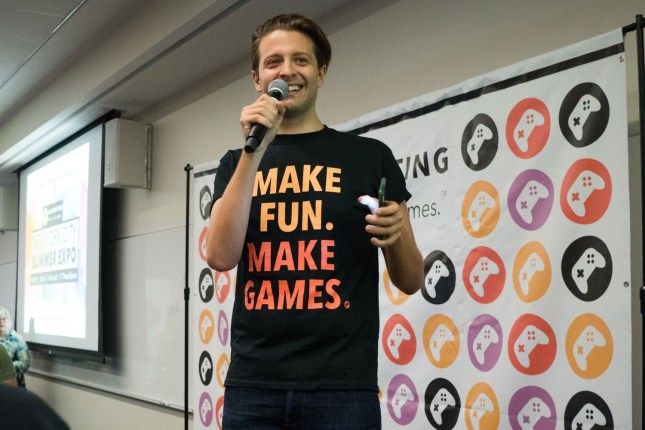
Throughout the year, we attended two of the gaming nights hosted by Playcrafting at Microsoft’s offices in New York City. These intimate gatherings are great for indies looking for a foothold in the industry – lots of people go to them, admission is free for developers, and there’s even free pizza! Both the Spring Expo and July’s Summer Expo were excellent opportunities for us to show off the game and get some candid feedback from strangers.


Us.PNG

September / Studio Madness

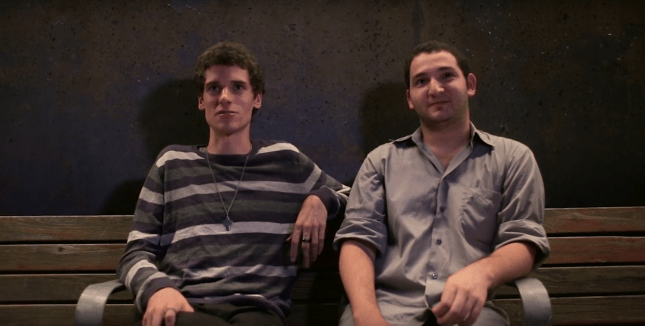
After a busy summer, we finally got a chance to sit down with Earl Madness, a photojournalist we met at IndieCade. Our long form interview is available to view on YouTube – in it, we discuss our hopes and dreams for Where Shadows Slumber, as well as some general thoughts about the game industry.


website

October / Website Launches

Web developer Caroline Amaba pulled off an incredible feat in October – creating a website as beautiful as our game! The site launched in October and has been a massive source of subscriptions to our newsletter, which means traffic is high as well as interest. Keep up the good work, o Mistress of Webs!


02

October / Gameacon

We attended Gameacon 2016 in Atlantic City, NJ for the first time in October. For a new convention, we were pleasantly surprised by the crowd that came to our table to see Where Shadows Slumber. To top it all off, we were nominated for a Crystal Award – Best Mobile Design! Unfortunately, we did not win. But the experience really helped shape the future strategy of the game, and for that we are thankful!


boat

November / The Demo Launches

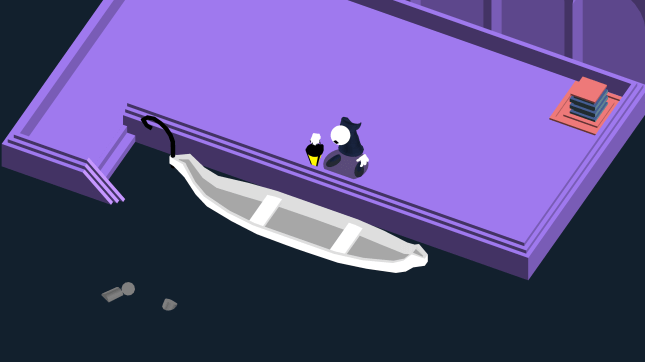
On the first day of November, we launched our game on Google Play! Shortly afterward (November 2nd, or midnight on the 3rd…) we launched our game on the App Store. We don’t like to talk about that scheduling mishap, but we should.

A word of caution: when you schedule an app to “release” on the App Store at a certain time on a certain date, the game is not available at that time on that date. Rather, it begins processing at that time and date and will be on the store a solid 24 hours later. The good news is, it happened to the demo and not the final game’s release! We won’t make that mistake again.


mivs

November / Accepted Into MIVS

After an arduous submission process, Where Shadows Slumber was accepted into MAGFest’s Indie Videogame Showcase (MIVS). We’ll have the good fortune of attending this event in just over a week (Jan 5th – 8th) at National Harbor, Maryland. This is our first time attending the Music and Gaming Festival in any capacity, so it’s going to be a wild ride! We’ll keep you posted on how that turns out just after we return.


bunni-18-of-80


December / Playcrafting and 16 Bit Awards

Our previous attendance at two Playcrafting events made us eligible to apply for a ’16 Bit Award. We had no idea at the time, but apparently Playcrafting holds a massive award ceremony at the end of every year! Our submission was accepted and we were officially nominated for Best Mobile Game. Although we didn’t take home the grand prize, we had a blast at the ’16 Bit Awards. They went all out for this thing! The event had free food and a live band, and we got to hang out with some really cool developers. 10/10, would go again!


fireworks

That’s All For Now!

We’re going to save the “look ahead” for a future blog post, where we’ll discuss what to look forward to in 2017. Some major events are just around the corner – and there is at least one morsel of news that we are legally barred from publicly announcing. (Don’t worry, it’s good news!)

This year has been good to us. We hope it has been good to you, too. If not, well… just wait longer! 2017, here we come!


= = = = = = = = = = = = = = = = = = = = = = = = = = = = = = = = = = = =

How was your year? We’d love to hear about any cool projects you’re working on. Maybe you’ve made progress on your game in a significant way – or perhaps 2017 is the start of something new? Whatever the case may be, feel free to use our comments section as a way to get the word out about your game! See you in the new year.

Frank DiCola is the founder and CEO of Game Revenant, a game studio in Hoboken, NJ.

Mechanic Spotlight: Shadows, Part 1

Throughout this blog, I’m planning on doing a number of posts which outline the mechanics of Where Shadows Slumber, and how they work. Now, there are plenty of very interesting mechanics that I can (and probably will) go over. However, there are probably a lot of blog posts and tutorials out there describing path finding, object pooling, shaders, and everything else. So, the mechanic I’m going to start with is the one that is the most unique to Where Shadows Slumber – the mechanic behind the shadows.

A quick disclaimer on the nature of this post – please note that this is not an in-depth description of the exact code we used for the shadows, nor is it an attempt to tell you the correct way to think about or implement such things. I’m sure a seasoned veteran of coding and game design will be able to point out a few inconsistencies or inefficiencies in our shadow system. Rather, this is meant to be a high-level overview of my thought process while I created this system, and how those thoughts changed throughout the process. Also, since we have been working in Unity for the production of this game, I will probably be mentioning how Unity does stuff pretty often.

When playing Where Shadows Slumber, you may have noticed that sometimes, things change when they’re in shadow. In fact, you shouldn’t have been able to beat the game without figuring that out.

shadowtransition

I think I’m just gonna use this GIF in every post…

Things change when they’re hidden by shadow and then revealed, but there are two (basic) ways to think about it – they can always change when put into shadow, or they can only change when you move around the object casting the shadow, so you’re on the other side of the casting object, relative to the changing object. One of these methods ended up making more sense to use in the game, but I implemented both of them on the way there, so I think it only makes sense to go over them both (even if it means stretching this post into two parts).

Now, these are both pretty simple problems at their cores, but there are a few interesting lessons. Let’s start with the first type of shadow, using the naive approach, which is exactly where I started a year or so ago.

So when an object is covered in shadow, the next time you see it, it should be different. The steps involved should look something like:

  • Detect if the object is in shadow now
  • Check if it was in shadow before (last frame)
  • If it wasn’t, change it!

Using these steps, the object will change every time it’s put into shadow and then revealed. So, clearly, the most important thing to be able to do is detect when an object is in shadow.

Since the light in the game comes from the player’s lantern, everything that’s in shadow is essentially ‘blocked’ from the player’s view by some obstacle. Thinking about shadows in this way leads to the first pass at detecting when an object is in shadow – basically, just draw a line from the player (or the lantern) to the object. If it hits anything along the way, that means that the light isn’t going to reach the object, which means it’s in shadow.

Image result for unity raycasting

Looks like Unity’s ray casting…


This process is pretty much the description of Unity’s ray casting: draw a ray from a point until it hits a Collider. So we just add a Collider to any object that might get in the way, and we have a simple ‘IsObjectInShadow’ function!

However, you may have noticed that there are a couple of reasons this won’t work, the most important being that it doesn’t behave correctly. Since casting a ray will only target one point, the shadow detection will only work for the exact position of the object. Anything with any amount of width or depth (so, anything) will say it’s in shadow when the center is in shadow, but the edges are not. This happens when the object is at the edge of the shadow, when it’s only partially shadowed. This is a pretty big problem if we’re going to be changing the object at that time, since the whole point is that the player won’t see the object when the change happens.

So we can detect when a point is in shadow, but just checking the exact position of an object isn’t enough. The easy solution is to simply check more points! By casting two rays, one toward the leftmost side of the object, one toward the rightmost, we can check if both of them are in shadow. If they are, then the whole object is in shadow. This version of our theoretical ‘IsObjectInShadow’ function works much better – as we move a character around a pillar, the object will more accurately determine whether or not it’s in shadow.

We can get the object’s leftmost/rightmost positions (relative to the player/light) by getting the objects dimensions, which we can either get from the Renderer component on the object (Unity will measure the visible object), or simply by placing some restriction on the size of the objects. Since Where Shadows Slumber uses a grid system, everything that changes with shadows is restricted to a 1 x 1 x 1 unit cube, in order to make shadow calculations easier.

Now comes the question – why is this version not good enough? We have to do a little math up front to get the left/right bounds, but after that, we simply have to cast a few rays, and we know whether or not our object is in shadow. Seems pretty good! And it is pretty good. It only works in two dimensions – if you move upward, above the object, the object will still think it’s in shadow – but that’s not too bad, and most level designs don’t involve a lot of vertical movement, so we can ignore it for now. The biggest problem with this version is that we have to add a Unity Collider component to every object that might cast a shadow. Then, every ray cast will test collision against every collider every frame (the reality is not quite this bad, but that’s the idea). This can become a problem in a scene with a lot of shadow objects and a lot of shadow casters, especially if you want different casters to affect different objects. We can improve upon this version with a little math and some clever thinking.

If we think about the way that shadows are cast, we can come up with a better way of determining if something is in shadow:

shadow-radii

(There’s a reason Frank’s the artist, and I’m not.)


If we specify that every object is restricted to a 1 x 1 box (in the two non-height dimensions), then we can use some trigonometry to determine whether something is in shadow. I won’t get into the details of the actual math, just the overall conceptual parts. No matter the angle, the radius of the blocker will always be at least r (0.5). In the same way, no matter the angle, the radius of the shadow object will always be at most R (√2). Thus, by taking distance into account, we can always tell if the entirety of the shadow object (everything within the bigger circle) is put into shadow by the blocker (everything in the smaller circle).

By using this method, we can tell if a shadow object is in shadow without ray casts or Colliders, and we can do it for a specific object. In this way, we can specify which blockers affect which shadow objects, which gives us a lot more control over level design.

Now that we’re able to tell if an object is in shadow, the hard part is over. Every frame, we just follow the steps outlined above, for any shadow object. We check if it’s in shadow, then check if it was in shadow (meaning we have to keep track of whether or not it was in the previous frame). We change the object to the next state. The object will only change once, until the user sees it, when it’ll appear differently. Then, if it’s put in shadow again, it’ll change again. This allows us the flexibility and consistency of shadow objects.

As it turns out, this version of the shadow mechanic didn’t end up being the one that we needed for Where Shadows Slumber. The shadow mechanic that we actually did use will have to wait for Part 2. We already did a lot of the heavy lifting this time, so it shouldn’t be too hard to make some small adjustments to the work we did here.

= = = = = = = = = = = = = = = = = = = = = = = = = = = = = = = = = = = =

I hope you enjoyed this first highlight of the shadow mechanic in Where Shadows Slumber. Hopefully it wasn’t too complex, and I was able to explain it well. Let us know if you have any feedback! As always, you can find out more about the game at WhereShadowsSlumber.com, find us on Twitter (@GameRevenant), Facebook, itch.io, or Twitch, and feel free to email us directly with any questions or feedback using contact@GameRevenant.com.

Jack Kelly is the head developer and designer for Where Shadows Slumber.