Last week, Jack described the creative impulse that drove him to invent the game’s unique shadow mechanic. This week, I want to go in a totally different direction. We’re going to zoom out and look at this project – all of Where Shadows Slumber – from 1,000 yards away and see what it looks like. From this distance, we don’t care about beautiful art, clever mechanics, stable builds, or challenging puzzles. All of that is assumed. We only see a calendar. Days turn into weeks, which become months, and then years.
Wait a second – this article won’t make much sense to you if you’ve never played Where Shadows Slumber before. The demo is available on both major app stores, so download it and give us a review before you read on:
The App Store | Google Play
Out here, we are 100% focused on project management. This blog post is for anyone who’s ever wondered “How do you make a game? Where do you start? How do you know when you’re done? When does everything that happens, happen?”
To be honest, we’re not entirely sure. This is only our third collaborative game project, and it’s the first one we’ve done with serious financial goals in mind. So take our advice with a grain of salt: it might not work for your game project, and it might not even work for us.
Doug Lombardi Shows Us The Way

Doug Lombardi schools the Stevens Game Development Club via Skype.
In my final year of graduate school at Stevens, the game development club hosted a truly awesome event: Doug Lombardi, the Vice-President of Marketing at Valve Software, Skyped into our weekly meeting to give us sage game development wisdom. I had the honor of attending!
His full talk can be found here, but I can give you a mangled, shortened version. When asked about the game development process, he said that if he had to make Portal all over again today he would start by finishing the first three levels. “Make sure it looks incredible and plays like butter – then, send it out to any journalist that will pick up the story.” The idea was simple. Your first priority ought to be creating a polished, perfect snippet of your game that you can show the public. While they get excited about that appetizer, share it with their friends, and begin engaging with you, you can develop the final game. By the time the finished product launches, everyone is excited for it because they’ve had a taste and they want more. Additionally, websites like Polygon love to be known for covering interesting indie games before anyone else.
Doug Lombardi knows what he’s talking about. This is his job! But this strategy is not something that young developers ever think of. “Why would I show someone my game before it’s done? Why would I only work on a portion of the game instead of the whole thing?”
In today’s culture, the hype surrounding new games is just an assumed part of your marketing plan. Games that have been released are fun to play – but people enjoy speculating about games that aren’t out yet even more. Gamers love to theorycraft about what a game is going to be like before they know all the details. It’s a coping mechanism to deal with the anticipation of waiting for launch day.
The idea of making a “press release” version of the game was not something we ever considered before, but the idea informed our thinking so much that we planned our entire development effort around this idea. Because of Mr. Lombardi’s excellent advice, we decided at the outset to structure the project into the following 3 Phases:
- The Throwaway Phase
- The Press Release Phase
- The Production Phase
Using this strategy, our complicated game is actually broken down into three small projects, each one larger then the next. This lets us take on selective parts of the game as we are ready for them. Unfortunately, I failed to put timeboxes on these Phases, which sets out expectations about how long each Phase should take to complete. This was a big mistake, and it meant that we (ok, mostly just myself) were allowed to procrastinate, stretching the Phases for a bit too long. Since there are no estimates on these Phases, I’ll just show you how the project is shaping up based on the data we’ve collected on ourselves during the course of the project:
- The Throwaway Phase (May 11th, 2015 – November 9th, 2015) 6 months
- The Press Release Phase (November 9th, 2015 – January 10th, 2017) 14 months
- The Production Phase (January 10th, 2017 – December 31st, 2017) 12 months?
Let’s talk about each Phase in some more detail, and then we’ll analyze where the project is at right now.
The Throwaway Phase
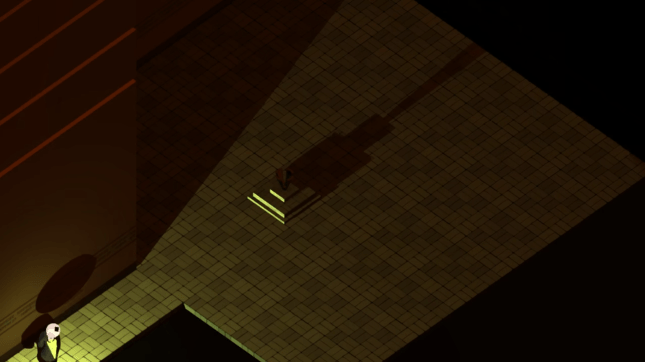
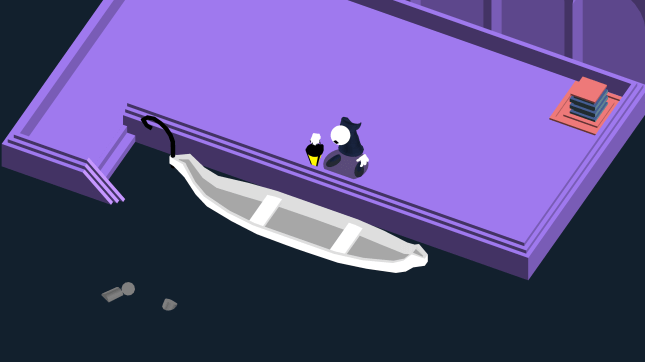
The Throwaway Project used the basic Unity shadow system, where lights dim at a distance. Notice that the player model is the same one that is currently in our demo.
This was the first Phase of our project, and as the name implies it was “thrown away” once we finished it. The purpose of the Throwaway Phase is to work on the game in a safe environment where you can try stuff out without worrying about the public ever seeing it. Our Throwaway Phase ended last November, and we have not released it to the public. It was never designed that way. Save for a few screenshots, you’ll never see the Throwaway project.
That’s because we made it for ourselves (and a select group of testers) and not the general populace. It was a Unity project where Jack could write and rewrite code, create test scenes, and nail down tricky mechanics. I used it as a way to refine my artistic pipeline and answer some of the more fundamental questions about the game’s art, like “what is the visual style of the game?” and “how does artwork get from my modeling program into Unity?”
Answering these basic questions saved us from dealing with some big headaches later. No one wants their engineer to build an entire game in a game engine only to find out that the artist can’t import their work into that same game engine. A mistake like that could cost you months – better to do a quick test during the Throwaway Phase and get that risk out of the way.
The dirty secret of the Throwaway Phase is that the game could have died there. In fact, the Throwaway Phase is meant to be a “proving ground” for the game. Is it a fun game even when it doesn’t look pretty? Is there something unique about it that makes it worth creating? In my life, I’ve thrown out many game designs at this stage because they were unworthy of more of my time. Don’t be afraid to do this! Time flies – remember death. Life is too short to work on bad games.
Obviously, we knew right away that we wanted to keep working on Where Shadows Slumber (which was called Light / Shadow Game at the time), so we migrated from the Throwaway Phase to the Press Release Phase. We kept some of the code and one 3D model, but from here on out we recreated everything from scratch. That might sound like a real waste of time, but it’s not. People learn skills quickly. I’m a better artist than I was a few months ago just because of my time working on the game. I prefer to start over rather than use shoddy files crafted by the inferior Frank of the past.
The Press Release Phase
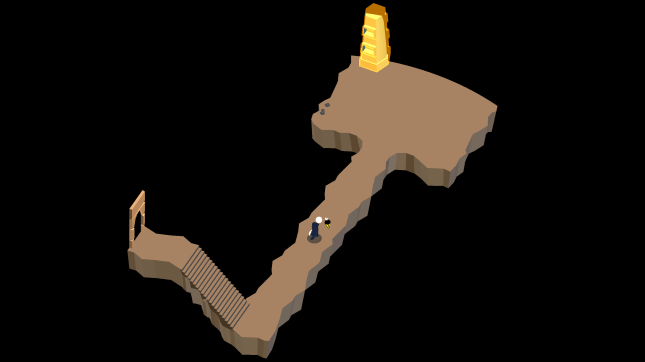
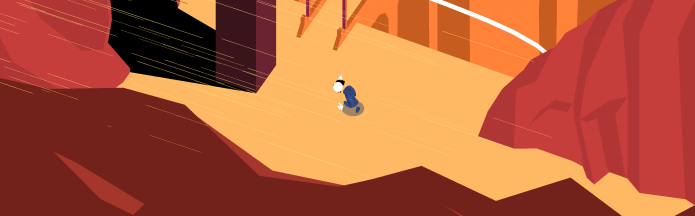
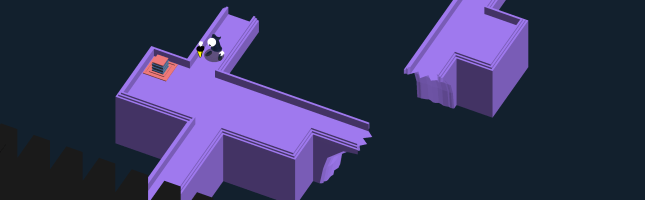
Level 7 of the ‘Press Release’ Demo of Where Shadows Slumber.
Don’t be fooled like I was – this Phase is not meant for you to advertise your game or begin talking to customers. That was a mistake I made early on. This Phase is when we created the demo that is available now on the store through the App Store and Google Play. It’s a development Phase designed to prepare you for the Production Phase, where development and marketing combine until they crescendo into a record-breaking app launch.
We focused on creating something worth releasing. We decided on a 10 level demonstration of the game’s mind-bending mechanics, haunting ambiance, and beautiful worlds. Doug Lombardi suggested 3 for Portal, but levels in Where Shadows Slumber go a lot faster than the puzzles in Portal, so 10 made more sense. The production quality of this “Press Release” project is meant to reflect that of the final game, so it’s a huge step up from the Throwaway.
Currently, it’s taking a bit longer than we’d like. This is on me – the art for a game like this tends to take much longer than the coding, and I’m the only artist on the team. We’re not moving at a good pace, so I’m planning on restructuring my life a little bit to spend more time each week working on the game.

Google Play aggregated ratings as of December 12th. (Source)
There is good news, though – the glowing response to our released demo has motivated me to work harder! Believe it or not, this is actually part of the project management plan. Keeping developers motivated is difficult. If you release your game too early, you’ll get critical feedback that will make you want to quit. If you wait too long to release your game, the developers might get anxious that they’re working on something horrible that no one has had the chance to openly criticize. Engaging the community at the right time isn’t just a good marketing strategy. It’s also part of keeping morale up!
The Production Phase

The final designs we’re considering for the official logo. Credit: Zak Moy
We have not yet begun this Phase in earnest, although Jack has been working on some preliminary narrative designs. He’s also got a notebook chock full of level designs, just waiting to be put into Unity. Above, you can see the logo designs our talented friend Zak Moy has been working on for us.
This is the most straightforward Phase to explain because it’s what everyone assumes – you build the game that you’ve already started and engage your audience along the way. Using Facebook, Twitter, blogs (spoiler: you’re reading part of our marketing plan right now), Reddit, and anything else you can get your hands on, you drip information out to the community as development progresses. The desire to have new content to show them acts as a motivator, causing you to actually produce new content.
Marketing and development coincide on launch day. A terrible crisis happens (one always does!) and then the launch goes well from there. I’ll have to write about this Phase again once we’re finished. The picture I’m painting right now is a bit too rosy and it’s actually getting me worried.
We’ll have the most work to do in this Phase, but also the most clarity. There’s no more room for wiggle-room. We know our game won’t have jumping, multiplayer, shotguns, real-time strategy base building, or MOBA mechanics. With a clear idea of what we’re building (and what we’re not building), development can go smoothly without taking us down the rabbit holes of scope creep.
Recap
Let’s look at our estimated Phase times again:
- The Throwaway Phase (May 11th, 2015 – November 9th, 2015) 6 months
- The Press Release Phase (November 9th, 2015 – January 10th, 2017) 14 months
- The Production Phase (January 10th, 2017 – December 31st, 2017) 12 months?
There’s a big problem with this. Can you see it? The Production Phase is estimated to take less time than the Press Release Phase, even though the Press Release Phase is just 1/10th of the effort it will take to make the final game. How do we account for this?
Part of the reason we’re confident of our delivery date is that, as the project rolls onward, we make concrete decisions about the game every day. Each decision we make means there is less uncertainty in the work we do, which in turn allows us to move on confidently in our plan. Ideally, by the time we begin the Production Phase in January, we are moving full steam ahead at a rapid pace. We’ll know the story, the characters, the setting, the levels, and the mechanics. The code will be finalized for the most part, and the artwork will follow from our concrete plan.
It’s an ambitious goal, and I wouldn’t be surprised if we get delayed by a month or two. That’s why I want to stress that this is an estimate and not a promised release date.
Would We Follow This Plan Again?
Patcha approves. If he approves, then so do I!
I think this is a great way to make games. It gives you room to experiment and even trash the project if you don’t think it’s a winning idea (during the The Throwaway Phase). It allows you to get a build out to the community early and build excitement for your game (during the Press Release Phase). Finally, when it comes time to develop, you can do so with a clear mind (the Production Phase).
Big budget game studios have their own way of doing things, but if you’re a small team like us I can’t recommend this process highly enough. For projects with a larger scope (blockbuster FPS games, RPGs) you may want to consider having numerous Press Release Phases so you can take miniature steps toward Production while keeping your growing player base happy.
= = = = = = = = = = = = = = = = = = = = = = = = = = = = = = = = = = = =
Thanks for taking the time to read about our process. Are you a game developer or software management expert? How have you structured your projects in the past? Let us know in the comments below! Next week, Jack will post a detailed overview of how he implemented the game’s shadow mechanic in Unity, so get your software engineering hat ready!
Frank DiCola is the founder and CEO of Game Revenant, a game studio in Hoboken, NJ.








 Game Revenant