State Of The Art – July 2017

Welcome to State Of The Art, July 2017 edition! This monthly progress report is written by Frank DiCola and is focused entirely on how the game’s visuals have improved in the past month. Without further ado, let’s explore the major leaps forward we took in July!


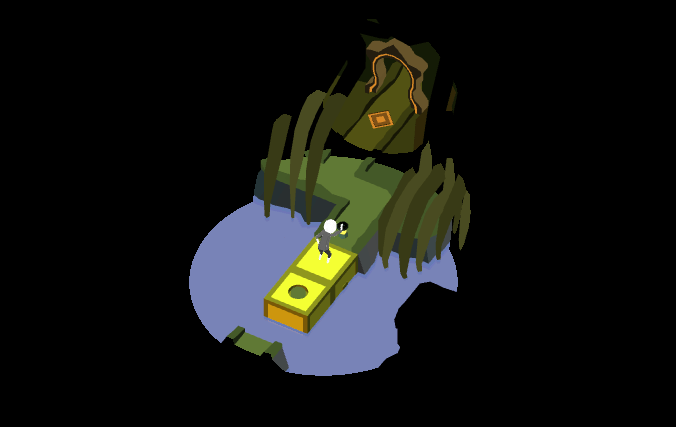
MountDoom

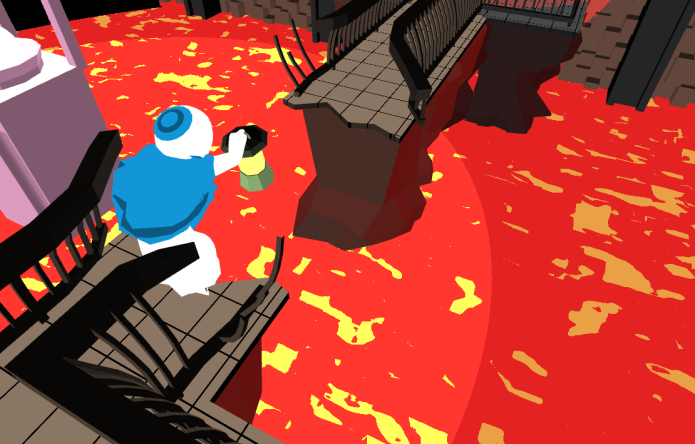
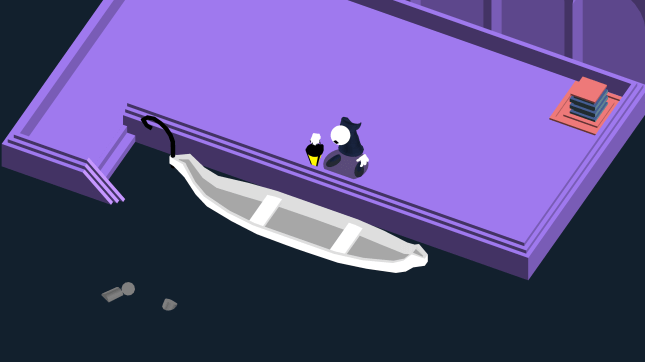
Pictured above is our classic scene where Obe throws the ring into Mt. Doom

World 1 (The Jail) Is Ready

It looks like the entire first real World, our volcanic prison that you must escape from, is ready! I say “ready” and not “finished” because nothing in the art world is ever truly finished. But these five Levels are “ready” because I’m ready to move on to something else without worrying about these all the time. They look good. They look pretty done. Will I need to tune them up later? Absolutely. But I’m not going to spend more time getting these Levels from 90% to 100% when there are some Levels at 0%.

Having said that, bask in the molten glory that is World 1!

1-1.png

Level 1-1, “Light” is the first Level of the Jail World.

1-2.png

Level 1-2, “Detour” shows off some of the cell blocks in this prison.

1-3.png

Level 1-3, “Lock” contains a rarely used side-exit door.

1-4.png

Level 1-4, “Pressure” needs a different back wall than the one currently shown.

1-5

Level 1-5, “Ascent” has a lot of annoying overlapping lights and we’ll fix those later.

What do you think of these Levels? Please leave a comment with your feedback, as I have a few concerns of my own and I want to see if casual observers would notice them. Maybe I’m just paranoid!


Obe

Obe’s Clothing Is Ready

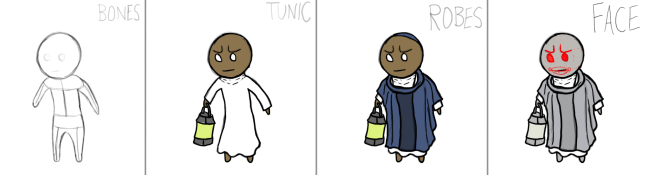
Our main character has quite the wardrobe. He’s wearing a lot of complicated clothing! Some of it is made from animated mesh, but other parts are physically based cloth that Unity simulates in real-time.

Getting this right has taken me a long time. But now I’m done messing with it and I’m ready to give it the ultimate stress test – cutscenes, weather (wind and rain!), and lots of animation. I believe his accessories can withstand the stress and remain looking cool.

Obe-Pants.PNG

Dude what happened to your pants?!

Undoubtedly, his clothing is going to get messed up sometimes. We’ll just need to identify those situations and preempt them with special scripts that manage his robes and keep them from going haywire.

Obe-Detail.PNG

Currently, the robe can clip through his white alb and skirt. This should be fixed by launch.

What do you think of his clothing? Is it worth it to have such a detailed robe on such a small character? I promise, for these close up cutscenes, it will look great!


River

What To Expect In August

This month, I’m going to aggressively go after the Levels in the River World. I’ve been so excited to work on that one for a long time! It’s wide open (as opposed to the claustrophobic Forest and Jail) which is a nice change of pace. The color scheme is totally unique, and the assets are really interesting. There’s some creepy story stuff happening there as well.

I also want to get cutscenes rolling, probably the first two (Intro to Forest, Finale to Forest) since they are the first things players will see. I don’t like the idea of waiting until the very end of the development cycle to start cranking out cutscenes. These things are going to be trailer-fodder and they need to look awesome. A rushed cutscene is probably going to end up being a cut cutscene 😛

See you again on September 1st!


= = = = = = = = = = = = = = = = = = = = = = = = = = = = = = = = = = = =

We hope you enjoyed this update about the game’s artwork. Have a question about aesthetics that wasn’t mentioned here? You can find out more about our game at WhereShadowsSlumber.com, ask us on Twitter (@GameRevenant), Facebookitch.io, or Twitch, and feel free to email us directly at contact@GameRevenant.com.

Frank DiCola is the founder of Game Revenant and the artist for Where Shadows Slumber.

Designing Obe, The Mysterious Protagonist of Where Shadows Slumber

For years, Jack and I have been referring to the main character of Where Shadows Slumber by euphemisms such as “the main character”, “the protagonist”, and “little lantern dude”. Now that the game’s story is coming together, we have finally given him a name! In this blog post, we’re going to do a deep dive into how we gradually got to this point in the character design process.


Obe

Meet Obe (oh-bee)

In Where Shadows Slumber, you guide Obe on his journey using magical shadows that emanate from a mysterious lantern. But the lantern is not the only thing that’s full of mystery. Who is Obe? Why has he come to this strange land? And is that a yarmulke?

We can’t give too much of the story away at this time. You’ll have to play the game when it comes out next year to find out the full story. Suffice it to say, Obe is an elderly man at the end of his life on a quest to set things right. (We would have called the game Old Man’s Journey, but someone beat us to the punch.) Obe didn’t ask for his lantern, but he would be lost without it.

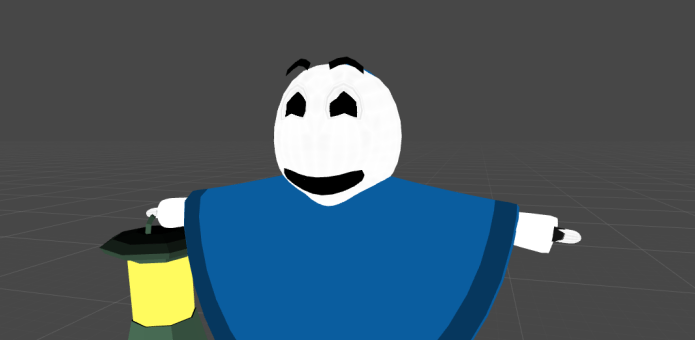
The artwork above is the final rendering of how the character will appear in-game. Once I rig his cloth chasuble to work properly, I’ll post some videos of him in action. Before I do that, let’s take a journey through time to see how we got to this point.


thresh_by_predator95-d6zmsh6

You Inspire Me!

From the beginning, Jack and I knew that we would need a character that the Player could guide through the world. Something about our game’s shadow mechanics made us feel that it had to take place in a dark, mysterious landscape. We couldn’t go “full abstract” and make the main character a capsule or something. (Though, that would have made my job as an artist much easier!) We needed to show the shadows interacting with real objects in a real place, which meant the protagonist needed to be an actual humanoid. Moreover, the protagonist either needed to emit light or carry some kind of light source with them. We decided a lantern would look cool, and started exploring characters in popular culture that would inspire our character’s design.

maxresdefault

Jack suggested Thresh from the online game League of Legends. A sinister character, Thresh uses a lantern and a hooked chain to grab his enemies and pull them to their doom. He traps people’s souls in his lantern and tortures them for all eternity.

This was a bit too evil for an indie puzzle game. Thresh looks like a take on the grim reaper, and his lantern isn’t even in the forefront of his design. But still, it was an inspiration! If you ever get creeped out by Obe, that’s because of the Thresh-y part of his design.

tonberry___color

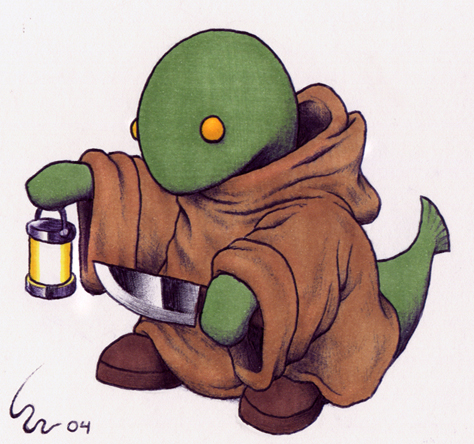
Then I suggested to Jack the design of Tonberry, a strange little green character from the Final Fantasy series. This enemy is apparently quite rare and super dangerous, despite its innocent appearance. Though it has many abilities across multiple Final Fantasy games, the recurring theme is that he slowly advances toward a party member until he is close enough. Then, he stabs them with his knife, delivering an instant kill.

I’m not sure why every character with a lantern in video games is a psycho murderer. That’s a little weird, don’t you think? Surely Where Shadows Slumber will change that perception!

What we enjoyed about Tonberry’s design was the simple, monk-like burlap robes and a nondescript lantern. His disarming appearance was also a huge inspiration for Obe. Now, Obe doesn’t carry a weapon around and he also isn’t a lizard, but his design was heavily influenced by this character.


ConceptArt-Inhabitants_Body

The Drawing Board

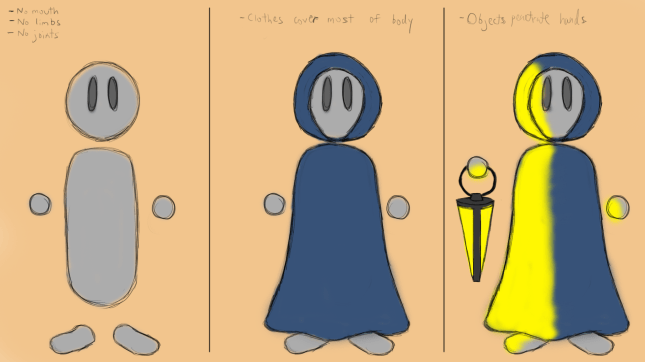
With a few key characters in mind, I set about drawing lots of pictures of what the game’s protagonist could look like. I began by deconstructing Thresh and Tonberry and distilling them into “mobile” versions. Remember, our game takes place on a small screen, so the character’s key elements must be clearly visible from far away.

ConceptArt-Protagonist-Sketches

What would chibi-Thresh look like? What elements can be stripped away and still retain the design? What elements are not necessary for a peaceful puzzle game?

ConceptArt-GhostCharacter.png

Simple designs for the character. Bottom Left: an unused design for a horrifying shadow creature that only appears in darkness and eats the souls of its victims.

ConceptArt-Protagonist-Body.jpg

The character’s robe became a central part of the design here, acting like Thresh’s gathering shadows and unearthly aura.

As you can see from the drawings, I tried to straddle the line between “cute and disarming” and “somehow a little sinister”. It was important to us that the Player trust the character in the beginning of the game, and then question their motives a little later on. Also pictured above, you can see the beginnings of some other character designs that would use our humanoid model. From an early stage we knew that if there were other humanoids in this universe, they would look like the main character – just slightly altered.


boat

First Character: Rayman-like

While this was happening, Jack and I were working on the very first iteration of Where Shadows Slumber. It was still just called “Light / Shadow Game” and we needed a character. Based on my drawings – but too scared to actually try using Unity Cloth – I created a simple character in 3DS Max.

Check out the character in action in the video above. He has a little cone shaped lantern, nubby little arms and legs, a fake robe and hood, one rhombus-shaped eye (!), and fingers. While this design is still near and dear to me, it had a lot of flaws.

One Eye Messes With Depth Perception: So apparently when a character only has one eye, it’s super difficult to tell where they are looking or when their head is turning. As humans, we’re much more used to the human face. We subconsciously compare both eyes to each other and make a judgment call about the way the head is turned based on that. A single eye made it difficult to animate the character properly.

Rayman Limbs Mess With Shadows: I love Rayman limbs. By this, I mean “floating hands and feet that aren’t attached to the torso in a visible way”. I think it’s an underused design. However, as much as I love it, it doesn’t work in a game where characters need to cast shadows and have silhouettes that make sense. We had to cut it.


screen_2432x1368_2017-01-24_13-34-45

If At First You Don’t Succeed…

For the next draft of our character model, I took the chibi style to heart and tried to think of a purpose for the character’s robes. It’s not enough to say “he’s wearing robes because he’s traveling and it’s a cloak”. I wanted to give them some kind of a purpose or possible religious significance. Now the character looks more like a cardinal or some kind of priest. This fits with his nondescript age of “old” and allows the Player to begin projecting their beliefs onto the character.

CharacterDesign

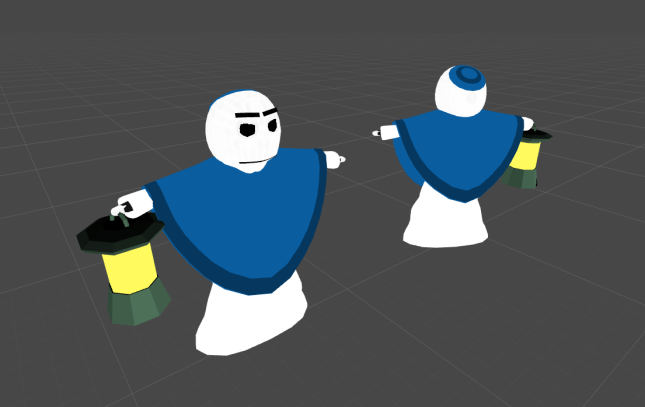
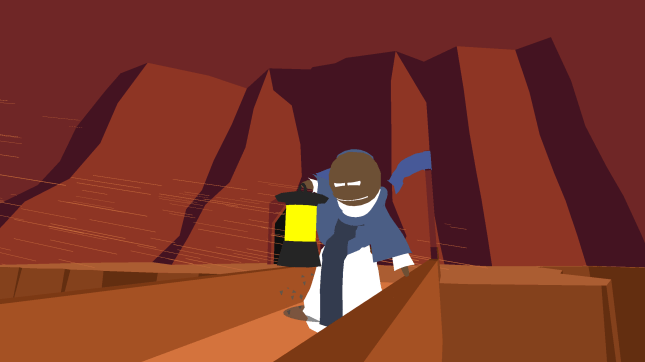
This model ended up being really close to the final design, but it just wasn’t there yet. Troubles with rigging the arms, face, and clothing meant that I needed to take one more shot at it. Still, we’re getting there! This character model appears in our Demo. Check out how the character looks in the Demo’s finale cutscene:

What were we saying about all lantern characters being really violent? Oh well… I guess some stereotypes really are true!


Happy.PNG

Welcome Home, Obe

Designing a character for this long almost feels like searching for a missing person. There are a lot of promising leads, but none of them pan out until finally you happen to stumble across what you’re looking for.

I feel that our main character has finally come home. He has a personality and feels like someone I can’t control anymore. It’s a strange feeling, but I take it as a sign that he will bring joy and intrigue to players around the world that want to unravel his mysterious story.


= = = = = = = = = = = = = = = = = = = = = = = = = = = = = = = = = = = =

We hope you enjoyed this update about the game’s character artwork. Have a question about Obe that wasn’t mentioned here? You can find out more about our game at WhereShadowsSlumber.com, ask us on Twitter (@GameRevenant), Facebookitch.io, or Twitch, and feel free to email us directly at contact@GameRevenant.com.

Frank DiCola is the founder of Game Revenant and the artist for Where Shadows Slumber.

State Of The Art – June 2017

Welcome to State Of The Art, June 2017 edition! This monthly progress report is written by Frank DiCola and is focused entirely on how the game’s visuals have improved in the past month. Without further ado, let’s explore the major leaps forward we took in June!


The Forest Is Starting To Look Finished

Where Shadows Slumber begins with a few short tutorial levels that teach the Player how to play and start the story off with a mysterious event. This takes place in the Forest, or “World 0”, as we’ve been calling it. I’ve recently begun calling it the game’s prelude, which sounds more profound and less technical.

Take a look at this video of the second Level of the game, “Bridge”, in action:

As you can see, the Level is entirely functional and artwork has been attached to every facet of the Level. The things that are missing are either out of my hands (audio, footfall particles when the protagonist walks) or things Jack and I want to leave for the end of the development process (polish on the Draggable “grab” effect).

The toolkit of 3D models I use to build Forest Levels is really coming together. Level 2 served as a good model for how I’m going to decorate Levels 1 and 3. Those have not been started yet, but you can expect them next month!


World Select and Level Select Menus

Where Shadows Slumber is a journey that takes you across a desolate world with a variety of biomes. You begin in a Forest, but you’re soon kidnapped and put into a volcanic Jail. You escape, but only by traveling down a haunted, marshy River… and that’s just the game’s first act!

We found it necessary to group these biomes into Worlds. Furthermore, each puzzle in the game is its own Level. So we needed a screen that allowed Players to view each World and then select the Level they want to play. I wanted to make each World screen inviting, yet spooky. I also wanted to use as much of the existing art in the game as possible.

Below is a video of the World Select Menu in action, including transitions:

Notice how the transitions from World-to-World mirror the shadow mechanic of our game. Including that was extremely important to us!

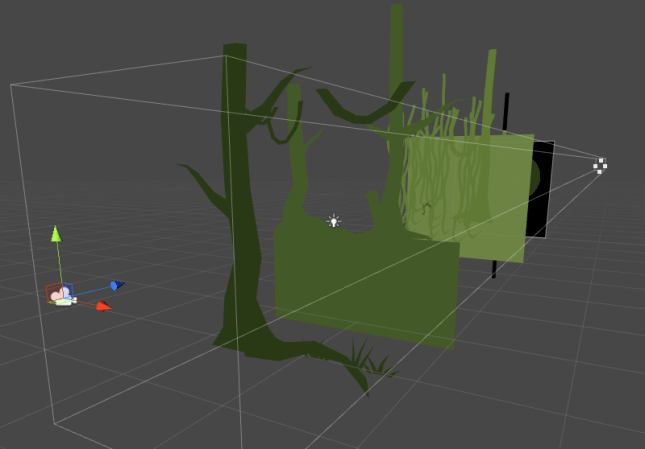
Please know that this menu is not finished yet. The decorations for this menu are entirely downstream of the actual art in the Levels. That’s why I’ve only finished a few of them so far. Believe it or not, while these screens may seem flat, they’re actually produced with 3D models and camera trickery!

Blog-BTS

It’s a cool effect… but that means I need to finish all of the Levels in a World before I can go on to the menu. Dependencies in game development are annoying, but it’s more annoying to ignore them and then come back to find a lot of your work was erased or made worthless because too many underlying elements changed.


We Built This City

The toolkit for the City (World 4) is one of my favorites in the game. The inspiration for this slum town environment was a combination of the poorest regions of India mixed with the pueblo towns of South America. The result is a city that looks hewn out of a mountainside and packed to the gills – once I add the people, that is! During your travels, you’ll go from the poorest area of the City all the way to the King’s palace. Who knows what you’ll find there?

Here’s a screenshot of Level 4-1, where we introduce the concept of Doors that teleport the main character. Check it out:


Over time, this toolkit will grow to include fancier parts of town, including a really cool Level we have planned where you ascend one of the city’s towers. Stay tuned!


Wolf Attack

Last time we saw the Wolf he had just been modeled. This month, I gave his face a fresh coat of paint and worked on his animations. Now he can express a wide range of emotions, from “angry” to “really mad” and even “about to kill someone”! Check it out:

Blog-Wolf.PNG


Works In Progress

Worlds 3 (Aqueduct) and 5 (Hills) have progressed slowly over the past month. Whenever we’re not sure of how a World’s puzzles will look, it’s harder to focus on the art for that World. I like to pick out a really solid puzzle and work to get it to a professional place, but the level design for these two Worlds is still very much a work in progress.

Blog-Aqueduct.PNG

Having said that, I have at least started both of these Worlds using dummy scenes. This design is subject to change, however. I’m still deciding on the key colors for the Aqueduct. Blue feels a bit too obvious. The Aqueduct should be dark and cavernous, but I also want it to be a departure from the two Worlds (Jail and River) the Player just experienced, which are kind of depressing and muddy.

Blog-Hills

As for the Hills, it’s very difficult to create a scene from nature using entirely modular pieces. Sometimes you just need to make something that specifically works for a certain puzzle – especially background mountains. The Hills have a lot of moss-covered rocks and grassy cliff faces. I’m having trouble making puzzle-piece 3D models that can be assembled to look like they fit together to form the rolling hills of Ireland. Expect progress on this World to be quite slow.


Thanks For Reading!

That’s all for now. In the future I’d like to make this update strictly contain videos of the game in action. Screenshots are great, but this is a game, and I want to push myself to film more sections of it and analyze it from every angle (animation, color, sound, feedback). Look out for that in July’s update!


= = = = = = = = = = = = = = = = = = = = = = = = = = = = = = = = = = = =

We hope you enjoyed this update about the game’s artwork. Have a question about aesthetics that wasn’t mentioned here? You can find out more about our game at WhereShadowsSlumber.com, ask us on Twitter (@GameRevenant), Facebookitch.io, or Twitch, and feel free to email us directly at contact@GameRevenant.com.

Frank DiCola is the founder of Game Revenant and the artist for Where Shadows Slumber.

Level Design

We’ve put a lot of work into designing, building, and testing our levels. In particular, now that we’ve got a lot of the other pieces in place and a good amount of user-testing done, we’ve been focusing quite a bit on level design. After all, as a puzzle game, the most important part of our gameplay is the puzzles themselves. An incredible game can end up flopping due to bad puzzle design, and a mediocre one can actually do really well, if the level design is good.

But how does level design actually happen? We have a bunch of levels, but how did we come up with them? What’s the process?


Design Process

4-3 design

Design of an upcoming level, Fountain!

The problem with level design is that it’s an inherently creative endeavor. I’ve always had trouble with this type of task – if I sit down and work on something for an hour, I want to see some measurable progress. But if I try to work on level design for an hour, I could literally just be sitting there thinking the whole time, with nothing to show for it. This (at least for me) is one of the reasons that level design often gets pushed to the proverbial back burner. I always want to work on game features, because I know I can make some progress on them, so I opt to do that rather than level design. However, this can be a dangerous prospect, as this is a great way to end up scrambling for levels, putting too little thought into their design, and releasing a great game with bad puzzles.

You can’t just say “I’m gonna go design a level!” I mean, you can (and sometimes I do), but that’s not the best way to go about it. Unfortunately, you’re really at the whim of your own brain – you have to be struck with inspiration. The best levels I’ve designed didn’t happen during a ‘level-designing brainstorm’. They happened when I was walking down the street, or sitting down at dinner, or pretty much anywhere, when I noticed something that made me think of a cool level. Inspiration isn’t something you can schedule, work hard at, and then just do. It has to come to you, which, for me at least, is terribly annoying.


Designing for Where Shadows Slumber

All of this gets even more difficult when it comes to designing puzzles specifically for Where Shadows Slumber. Any innovative puzzle game has a sort of quirky concept, a hook to get users to take notice and to make the puzzles more unique and interesting. For us, of course, it’s the shadows and the ever-changing nature of the world, and those aspects of the game are what make it the hardest to design for.

So you sit down and design a level. It looks pretty cool, it’s got a nice flow, it seems challenging and fun. You show it to your team, or you start to implement it, and suddenly you realize – it just doesn’t work. There’s one small thing that prevents the level from working, whether it be a light in the wrong place, an object that should cast shadows but can’t, or maybe it’s just too difficult for a user to get. These aren’t great examples, but this type of situation comes up all the time. We designed around 30 levels for Where Shadows Slumber at the beginning of the year, and now we only have around 15. What happened to the other half? There was something small that prevented them from being good levels – and it’s hard to notice any of these issues until you implement the level and test it out.

The other difficult part of designing these intricate levels is actually communicating them to each other. Every level design, no matter how great, needs to withstand the feedback of its peers. The problem is – how can we show these crazy levels to each other?

IMAG0625

Notice how my drawing style is a more clinical, overhead view than Frank’s (above)

We’ve tried drawing them and sending them to each other, but they’re often too intricate to really ‘get’ from a drawing. In the end, the only process we’ve found for sharing levels is to sit down in the same room together and talk through what the level consists of, along with the drawings. Even this isn’t good enough for a lot of the more complex levels – sometimes the only way to show your team the level is to build it! This is very frustrating, especially when you build a level that’s no good, and you have to throw it out, but sometimes it’s a necessary part of the process.


Taking the User into Account

Of course, the real judge of level design is the user. It doesn’t matter if every one of your levels is a masterful blend of elegant design and game mechanics if your users don’t enjoy playing it. This is a pitfall that I continually see people falling into, and, as I recently realized, one in which I lived for a good portion of the development of Where Shadows Slumber. But no longer! Throughout our testing, the users have spoken, and we are listening!
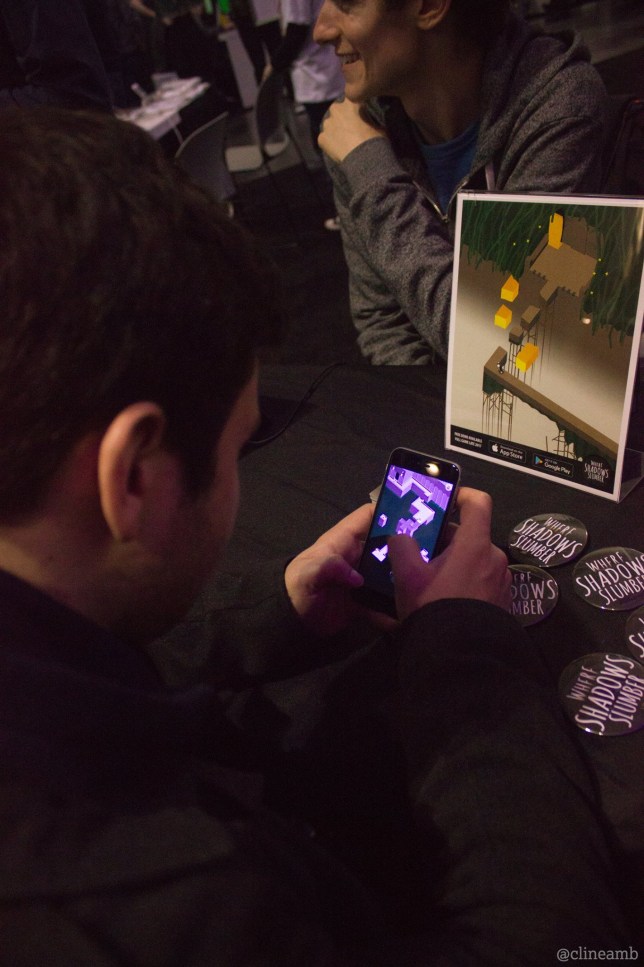
feedback

Getting some feedback on level design!

What does it meant to design for the user? How do we know what they will and won’t like? That’s a difficult question without an easy answer, but I will share some of the tips that I try to stick to.

Listen to your users. This should be obvious, but sometimes it’s not. You have to get your game in the users’ hands, get them playing the game, hear their feedback, and actually listen to it! You’ll never know that users don’t like one of your levels unless you let them test it out, and your level design won’t be good if you disregard their feedback.

Difficulty/learning curve. If your game has a crazy mechanic or concept, the user isn’t going to know how it works – it might seem intuitive to you, but that’s because you’ve been working on the game for so long! You have to make sure that you gently introduce them to the mechanic, in a way that shows how it works while also keeping them hooked. And you have to make sure the difficulty ramps up before too long, or they’ll just get bored of your everlasting tutorial.

Remember that the user doesn’t know what you know. Some people phrase this rule as “treat the user like they’re stupid”, but I think that’s an overstatement. Your users aren’t stupid, they just don’t understand the subtleties of your game the same way you do. They will never do exactly what you expect, and they will never understand the level as well as you do. You need to keep that in mind, examine your level design with an objective eye, and make sure that the experience is enjoyable for the user no matter how they go about solving your puzzles.

Users want to feel smart. The people who pick up and play a puzzle game are usually pretty smart people, and they want to feel smart. This leads to an important design philosophy – make your levels hard, but not too hard. The user doesn’t want to just play an endless parade of easy levels – they won’t feel any satisfaction from beating them. On the other hand, the user doesn’t want to hit a near-impossible level – that’s just frustrating! Beating a level should be easy enough that your users will beat it without getting frustrated, but hard enough that they feel accomplished when they do.

Iterate and Re-use. Sometimes, your users won’t like a level – it happens. In this case, you shouldn’t simply throw the level out. An important part of design is iteration – if your users don’t like a level, figure out why. Figure out what you can do to improve the level. There are parts they don’t like, that you’ll probably end up taking out, but there are most likely some good things about the level, and you don’t want to waste them. Try to fix what the users disliked, and then head back to them and get another opinion.


If I Had to Skimp on Level Design…

Creating a game takes a long time, and there’s a lot to do. Sometimes, you just don’t have the time to pour your heart and soul into every level you design. Sometimes, you just have to put in a few ‘filler’ levels. When is it okay to do that, and what’s the best way to go about doing it?
20170627_124251

“Okay, hear me out: we open on a completely blank screen…”


As much as I’d like to say “all levels are created equal”, I can’t, because it’s not true. Frankly, there are some levels that are a lot more important than others. Which levels are most important? The early ones.

One of the biggest hurdles for a game is what I call the barrier to entry. If I pick up a new game, and the second level is really annoying, there’s a chance I’ll just put it down and never play it again, even if the rest of the game is phenomenal – I have no way of knowing that, and I assume the rest will be just as annoying. However, if I play the exact same game, but it’s the seventh level that’s really annoying, I’ve already played through six awesome levels. The game has earned some credit with me, so I’m willing to let one annoying level slide.

This is doubly true for puzzle games where the user has to learn the mechanics. If you don’t teach the user your mechanics very well in the first few levels, they’re not going to enjoy the rest of the game, because they won’t have learned how to solve the puzzles.

The third argument for this is simply a mathematical one. Every user who plays your game will play the first level. No matter how good your game is, there’s some rate of falloff – some people just stop playing. That means that almost every user plays level two, and most users play level three, and so on. So, the levels that will see the most playtime overall are the first levels, hands down (for any statistics nerds out there, this is basically the same premise as Benford’s Law).

So, if you’re running out of time for level design and you need to skimp on some levels, you should make it levels later in the game. Anyone who has gotten that far already likes the game (presumably), so you don’t need to sell it to them, and they’ll give you a little more leeway.

Now that we’ve tested some of our levels, we’re ramping up into more level design, and I though it would be a good opportunity to show you a little bit of our process. Hopefully you learned something about our level design process, and maybe you can even use it in your own projects!


= = = = = = = = = = = = = = = = = = = = = = = = = = = = = = = = = = = =

If you have questions about our game design process, feel free to contact us! You can always find out more about our game at WhereShadowsSlumber.com, find us on Twitter (@GameRevenant), Facebook, itch.io, or Twitch, and feel free to email us directly with any questions or feedback at contact@GameRevenant.com.

Jack Kelly is the head developer and designer for Where Shadows Slumber.