MAGFest 2017 Rocked!

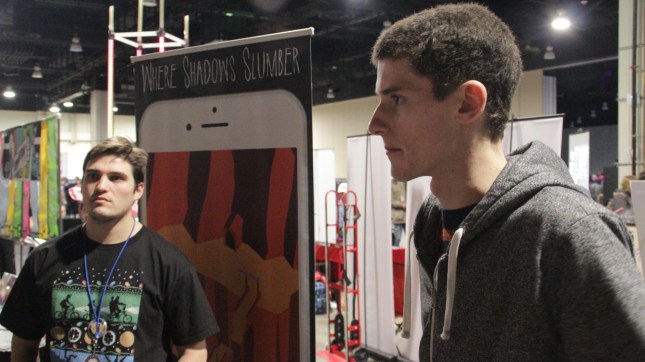
Jack and I have just returned from a wild weekend at MAGFest 2017, and I have nothing but positive things to say about the experience. Back in late September, we applied for MIVS – the MAGFest Indie Videogame Showcase. After multiple rounds of judging, we ended up making it all the way! We were one of many indie game studios that were invited to demo our game at MAGFest.

By invited, I do mean invited. One of the best parts of this convention was that there was no booth price for indie developers. Ticket sales from the convention were used to pay our way, and it meant a lot. MAGFest ended up being one of the less expensive shows Game Revenant has done so far… by comparison, my dalliance to Chicago for Mr. Game! cost me a number that rhymes with gour-gousand.

The most valuable part of these events is getting feedback from players. It isn’t always easy to hear constructive criticism from your fans, but it is necessary. (Jack is going to be writing about this subject next week!) We specifically asked people at our booth to give us “tough love” as we near completion of the demo and move on to production. Without hearing some negative feedback, you’ll never escape the indie thought bubble.

“My game is the best game that’s ever been created. My game. Me. Haha… everyone else must be stupid for not making it first. Not me though. Hahaha…”

– The Indie Thought Bubble

So just to show you we’re listening, here’s three big lessons we learned about our game’s demo (which you can download) that we’ll keep in mind as we start final production this month.


img_2696

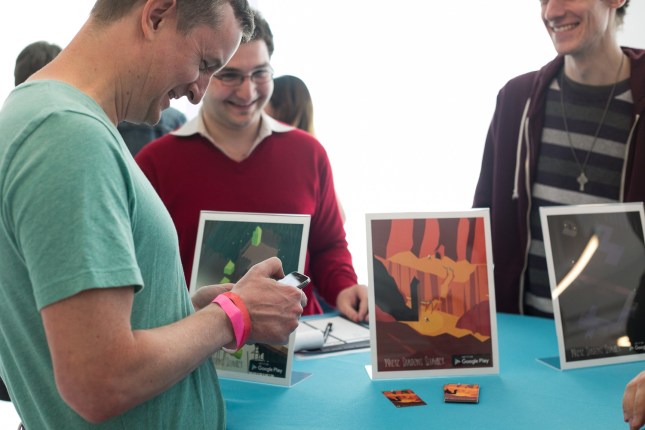
A blue-haired tester at MAGFest plays Level 3, “Canyon” on our iPhone.

1. Make The Game More Difficult

Right now, the demo is a bit too easy. This was something 90% of our testers told us. People would marvel at our cool idea, beautiful artwork, immersive sound (for those that could actually hear it in the crowded convention hall) but stop short before discussing the puzzles.

The most common feedback was that it felt like we had 5 or 6 tutorial levels instead of the 3 we were aiming for. Players don’t like feeling “led” by puzzle games, whether that leading is overt (tap HERE to move! HERE! Right over HERE!) or subtle. We’ve got a subtle thing going on right now, where there are too many easy levels in a row. Players find that to be boring.

We vow to make the game physically relaxing, but mentally challenging! Just because the game is supposed to give you a “moment of zen” on your daily commute doesn’t mean it can’t really make you think. Harder levels, and more compact tutorials, are on the way!


img_2727

The booth got so packed we had to use our phones to demo the game as well!

2. More Narrative Elements

This feedback usually came in the form of a question. “Will there be a story?” It was always a hopeful question, like “I really hope you guys have a story planned.” We would tell people that although the demo won’t have too much (we’re working on a final cutscene for it now) the final game definitely will have a cool story.

Our goal is to tell a story without using words. My passion is animation, and I think body language is an incredibly useful tool for communicating ideas. I don’t think we need dialogue bubbles or text to tell the story of a man’s solitary journey through a dark and strange world. The other reason is because avoiding the use of text will make it easier for our game to launch in other regions where English is not the official language.

So, don’t worry! A story is on the way. Once it arrives, maybe the 18+ rating on the game will seem a bit more obvious…


img_2701

Jack stares off into the distance, permanently scarred by a two syllable word: Grongus.

3. Rename The Game To…

Not all feedback is good. Sometimes, you need to let criticism go. People gave us lots of good ideas, but of course the constant refrain was to rename the game to Where Shadows Grongus. This won’t happen, so I hesitate to even mention it. However it was requested by about 105% of our testers and it seems dishonest not to say something.

The name of the game is final. It performs well on search engines like Google, Yahoo, Bing and DuckDuckGo, just to name a few. We have a real ownership of the string Where Shadows Slumber and a new logo has even been created for that title.

Please stop asking us to change the name. Don’t tweet at Game Revenant about it, and leave our Facebook Page alone. This debate is over.


didwewin

The two of us eagerly awaiting the announcement of awards at the end of MIVS.

Thanks, MIVS!

The MIVS Staff deserves a thank-you for giving us this awesome opportunity. You won’t find this kind of sweet deal at other shows, but MAGFest is a strange animal. Here’s the staff members that worked on this year’s show. Thanks, everybody!

Lexi – layout, hotel & badge handling
Joel – judge coordinating, hotel & badge handling
Nate – map artist, video editor, web content
Kat – MIVSY maker, volunteer scheduler
Marc – Awards spearheader
Kotey – Tournaments
Paige – External entity coordination
Peter – LEDs, new Obelisk lead
Nichole – Press, coordination with internal social media

Tronster – coordinating everything!


= = = = = = = = = = = = = = = = = = = = = = = = = = = = = = = = = = = =

Do you have feedback for us? Did you play the demo of Where Shadows Slumber? Please try it on your Apple or Android device and then leave a comment for us below! We’d also love to hear from you on the official Game Revenant Facebook Page, or on our Twitter account.

Frank DiCola is the founder and CEO of Game Revenant, a game studio in Hoboken, NJ.

2016 Year In Review

Christmas is behind us, and the year is coming to an end. For the final blog post of 2016, we decided to recap the major events in the lifetime of Where Shadows Slumber that occurred this year.

When we began 2016, the game’s demo (currently available on iOS and Google Play) was only 2 months into development. As we created and refined our 10 level demo over the next 12 months, we also had the opportunity to attend some incredible game industry events. Here are some of our favorite development milestones!


indiecade

Jack got cropped out of this picture, as punishment for being too darn tall.

April / IndieCade East

At the very end of April, we had the great fortune of attending IndieCade East. This juried “Show and Tell” event required us to submit an application and go through an approval process before being allowed to showcase the game. We’re so glad that the judges were impressed with our game, even during its infant stages. This was the earliest feedback we got from total strangers, and it was positive yet constructive.


dan

Dan Butchko, the CEO of Playcrafting.

July / Playcrafting Summer Expo

Throughout the year, we attended two of the gaming nights hosted by Playcrafting at Microsoft’s offices in New York City. These intimate gatherings are great for indies looking for a foothold in the industry – lots of people go to them, admission is free for developers, and there’s even free pizza! Both the Spring Expo and July’s Summer Expo were excellent opportunities for us to show off the game and get some candid feedback from strangers.


Us.PNG

September / Studio Madness

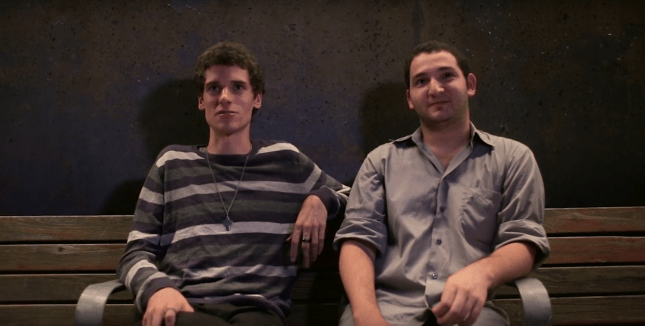
After a busy summer, we finally got a chance to sit down with Earl Madness, a photojournalist we met at IndieCade. Our long form interview is available to view on YouTube – in it, we discuss our hopes and dreams for Where Shadows Slumber, as well as some general thoughts about the game industry.


website

October / Website Launches

Web developer Caroline Amaba pulled off an incredible feat in October – creating a website as beautiful as our game! The site launched in October and has been a massive source of subscriptions to our newsletter, which means traffic is high as well as interest. Keep up the good work, o Mistress of Webs!


02

October / Gameacon

We attended Gameacon 2016 in Atlantic City, NJ for the first time in October. For a new convention, we were pleasantly surprised by the crowd that came to our table to see Where Shadows Slumber. To top it all off, we were nominated for a Crystal Award – Best Mobile Design! Unfortunately, we did not win. But the experience really helped shape the future strategy of the game, and for that we are thankful!


boat

November / The Demo Launches

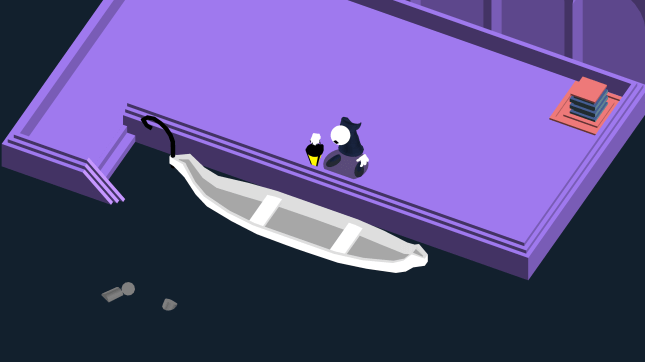
On the first day of November, we launched our game on Google Play! Shortly afterward (November 2nd, or midnight on the 3rd…) we launched our game on the App Store. We don’t like to talk about that scheduling mishap, but we should.

A word of caution: when you schedule an app to “release” on the App Store at a certain time on a certain date, the game is not available at that time on that date. Rather, it begins processing at that time and date and will be on the store a solid 24 hours later. The good news is, it happened to the demo and not the final game’s release! We won’t make that mistake again.


mivs

November / Accepted Into MIVS

After an arduous submission process, Where Shadows Slumber was accepted into MAGFest’s Indie Videogame Showcase (MIVS). We’ll have the good fortune of attending this event in just over a week (Jan 5th – 8th) at National Harbor, Maryland. This is our first time attending the Music and Gaming Festival in any capacity, so it’s going to be a wild ride! We’ll keep you posted on how that turns out just after we return.


bunni-18-of-80


December / Playcrafting and 16 Bit Awards

Our previous attendance at two Playcrafting events made us eligible to apply for a ’16 Bit Award. We had no idea at the time, but apparently Playcrafting holds a massive award ceremony at the end of every year! Our submission was accepted and we were officially nominated for Best Mobile Game. Although we didn’t take home the grand prize, we had a blast at the ’16 Bit Awards. They went all out for this thing! The event had free food and a live band, and we got to hang out with some really cool developers. 10/10, would go again!


fireworks

That’s All For Now!

We’re going to save the “look ahead” for a future blog post, where we’ll discuss what to look forward to in 2017. Some major events are just around the corner – and there is at least one morsel of news that we are legally barred from publicly announcing. (Don’t worry, it’s good news!)

This year has been good to us. We hope it has been good to you, too. If not, well… just wait longer! 2017, here we come!


= = = = = = = = = = = = = = = = = = = = = = = = = = = = = = = = = = = =

How was your year? We’d love to hear about any cool projects you’re working on. Maybe you’ve made progress on your game in a significant way – or perhaps 2017 is the start of something new? Whatever the case may be, feel free to use our comments section as a way to get the word out about your game! See you in the new year.

Frank DiCola is the founder and CEO of Game Revenant, a game studio in Hoboken, NJ.

Process Spotlight: Three Phases

Last week, Jack described the creative impulse that drove him to invent the game’s unique shadow mechanic. This week, I want to go in a totally different direction. We’re going to zoom out and look at this project – all of Where Shadows Slumber – from 1,000 yards away and see what it looks like. From this distance, we don’t care about beautiful art, clever mechanics, stable builds, or challenging puzzles. All of that is assumed. We only see a calendar. Days turn into weeks, which become months, and then years.

Wait a second – this article won’t make much sense to you if you’ve never played Where Shadows Slumber before. The demo is available on both major app stores, so download it and give us a review before you read on:

The App Store  |  Google Play

Out here, we are 100% focused on project management. This blog post is for anyone who’s ever wondered “How do you make a game? Where do you start? How do you know when you’re done? When does everything that happens, happen?”

To be honest, we’re not entirely sure. This is only our third collaborative game project, and it’s the first one we’ve done with serious financial goals in mind. So take our advice with a grain of salt: it might not work for your game project, and it might not even work for us.


Doug Lombardi Shows Us The Way


capture

Doug Lombardi schools the Stevens Game Development Club via Skype.

In my final year of graduate school at Stevens, the game development club hosted a truly awesome event: Doug Lombardi, the Vice-President of Marketing at Valve Software, Skyped into our weekly meeting to give us sage game development wisdom. I had the honor of attending!

His full talk can be found here, but I can give you a mangled, shortened version. When asked about the game development process, he said that if he had to make Portal all over again today he would start by finishing the first three levels. “Make sure it looks incredible and plays like butter – then, send it out to any journalist that will pick up the story.” The idea was simple. Your first priority ought to be creating a polished, perfect snippet of your game that you can show the public. While they get excited about that appetizer, share it with their friends, and begin engaging with you, you can develop the final game. By the time the finished product launches, everyone is excited for it because they’ve had a taste and they want more. Additionally, websites like Polygon love to be known for covering interesting indie games before anyone else.

Doug Lombardi knows what he’s talking about. This is his job! But this strategy is not something that young developers ever think of. “Why would I show someone my game before it’s done? Why would I only work on a portion of the game instead of the whole thing?”

In today’s culture, the hype surrounding new games is just an assumed part of your marketing plan. Games that have been released are fun to play – but people enjoy speculating about games that aren’t out yet even more. Gamers love to theorycraft about what a game is going to be like before they know all the details. It’s a coping mechanism to deal with the anticipation of waiting for launch day.

The idea of making a “press release” version of the game was not something we ever considered before, but the idea informed our thinking so much that we planned our entire development effort around this idea. Because of Mr. Lombardi’s excellent advice, we decided at the outset to structure the project into the following 3 Phases:

  • The Throwaway Phase
  • The Press Release Phase
  • The Production Phase

Using this strategy, our complicated game is actually broken down into three small projects, each one larger then the next. This lets us take on selective parts of the game as we are ready for them. Unfortunately, I failed to put timeboxes on these Phases, which sets out expectations about how long each Phase should take to complete. This was a big mistake, and it meant that we (ok, mostly just myself) were allowed to procrastinate, stretching the Phases for a bit too long. Since there are no estimates on these Phases, I’ll just show you how the project is shaping up based on the data we’ve collected on ourselves during the course of the project:

  • The Throwaway Phase (May 11th, 2015 – November 9th, 2015) 6 months
  • The Press Release Phase (November 9th, 2015 – January 10th, 2017) 14 months
  • The Production Phase (January 10th, 2017 – December 31st, 2017) 12 months?

Let’s talk about each Phase in some more detail, and then we’ll analyze where the project is at right now.


The Throwaway Phase
 

Chonguis.PNG

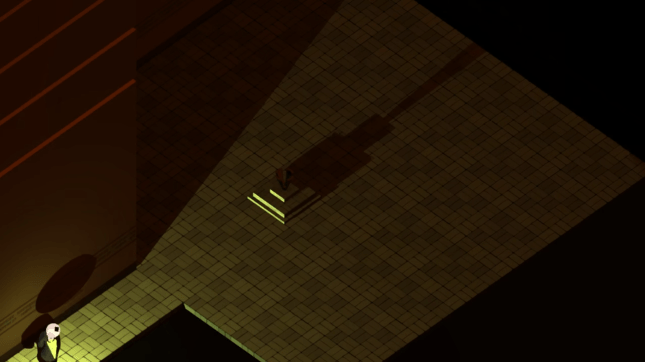
The Throwaway Project used the basic Unity shadow system, where lights dim at a distance. Notice that the player model is the same one that is currently in our demo.

This was the first Phase of our project, and as the name implies it was “thrown away” once we finished it. The purpose of the Throwaway Phase is to work on the game in a safe environment where you can try stuff out without worrying about the public ever seeing it. Our Throwaway Phase ended last November, and we have not released it to the public. It was never designed that way. Save for a few screenshots, you’ll never see the Throwaway project.

That’s because we made it for ourselves (and a select group of testers) and not the general populace. It was a Unity project where Jack could write and rewrite code, create test scenes, and nail down tricky mechanics. I used it as a way to refine my artistic pipeline and answer some of the more fundamental questions about the game’s art, like “what is the visual style of the game?” and “how does artwork get from my modeling program into Unity?”

Answering these basic questions saved us from dealing with some big headaches later. No one wants their engineer to build an entire game in a game engine only to find out that the artist can’t import their work into that same game engine. A mistake like that could cost you months – better to do a quick test during the Throwaway Phase and get that risk out of the way.

The dirty secret of the Throwaway Phase is that the game could have died there. In fact, the Throwaway Phase is meant to be a “proving ground” for the game. Is it a fun game even when it doesn’t look pretty? Is there something unique about it that makes it worth creating? In my life, I’ve thrown out many game designs at this stage because they were unworthy of more of my time. Don’t be afraid to do this! Time flies – remember death. Life is too short to work on bad games.

Obviously, we knew right away that we wanted to keep working on Where Shadows Slumber (which was called Light / Shadow Game at the time), so we migrated from the Throwaway Phase to the Press Release Phase. We kept some of the code and one 3D model, but from here on out we recreated everything from scratch. That might sound like a real waste of time, but it’s not. People learn skills quickly. I’m a better artist than I was a few months ago just because of my time working on the game. I prefer to start over rather than use shoddy files crafted by the inferior Frank of the past.


The Press Release Phase
 

screen_2844x1599_2016-12-12_14-00-40

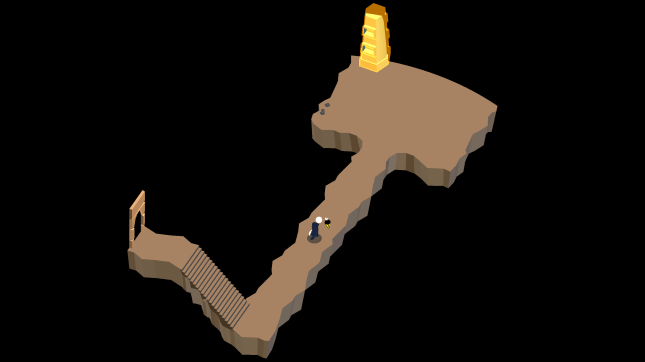
Level 7 of the ‘Press Release’ Demo of Where Shadows Slumber.

Don’t be fooled like I was – this Phase is not meant for you to advertise your game or begin talking to customers. That was a mistake I made early on. This Phase is when we created the demo that is available now on the store through the App Store and Google Play. It’s a development Phase designed to prepare you for the Production Phase, where development and marketing combine until they crescendo into a record-breaking app launch.

We focused on creating something worth releasing. We decided on a 10 level demonstration of the game’s mind-bending mechanics, haunting ambiance, and beautiful worlds. Doug Lombardi suggested 3 for Portal, but levels in Where Shadows Slumber go a lot faster than the puzzles in Portal, so 10 made more sense. The production quality of this “Press Release” project is meant to reflect that of the final game, so it’s a huge step up from the Throwaway.

Currently, it’s taking a bit longer than we’d like. This is on me – the art for a game like this tends to take much longer than the coding, and I’m the only artist on the team. We’re not moving at a good pace, so I’m planning on restructuring my life a little bit to spend more time each week working on the game.

blognus

Google Play aggregated ratings as of December 12th. (Source)

There is good news, though – the glowing response to our released demo has motivated me to work harder! Believe it or not, this is actually part of the project management plan. Keeping developers motivated is difficult. If you release your game too early, you’ll get critical feedback that will make you want to quit. If you wait too long to release your game, the developers might get anxious that they’re working on something horrible that no one has had the chance to openly criticize. Engaging the community at the right time isn’t just a good marketing strategy. It’s also part of keeping morale up!


The Production Phase


logos

The final designs we’re considering for the official logo. Credit: Zak Moy

We have not yet begun this Phase in earnest, although Jack has been working on some preliminary narrative designs. He’s also got a notebook chock full of level designs, just waiting to be put into Unity. Above, you can see the logo designs our talented friend Zak Moy has been working on for us.

This is the most straightforward Phase to explain because it’s what everyone assumes – you build the game that you’ve already started and engage your audience along the way. Using Facebook, Twitter, blogs (spoiler: you’re reading part of our marketing plan right now), Reddit, and anything else you can get your hands on, you drip information out to the community as development progresses. The desire to have new content to show them acts as a motivator, causing you to actually produce new content.

Marketing and development coincide on launch day. A terrible crisis happens (one always does!) and then the launch goes well from there. I’ll have to write about this Phase again once we’re finished. The picture I’m painting right now is a bit too rosy and it’s actually getting me worried.

We’ll have the most work to do in this Phase, but also the most clarity. There’s no more room for wiggle-room. We know our game won’t have jumping, multiplayer, shotguns, real-time strategy base building, or MOBA mechanics. With a clear idea of what we’re building (and what we’re not building), development can go smoothly without taking us down the rabbit holes of scope creep.


Recap


Let’s look at our estimated Phase times again:

  • The Throwaway Phase (May 11th, 2015 – November 9th, 2015) 6 months
  • The Press Release Phase (November 9th, 2015 – January 10th, 2017) 14 months
  • The Production Phase (January 10th, 2017 – December 31st, 2017) 12 months?

There’s a big problem with this. Can you see it? The Production Phase is estimated to take less time than the Press Release Phase, even though the Press Release Phase is just 1/10th of the effort it will take to make the final game. How do we account for this?

Part of the reason we’re confident of our delivery date is that, as the project rolls onward, we make concrete decisions about the game every day. Each decision we make means there is less uncertainty in the work we do, which in turn allows us to move on confidently in our plan. Ideally, by the time we begin the Production Phase in January, we are moving full steam ahead at a rapid pace. We’ll know the story, the characters, the setting, the levels, and the mechanics. The code will be finalized for the most part, and the artwork will follow from our concrete plan.

It’s an ambitious goal, and I wouldn’t be surprised if we get delayed by a month or two. That’s why I want to stress that this is an estimate and not a promised release date.

Would We Follow This Plan Again?
 

patcha

Patcha approves. If he approves, then so do I!

I think this is a great way to make games. It gives you room to experiment and even trash the project if you don’t think it’s a winning idea (during the The Throwaway Phase). It allows you to get a build out to the community early and build excitement for your game (during the Press Release Phase). Finally, when it comes time to develop, you can do so with a clear mind (the Production Phase).

Big budget game studios have their own way of doing things, but if you’re a small team like us I can’t recommend this process highly enough. For projects with a larger scope (blockbuster FPS games, RPGs) you may want to consider having numerous Press Release Phases so you can take miniature steps toward Production while keeping your growing player base happy.


= = = = = = = = = = = = = = = = = = = = = = = = = = = = = = = = = = = =

Thanks for taking the time to read about our process. Are you a game developer or software management expert? How have you structured your projects in the past? Let us know in the comments below! Next week, Jack will post a detailed overview of how he implemented the game’s shadow mechanic in Unity, so get your software engineering hat ready!

Frank DiCola is the founder and CEO of Game Revenant, a game studio in Hoboken, NJ.

If Dishonored 2 Repeats This One Mistake, The Entire Game Will Be Ruined

All it took was one line of text to ruin the original Dishonored for me. And it could happen to the next game in the series without the developers even realizing it.

This post contains marketing materials from the upcoming title, Dishonored 2. If you want to keep yourself “in the dark” for a pristine experience, stay back!

The recent release of Corvo’s Gameplay Trailer (above) inspired me to write about what I believe is fatal flaw in the original Dishonored. It was merely a single line of text – and I’m not referring to programming code.

Let’s make something clear first, however. This is not a review of the original Dishonored for PC and consoles. Dishonored 2 has not been released yet as of this moment, so this post is not a review of that game either.

In fact, just to avoid any confusion, you should read this article as if I thought Dishonored was the perfect game in every way. No flaws, no bugs, no issues at all.

Except one.

dishonoredloadingscreen

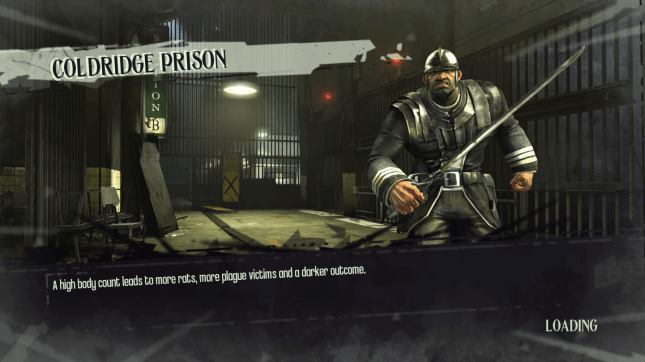
This is one of the loading screens you see before the game’s first level, Coldridge Prison. Do you see the problem? Blink and you’ll miss it. Read that line carefully.

A high body count leads to more rats, more plague victims and a darker outcome.

This single line of text, repeated ad infinitum, set the stage for completely ruining my experience with Dishonored.

A Darker Outcome

I started Dishonored on a pretty high difficulty, so the first few attempts at escaping my prison cell were met with defeat after humiliating defeat. But honestly, I didn’t mind at all! I was enjoying experiencing a new first person combat system that required timing and good reflexes. Dying constantly to the first few guards in the game was a pleasure.

Unfortunately, it also caused me to have to reload my save state numerous times. (Dying tends to do that.) I was playing the game with my older brother observing at the time. Every time I died, we would see the message in the loading screen above: Kill people in this game and it will end badly for you in the end.

Eventually, the long-term planner in me could ignore the warning no longer. I couldn’t stand the thought of wasting my time playing the game the wrong way. I tried to ignore it at first, but my brother and I both came to the same conclusion: since this is the beginning of the game, and I’m starting with a clean slate, I might as well “keep it clean”, right? It’s not like I already had a track record of murdering guards by the dozens – this was literally the first level of the game. I could be any kind of Corvo that I wanted.

And so, I made the fateful (terrible) decision to play the game non-lethally. Repeated exposure to the warning above had convinced me that, although being a violent psychopath might be more fun, it’s not worth it in the end! So I dutifully choked guards, stuck to the sleeping dart crossbow, and avoided conflict wherever possible. Whenever I messed up, it was time to reload my save. That meant I needed to save constantly, to preserve the tiny bits of progress I made as I tiptoed through the game.

The end result? I experienced the darkest outcome of all: a ‘beige’ Dishonored with all of the fun and controversy taken out. I didn’t even kill Daud, the man responsible for setting the game’s events in motion and murdering the Empress I was sworn to protect. I locked myself out of playing the revenge fantasy I purchased. And for what? It didn’t really feel like the game was designed for the non-lethal approach at all.

Instead, I felt like I played the game backwards. Perhaps I should have played it once all the way through as a violent madman, slaughtering anyone who looked at me the wrong way. Then, after realizing the terrible result of my actions, it would be time to play the game a second time with the added constraint of being an unseen pacifist. Guided by age and experience, I would be able to complete this more challenging version of the game – and be rewarded with a more peaceful ending.

This Warning Is Hypocritical

I have no idea why that loading screen message needed to be in the game. If all it did was warn you about the rats and plague victims, that would be fine. But warning me about the ending of the game set me up to police my own experience in a way that completely killed the fun.

bc425956be63256e34e24adf05ca66a58cd9c089

Dishonored is a stealth game that can be played in many ways, but it has so many more options for crazy stuff if you play it without worrying about the moral consequences of your actions. Most of the game’s talents didn’t seem usable to someone like me. A lot of the game’s new items were lethal by design and thus, useless. But the worst part is that by warning me about the game’s Low Chaos / High Chaos system, it caused me to never actually see it occur.

If I had been allowed to play the game and examine the consequences of my actions, I might have made the decision on my own to kill fewer guards or abandon murder altogether. But I never saw swarms of rats because I was always on Low Chaos. Plague victims were just a part of the story and hardly came up in the game.

The warning in that loading screen also flies in the face of the central thrust of the game’s marketing up until that point. Don’t believe me? Watch some old trailers for Dishonored. The game’s catchphrase before it released was “Revenge Solves Everything.” (The commercial I just linked could alternatively be called “3 minutes of people dying horribly.”) I counted a single (!) non-lethal stealth kill. After months of buildup through violent trailers, the perfect setup for a revenge story, and an intro cutscene designed to get your blood boiling… you tell me not to kill people?

The irony is, in worring about not wanting to “waste my time playing the game the wrong way”, I ended up doing exactly that. And I never returned to play through the game again, or purchase the DLC.

So the moral of the story is: if your game has a range of options, but one of those options is clearly the most fun way to play, make sure you encourage players to take that route. Sure, they might regret it later when they realize the whole kingdom falls to death and violence, but that’s the point! You want players to have those moments in gaming. It’s always better to give people experiences that confirm moral truths than to just lecture them.

Epilogue

Fortunately, I’ve already decided how I’m going to avoid this problem for Dishonored 2. Since the game allows you to play as either Emily Kaldwin and Corvo, I’ve decided that I’ll play as Emily first and do an “anything goes” run. That means I’ll start each encounter out as stealthily as possible, but if a fight breaks out I won’t hesitate to kill people or run away. I’m also going to refrain from over-saving, which is a bad habit I picked up from The Elder Scrolls that tends to ruin the flow of games. It’s going to be autosave only for me… the more things go to hell, the better! Then, if I really want to get the nicer ending, I’ll do that playthrough as Corvo. This way, I’ll get to experience Dishonored 2 the way it was meant to be played, and Corvo gets to retain my head canon of being a merciful phantom.

If you’re playing Dishonored for the first time after reading this article, my advice to you is just to play it your way. If you always play stealth games without killing everybody, go for it. Just don’t make that choice because you were pressured into it by the game.

And I have some advice for anyone on the Dishonored 2 team. Go and look at all of the loading screen messages your team has created – seriously! For each and every one of them, consider if they could pressure a player into changing their tactics in a way that makes the game less fun. Ask yourself: how is this game meant to be played? Does our marketing gel with the message players get when they finally get their hands on the game? Would I be happy if someone only played the game in Low Chaos and never got to see some of the crazy mayhem they can cause with bombs, spells, and guns?

If the answer is no, make sure messages like the one above are nowhere to be found. And for God’s sake, will someone patch that loading screen out of the original Dishonored?

= = = = = = = = = = = = = = = = = = = = = = = = = = = = = = = = = = = =

I’d like to hear from you. Is it just me, or did anyone else have a similar experience with this game? Leave your feedback in the comments below, and be sure to check out my gaming stream where I will one day re-play Dishonored… on maximum chaos.

Frank DiCola is the founder and CEO of Game Revenant, a game studio in Hoboken, NJ.