Fake It Til You Make It

Alright people. There’s something that’s been bothering me for a while, and I think it’s time we come clean. For the last two years, ever since the first prototype of Where Shadows Slumber, Frank and I have been lying to you.

“What?!” you ask incredulously, affronted dignity ablaze. “How can this be? What have you lied to us about? I must know!”

Well, never fear – we’ve never lied about the game. All of our screenshots are from the actual game, we’ve represented our progress pretty accurately, and we love you as much as we always have. Rather, inside the game, within Obe’s world, basically everything is a lie.


2

The video game Hydrophobia was criticized for focusing too much on its water physics and not enough on other forms of gameplay.

Faker!

This phenomenon is not unique to Where Shadows Slumber – in fact, it’s one of the defining features of video games. If you have experience with video game development, you know exactly what I mean. Think about the real world and the way things actually work. Molecules, fluid dynamics, physics – it’s just way too much stuff to simulate. Even if we get rid of all the stupid sciencey stuff and just consider things like gravity, friction, momentum, and basically anything else from classical physics, the real world is far too complicated to quickly and reliably reproduce on a phone (or a supercomputer, for that matter).

And the best part about this is that it’s not a problem. In fact, even if phones could handle all of physics, we would probably continue faking it. After all, if we do a good enough job of faking it, why would we bother actually implementing it?

This brings me to the actual point – when developing a game, we’re not trying to create a world for you to look at and interact with. Instead, we’re trying to create something that looks enough like a world that you can interact with that you think we actually did create a whole world. This is a very fine line to ride – too far toward realism, and your game will lag, but too far toward fake-ism, and people will be able to tell and won’t like it.

lava

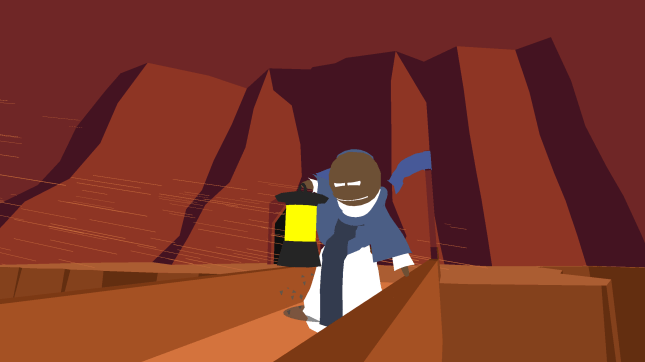
How did you even get there? …How are you not dying?!

Think about a character walking on relatively flat ground. You could spend all of your time designing a system which allows you to near-perfectly imitate physics. Every time the character takes a step, you calculate exactly how their foot hits the ground, and how it changes their path. This process has eaten up most of your development time, and is so intensive that your game can’t run at more than 15 frames per second. But hey, those perfect physics are worth it, right?

Well, no. I mean, in this case, the ground is relatively flat, so you could have the character just walk along a straight line. Sure, his feet might hover above the ground or clip through it at times, but it’s close enough. Even if the ground isn’t flat, the point is that a simplification of what actually happens is always ‘good enough’ for your game, and it helps you save where you really need to – both development time and processor time.


NoShadow

Wait, what’s making that shadow?

Where FAKE Shadows Slumber

Now, when it comes to Where Shadows Slumber, there are two big areas in which we consistently lie.

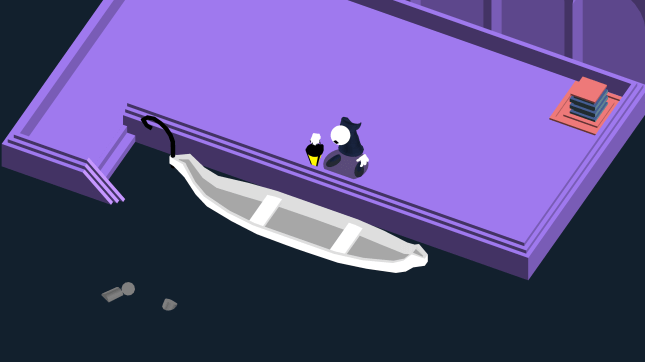
Physics. This is the case that applies to most, if not all, games, and Where Shadows Slumber is no exception. Everything you see when you’re playing is a carefully constructed illusion. Obe is never standing on the ground – the ground is conveniently and strategically placed so that it looks like he’s standing on the ground. “Physics” covers any physical interactions or representations of objects. This leads to a huge disconnect between what things look like, and how they work. In fact, nothing in the game serves the dual purpose of actually doing something and actually looking like something. In every case, we simply have two game objects – one which interacts with other objects according to the rules of our game (our simplified “physics”, if you will), and the other which is just there to look pretty.

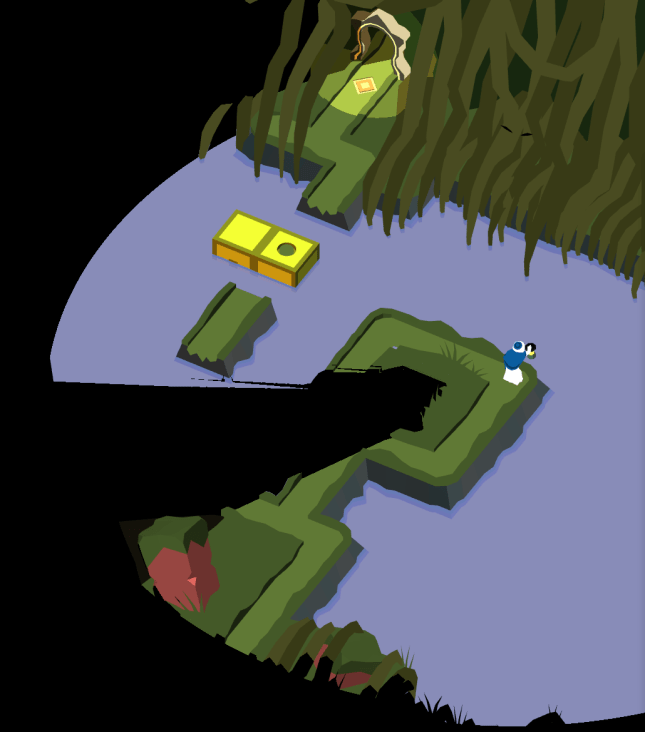
Shadows. Where Shadows Slumber is, obviously, based on shadows. Someone who has played the game would tell you that “shadows change things”. However, this isn’t exactly true – in fact, the shadows in Where Shadows Slumber have literally no effect on the gameplay whatsoever! This is another instance of the decoupling of an object and its visual representation. We show the dark black shadow as it moves across the world, but using that shadow’s location is far too computationally intense to be doing every frame. We could do it, but this is another case where we don’t need to be 100% realistic, as discussed in my blog posts on how our shadows work (part 1 and part 2), we use a much simpler algorithm to determine if something is in shadow. This saves computation time while not sacrificing quality. It’s all about that trade-off!
 

8rgt8bamhlnvicvzsd3pfjof

Otherwise known as “what happens when two hacks collide.”

Potential Pitfalls of Constantly Lying

While I strongly advocate for this type of simplification, there are cases where it can cause some trouble. A great example of this came up when we were doing the finishing touches on the original demo for the game.

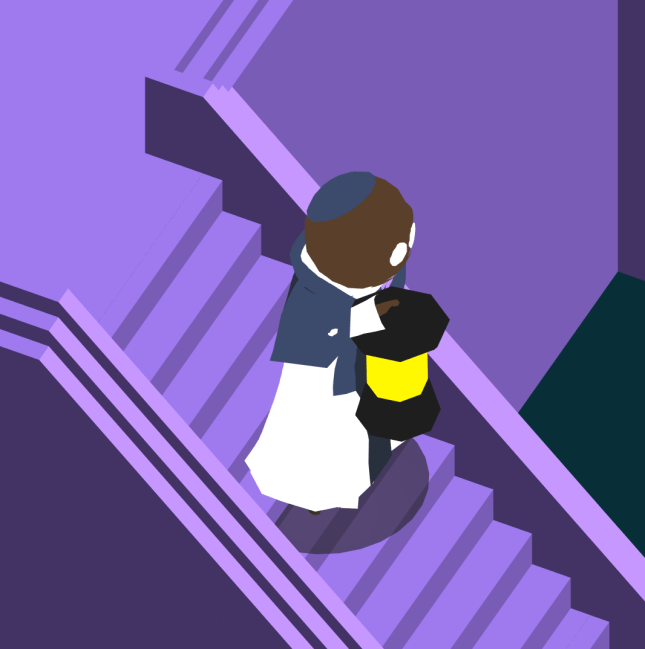
We had added ramps that Obe could walk on to some levels, to give them a little more depth. It  was working very smoothly, and made the world feel less game-y. Separately, we also came to a decision to have a drop shadow for Obe. It felt weird that Obe himself didn’t cast any shadows, but it didn’t make sense for him to, or everything behind him would be in shadow. We ended up with a circular shadow underneath him. Even though it didn’t make sense from a literal standpoint (since the light wasn’t directly above him), we found that players simply knew what it was, and it added realism, since they were so familiar with the concept of shadows being ‘underneath’ something.
StairShadow

Something looks just a little off…

This was all fine and good – both of these ideas were strong ideas (in fact, the latter is a great example of a place where simulating a very fake shadow was much better than attempting to use a realistic one). However, it was when we combined these ideas that we ran into trouble. You see, the drop shadow we made assumed a flat floor – we just plopped it down with a little transparency, and it looked great! Until Obe got to the stairs, that is. Once he started up a ramp, half of the drop shadow ended up being invisible (because it was underneath the ramp), and the other half was at the wrong angle. We had come up with a great simplification, but it ended up totally ruining the illusion!

These situations do come up, and pretty often – two great ideas can combine to form one horrible edge case. However, this situation in particular came about due to a bad design process. At some point near the end of the demo’s development period, we realized “Oh shoot, Obe needs a shadow!” We hacked together the drop shadow solution without considering the long-term design implications. The important thing about making this type of simplification is to understand that it is inherently “wrong” on some level, since it doesn’t perfectly respect the way the world works. This is fine, until it comes up against other things, which are themselves “wrong”. In these cases, you must be extra careful to think through your design decisions with respect to everything they’re going to interact with. This is yet another reason why it’s important not to make design decisions or changes toward the end of your project.


= = = = = = = = = = = = = = = = = = = = = = = = = = = = = = = = = = = =

I hope this gave you a bit of an insight into what’s actually happening in Where Shadows Slumber! If your confidence in us is shaken and you have any questions about what else we’re lying about, feel free to contact us! You can always find out more about our game at WhereShadowsSlumber.com, find us on Twitter (@GameRevenant), Facebookitch.io, or Twitch, and feel free to email us directly with any questions or feedback at contact@GameRevenant.com.

Jack Kelly is the head developer and designer for Where Shadows Slumber.
State Of The Art – July 2017

Welcome to State Of The Art, July 2017 edition! This monthly progress report is written by Frank DiCola and is focused entirely on how the game’s visuals have improved in the past month. Without further ado, let’s explore the major leaps forward we took in July!


MountDoom

Pictured above is our classic scene where Obe throws the ring into Mt. Doom

World 1 (The Jail) Is Ready

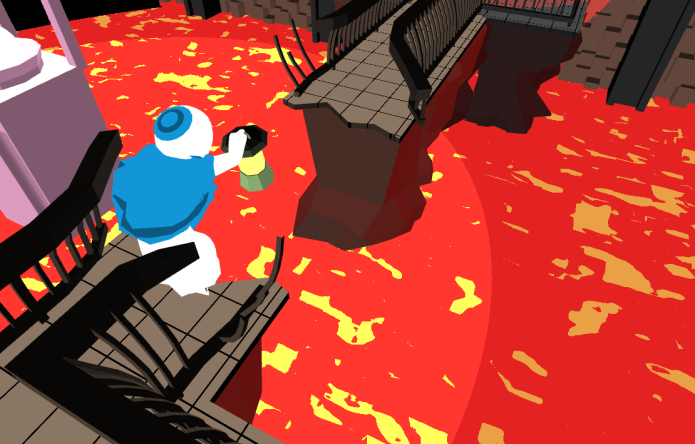
It looks like the entire first real World, our volcanic prison that you must escape from, is ready! I say “ready” and not “finished” because nothing in the art world is ever truly finished. But these five Levels are “ready” because I’m ready to move on to something else without worrying about these all the time. They look good. They look pretty done. Will I need to tune them up later? Absolutely. But I’m not going to spend more time getting these Levels from 90% to 100% when there are some Levels at 0%.

Having said that, bask in the molten glory that is World 1!

1-1.png

Level 1-1, “Light” is the first Level of the Jail World.

1-2.png

Level 1-2, “Detour” shows off some of the cell blocks in this prison.

1-3.png

Level 1-3, “Lock” contains a rarely used side-exit door.

1-4.png

Level 1-4, “Pressure” needs a different back wall than the one currently shown.

1-5

Level 1-5, “Ascent” has a lot of annoying overlapping lights and we’ll fix those later.

What do you think of these Levels? Please leave a comment with your feedback, as I have a few concerns of my own and I want to see if casual observers would notice them. Maybe I’m just paranoid!


Obe

Obe’s Clothing Is Ready

Our main character has quite the wardrobe. He’s wearing a lot of complicated clothing! Some of it is made from animated mesh, but other parts are physically based cloth that Unity simulates in real-time.

Getting this right has taken me a long time. But now I’m done messing with it and I’m ready to give it the ultimate stress test – cutscenes, weather (wind and rain!), and lots of animation. I believe his accessories can withstand the stress and remain looking cool.

Obe-Pants.PNG

Dude what happened to your pants?!

Undoubtedly, his clothing is going to get messed up sometimes. We’ll just need to identify those situations and preempt them with special scripts that manage his robes and keep them from going haywire.

Obe-Detail.PNG

Currently, the robe can clip through his white alb and skirt. This should be fixed by launch.

What do you think of his clothing? Is it worth it to have such a detailed robe on such a small character? I promise, for these close up cutscenes, it will look great!


River

What To Expect In August

This month, I’m going to aggressively go after the Levels in the River World. I’ve been so excited to work on that one for a long time! It’s wide open (as opposed to the claustrophobic Forest and Jail) which is a nice change of pace. The color scheme is totally unique, and the assets are really interesting. There’s some creepy story stuff happening there as well.

I also want to get cutscenes rolling, probably the first two (Intro to Forest, Finale to Forest) since they are the first things players will see. I don’t like the idea of waiting until the very end of the development cycle to start cranking out cutscenes. These things are going to be trailer-fodder and they need to look awesome. A rushed cutscene is probably going to end up being a cut cutscene 😛

See you again on September 1st!


= = = = = = = = = = = = = = = = = = = = = = = = = = = = = = = = = = = =

We hope you enjoyed this update about the game’s artwork. Have a question about aesthetics that wasn’t mentioned here? You can find out more about our game at WhereShadowsSlumber.com, ask us on Twitter (@GameRevenant), Facebookitch.io, or Twitch, and feel free to email us directly at contact@GameRevenant.com.

Frank DiCola is the founder of Game Revenant and the artist for Where Shadows Slumber.

What Happens When You Forget to Write A Blog Post?

“Yo Frank, what upppp?!” I ask once he answers the phone call and his face shows up, larger than life, on my screen.

“Ey boii!” he replies, his voice booming through my headphones. The line falls silent for a few seconds, before we both speak up in unison:

“So, you’ve got a blog post planned for tomorrow, right?”

We stare at each other (well, as much as you can over the internet), our faces slowly transforming into masks of horror as we realize the ultimate fate we have incidentally worked together to bring upon ourselves.

“What will our millions of fans think?!” Frank cries, as the room around him is engulfed in flame.

“How will we ever persist without the precise instrumentation and scheduling that our weekly blog posts bring into our lives?!” I ask of the world in general, falling to the floor, unable to go on.

Then I meet Frank’s eye. I climb back into my chair as he slowly lifts his  hand, making both a fist and intense eye contact. I raise mine as well, shaking it in the air as we chant:

“Rock, paper, scissors, shoot!”

And that’s the story of how I got stuck spending last night writing this blog post.

ConceptArt-Murder_Arson

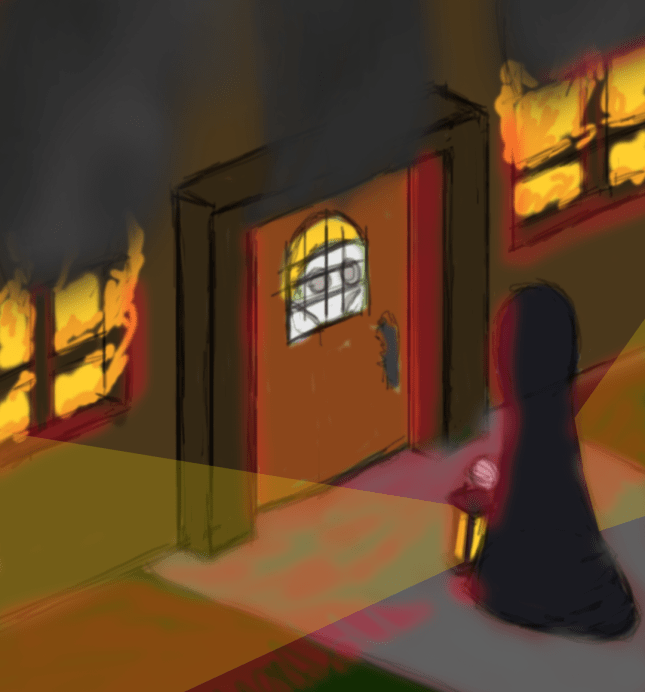
We all know how it feels to forget about a responsibility…

Not Really Though…

I really spent the whole week writing this post, not just last night (wink), but that story does a good job of showing how it feels to be behind, especially when it comes to our blog. We’ve made the conscious choice to involve ourselves in indie game development, without any real outside motives other than a love for games and development. Because of that, we do a lot of interesting and difficult things, and we talk about them a lot on this blog. But you know what interesting, difficult thing we do every week that doesn’t really get talked about that often?

That’s right – every week, one of us writes a blog post. Some of them are pretty good – a lot of them show interesting choices we made, or maybe they provide insight to other developers out there. But the point of writing this blog isn’t to write the best blog out there, or to prove ourselves as ultimate authorities on game development (hint: we’re not).

The point of writing this blog is to connect with people. We want to let people know about the struggles we’ve gone through to make our game as great as possible. We want to help other developers make their games as great as possible. We want to get feedback from anyone reading these posts, so that our game can be as great as possible.


How Hard Can It Be?

This is a fair question, and the quick answer to it is actually one of the reasons we ended up starting the blog in the first place – it should be easy, right?

And for a while, it was! We had spent a year and a half creating a game and only sharing the details of it with each other. We had a whole boatload of topics to talk about! We were itching to discuss artistic direction, algorithm implementations, and design decisions. I think there was a point when we had a full two months worth of posts already written.

However, that was the easy part, the colloquial ‘honeymoon’ period. Of course it’s easy at the beginning! But as the months have worn on (and we’re still less than a year into it), the obvious topics have started to dry up. “What’s our game about? Shadows? Well I already wrote that one…” You end up having to weave thinner and thinner topics into a real story – I mean, I’m writing a blog post about writing a blog. That’s when you know you’re at the bottom of the barrel.

Running out of ideas

Running out of ideas!

That said, game development and Where Shadows Slumber are both pretty interesting, so we’ve been able to manage coming up with enough topics. The real hard part of this blog is the opportunity cost. We spend a few hours throughout the week writing, revising, and proofreading, and then another few hours finding and creating the perfect images to include. The problem with this is pretty clear – every day we have less and less time left for the game, and every minute spent on something else is a minute we’re not spending on the game. Spending a few hours a week, especially when you have other responsibilities, is a large portion of time to commit. Is it really worth it?


Then Why Bother?

When I pictured myself as a game developer, I never pictured myself writing a blog. Even when Frank and I were pretty far into the development of Where Shadows Slumber, I never even considered it. I mean, we’re making a game, right? Shouldn’t we just, you know, make the game?

Blogging

Obe does not engage in blogging. He engages in Gronging.

It turns out that, despite the fact that we could make a game without writing a blog, there are still some places where it’s pretty important. When the idea of the blog first came up, we weighed the positive against the negative, and decided to do it – we must have some reasons, right? And we do!

1.) Getting Noticed. One of the hardest parts of indie game development is publicity. How do you get people to notice your game? If you somehow manage to build a fanbase during development, how do you keep a hold of them until your production release? Thanks to Frank’s orchestration of our process (which you can read about in his blog post about it), we found ourselves with a pretty good demo of our game, and we were still pretty far from a production release. Between a few conventions, a timely release, and an insane amount of luck, we have managed to garner over 200,000 downloads! The problem is, we’re still around 8 months away from a real release. What happens to all of the people antsy for more Where Shadows Slumber?

This is where the blog comes in – anyone who has played the demo and is interested in the game can find out more about it here. They can keep track of our progress and get updates about the game. They can get an idea of when the game will be ready, and they can keep it in mind. They can even hack into WordPress, figure out our home addresses, and then force us to finish the game, if they really want to!

2.) Marketing. Being open about our development process helps us to ‘build a brand’, and writing a blog is one of the best ways for us to do so. Our brand is something that’s very important for us to cultivate – when people think of Frank and Jack, we want them to think of two awesome guys, who are sharing their process and trying to be a part of the indie game development community. We don’t want the general perception of us to be that we’re secretive or shady. Would you rather buy a game from Sir Awesome Coolguy or Creepy McCreeperson?

3.) Helping Ourselves and Others. The biggest aspect of the blog, and the reason that we’re still doing it, is that it’s rewarding for us, selfish as we are. We were part of a panel on indie game development at PAX (which you can read about here), and that’s still one of the most rewarding parts of working on Where Shadows Slumber for me. It really means a lot to me to be able to answer questions or give advice that helps someone else with their game. I truly love game development, and if this blog helps a single person or team bring their ideas to life and complete a game, then it’s all worth it.


So, Why The Where Shadows Slumber Blog?

There are a lot of blogs out there. I mean, there are a lot of blogs out there. That’s one of the beautiful things about the internet (*cough* plug for net neutrality *cough*) – pretty much anyone can put something together and get their message out. So why are you, dear reader, reading this blog, of all of the blogs out there?

We aren’t trying to be the best blog on the internet. We aren’t trying to be the most insightful game designers. We aren’t trying to be the best at teaching programming or art. There are other blogs out there, and there are great ones for learning about anything you want to learn about.

ConceptArt-Inhabitants_Citizens

We want to share Where Shadows Slumber with all of the citizens of the world!

What the Game Revenant blog, at least as it pertains to Where Shadows Slumber, is all about is our progress. We’re a small indie development team, going through this process for the first(ish) time, and we want to let you all know about it. Whether you use it to keep tabs on our game, get tips on your own, or just learn more about us and our process, is up to you. Either way, we really appreciate you reading!


= = = = = = = = = = = = = = = = = = = = = = = = = = = = = = = = = = = =

Thanks for reading! If you want to know even more about our process, or have any questions about blogging in general, feel free to contact us, and you can always find out more about our game at WhereShadowsSlumber.com, find us on Twitter (@GameRevenant), Facebookitch.io, or Twitch, and feel free to email us directly with any questions or feedback at contact@GameRevenant.com.

Jack Kelly is the head developer and designer for Where Shadows Slumber.

Designing Obe, The Mysterious Protagonist of Where Shadows Slumber

For years, Jack and I have been referring to the main character of Where Shadows Slumber by euphemisms such as “the main character”, “the protagonist”, and “little lantern dude”. Now that the game’s story is coming together, we have finally given him a name! In this blog post, we’re going to do a deep dive into how we gradually got to this point in the character design process.


Obe

Meet Obe (oh-bee)

In Where Shadows Slumber, you guide Obe on his journey using magical shadows that emanate from a mysterious lantern. But the lantern is not the only thing that’s full of mystery. Who is Obe? Why has he come to this strange land? And is that a yarmulke?

We can’t give too much of the story away at this time. You’ll have to play the game when it comes out next year to find out the full story. Suffice it to say, Obe is an elderly man at the end of his life on a quest to set things right. (We would have called the game Old Man’s Journey, but someone beat us to the punch.) Obe didn’t ask for his lantern, but he would be lost without it.

The artwork above is the final rendering of how the character will appear in-game. Once I rig his cloth chasuble to work properly, I’ll post some videos of him in action. Before I do that, let’s take a journey through time to see how we got to this point.


thresh_by_predator95-d6zmsh6

You Inspire Me!

From the beginning, Jack and I knew that we would need a character that the Player could guide through the world. Something about our game’s shadow mechanics made us feel that it had to take place in a dark, mysterious landscape. We couldn’t go “full abstract” and make the main character a capsule or something. (Though, that would have made my job as an artist much easier!) We needed to show the shadows interacting with real objects in a real place, which meant the protagonist needed to be an actual humanoid. Moreover, the protagonist either needed to emit light or carry some kind of light source with them. We decided a lantern would look cool, and started exploring characters in popular culture that would inspire our character’s design.

maxresdefault

Jack suggested Thresh from the online game League of Legends. A sinister character, Thresh uses a lantern and a hooked chain to grab his enemies and pull them to their doom. He traps people’s souls in his lantern and tortures them for all eternity.

This was a bit too evil for an indie puzzle game. Thresh looks like a take on the grim reaper, and his lantern isn’t even in the forefront of his design. But still, it was an inspiration! If you ever get creeped out by Obe, that’s because of the Thresh-y part of his design.

tonberry___color

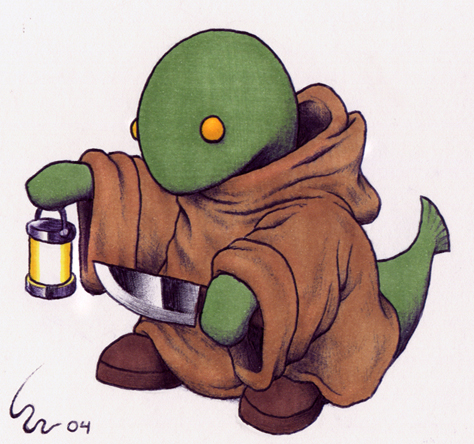
Then I suggested to Jack the design of Tonberry, a strange little green character from the Final Fantasy series. This enemy is apparently quite rare and super dangerous, despite its innocent appearance. Though it has many abilities across multiple Final Fantasy games, the recurring theme is that he slowly advances toward a party member until he is close enough. Then, he stabs them with his knife, delivering an instant kill.

I’m not sure why every character with a lantern in video games is a psycho murderer. That’s a little weird, don’t you think? Surely Where Shadows Slumber will change that perception!

What we enjoyed about Tonberry’s design was the simple, monk-like burlap robes and a nondescript lantern. His disarming appearance was also a huge inspiration for Obe. Now, Obe doesn’t carry a weapon around and he also isn’t a lizard, but his design was heavily influenced by this character.


ConceptArt-Inhabitants_Body

The Drawing Board

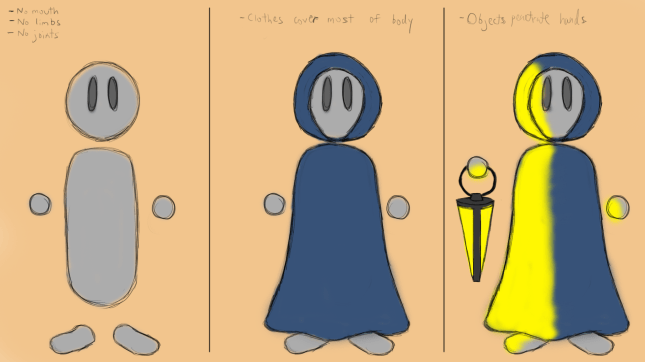
With a few key characters in mind, I set about drawing lots of pictures of what the game’s protagonist could look like. I began by deconstructing Thresh and Tonberry and distilling them into “mobile” versions. Remember, our game takes place on a small screen, so the character’s key elements must be clearly visible from far away.

ConceptArt-Protagonist-Sketches

What would chibi-Thresh look like? What elements can be stripped away and still retain the design? What elements are not necessary for a peaceful puzzle game?

ConceptArt-GhostCharacter.png

Simple designs for the character. Bottom Left: an unused design for a horrifying shadow creature that only appears in darkness and eats the souls of its victims.

ConceptArt-Protagonist-Body.jpg

The character’s robe became a central part of the design here, acting like Thresh’s gathering shadows and unearthly aura.

As you can see from the drawings, I tried to straddle the line between “cute and disarming” and “somehow a little sinister”. It was important to us that the Player trust the character in the beginning of the game, and then question their motives a little later on. Also pictured above, you can see the beginnings of some other character designs that would use our humanoid model. From an early stage we knew that if there were other humanoids in this universe, they would look like the main character – just slightly altered.


boat

First Character: Rayman-like

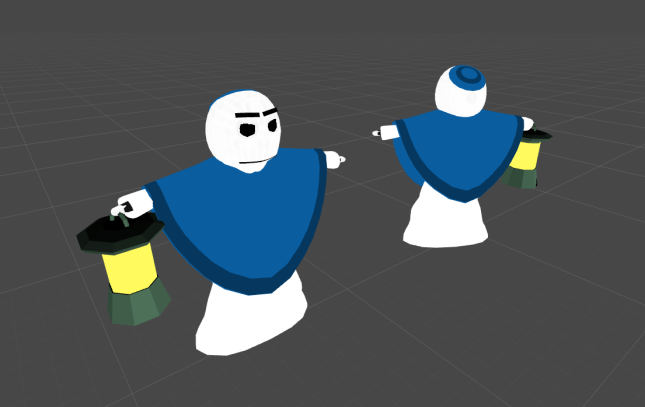
While this was happening, Jack and I were working on the very first iteration of Where Shadows Slumber. It was still just called “Light / Shadow Game” and we needed a character. Based on my drawings – but too scared to actually try using Unity Cloth – I created a simple character in 3DS Max.
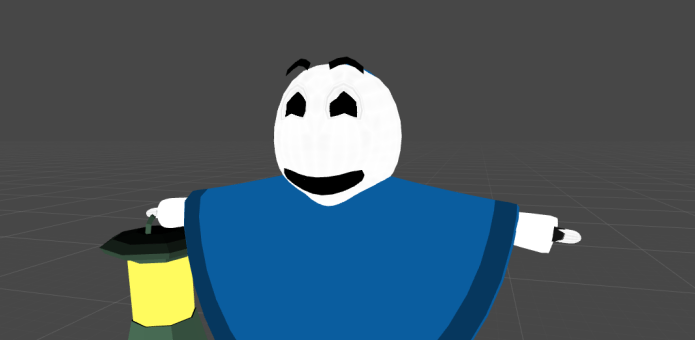
Check out the character in action in the video above. He has a little cone shaped lantern, nubby little arms and legs, a fake robe and hood, one rhombus-shaped eye (!), and fingers. While this design is still near and dear to me, it had a lot of flaws.

One Eye Messes With Depth Perception: So apparently when a character only has one eye, it’s super difficult to tell where they are looking or when their head is turning. As humans, we’re much more used to the human face. We subconsciously compare both eyes to each other and make a judgment call about the way the head is turned based on that. A single eye made it difficult to animate the character properly.

Rayman Limbs Mess With Shadows: I love Rayman limbs. By this, I mean “floating hands and feet that aren’t attached to the torso in a visible way”. I think it’s an underused design. However, as much as I love it, it doesn’t work in a game where characters need to cast shadows and have silhouettes that make sense. We had to cut it.


screen_2432x1368_2017-01-24_13-34-45

If At First You Don’t Succeed…

For the next draft of our character model, I took the chibi style to heart and tried to think of a purpose for the character’s robes. It’s not enough to say “he’s wearing robes because he’s traveling and it’s a cloak”. I wanted to give them some kind of a purpose or possible religious significance. Now the character looks more like a cardinal or some kind of priest. This fits with his nondescript age of “old” and allows the Player to begin projecting their beliefs onto the character.

CharacterDesign

This model ended up being really close to the final design, but it just wasn’t there yet. Troubles with rigging the arms, face, and clothing meant that I needed to take one more shot at it. Still, we’re getting there! This character model appears in our Demo. Check out how the character looks in the Demo’s finale cutscene:

What were we saying about all lantern characters being really violent? Oh well… I guess some stereotypes really are true!


Happy.PNG

Welcome Home, Obe

Designing a character for this long almost feels like searching for a missing person. There are a lot of promising leads, but none of them pan out until finally you happen to stumble across what you’re looking for.

I feel that our main character has finally come home. He has a personality and feels like someone I can’t control anymore. It’s a strange feeling, but I take it as a sign that he will bring joy and intrigue to players around the world that want to unravel his mysterious story.


= = = = = = = = = = = = = = = = = = = = = = = = = = = = = = = = = = = =

We hope you enjoyed this update about the game’s character artwork. Have a question about Obe that wasn’t mentioned here? You can find out more about our game at WhereShadowsSlumber.com, ask us on Twitter (@GameRevenant), Facebookitch.io, or Twitch, and feel free to email us directly at contact@GameRevenant.com.

Frank DiCola is the founder of Game Revenant and the artist for Where Shadows Slumber.