Art Spotlight: Cutscenes, Part II

I’m happy to report that as of today, the demo’s final cutscene is complete. This signals the end of an era – we won’t be updating the demo much more after this. You’ll be able to see the cutscene when you beat Level 9, right before we roll the credits. The next time we update the demo will be when we add language support for multiple regions – and we’re only doing that so we have some practice before we do it for real in the final game.

You can watch the cutscene below, using this YouTube link. Forgive the resolution, but remember – this will be playing in portrait mode on phones and tablets. It’s not meant for a wide screen like your computer.


I suggest you watch it before reading the rest of this blog post! It’s 90 seconds long and includes sound, so get your headphones. It may be “safe for work”, depending on where you work I guess… more on that in the next section.


M

Why Is The Demo Rated “M” on Google Play?

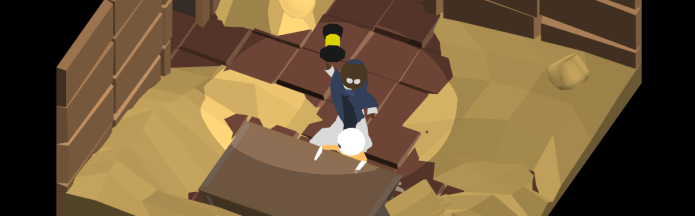
You’re looking at it. The story of Where Shadows Slumber is rather grim, and includes some violent imagery. For this reason, I chose to give the game’s demo an M rating when I uploaded it to Google Play. It’s entirely possible that I overshot things. Perhaps this is more of a “T” level of violence, or possibly even “E” for cartoon violence. I’d rather err on the side of caution. We took a chance with Apple by going for 9+ under the label “Infrequent / Mild Horror / Fear Themes”.

This is a bold step Jack and I have taken, and it remains to be seen whether or not it pays off. Many fans have told us that their young children (4 to 9 years of age) really enjoyed playing the demo. We may alienate those users by having such violent story elements in the game. It’s possible that the final game will include a Safe Mode where all of the game’s movies are instantly skipped without alerting the player. Or maybe we’re being too cautious.

The reception we get to this cutscene will greatly impact the game’s final story. Right now it’s a bit violent, with few hopeful moments along the way. If an official from Apple or Google warns us that this will turn off large groups of users, you may see a more sanitized version of this story appear next year when we release the game. My hope is that we actually attract people by giving them a narrative with teeth that tells a meaningful, adult story. Time will tell if I am wrong!


Cloth

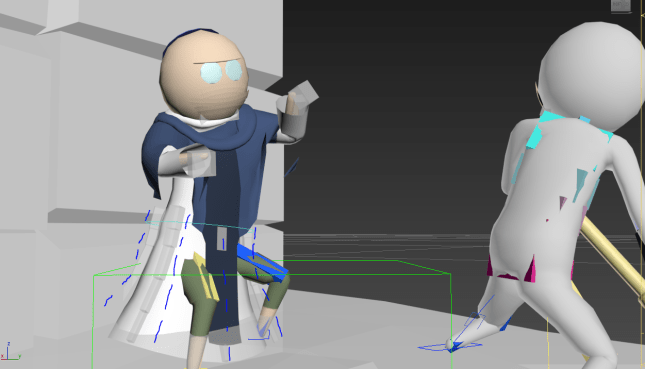
When you examine the edges on the skirt, it becomes clear how it can’t deform properly.

This Cutscene: What Went Wrong

Many close friends of the developers have asked us why we bothered to make this cutscene at all. As I stated in Part I of this series, this was a huge endeavor that required over 40 man-hours to complete, over a span of a few weeks. Since it will not be included in the final game, why spend all that time on it? Most players will never even watch this cutscene, and it is only tangentially related to the final game.

I’ll tell you why – it’s because it was a darn good learning experience, that’s why! The process of making this cutscene was grueling, and it showed me a few ways I could improve my process in the future. Since we want the final game to have somewhere around 16 cutscenes, it’s important to work efficiently. Otherwise, you can expect that number to drop to about 3. Without further ado, here’s three things that I could do better in the future:

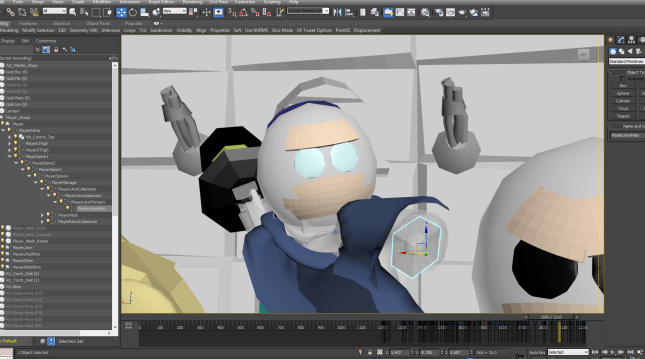
Cloth Simulation: The protagonist is wearing two robes. One is a white cassock that has sleeves and a skirt. The other is a blue priestly-looking mantle. For the most part, this cloth is controlled by following the character’s bones. That is, when his right arm moves, his right sleeve goes along for the ride. But his skirt is controlled by 30 separate bones, which is stupid. I hate that I built him that way, and I have resolved to change him for the final game. I’d much rather have 3DS Max simulate the skirt as cloth, and then bring that animation into Unity. I’ll sacrifice control, but I’ll gain time. It’s worth it!

Footstep Audio: Most of the effort that went into recording sound was spent creating the sound of footsteps. I’m not really pleased with how they came out, because they are very loud and a bit too prominent. Regardless, it struck me that I ought to be able to automatically generate these “footfalls”. Jack set up a system to do this in the game itself, so we could have done it in the cutscene with different parameters. Alas, I only just thought of it, so I spent a ton of time painstakingly matching footstep sounds with the animations on screen. In general, having an audio expert who is a part of the team (and receives a cut of the game’s proceeds, or some kind of salary) would save a lot of time.

Character Rigging: This is kind of related to the cloth comment above, but it’s worth mentioning that these characters were measured and found wanting once I really began animating them. Their left arm broke and began bending oddly. Their shin bones contorted out of proportion. Their faces are weird, ranging from expressionless to cartoonish. These things are all my fault, and I need to retrain myself in 3D rigging before I redo the character model for the final game.
 

sddefault

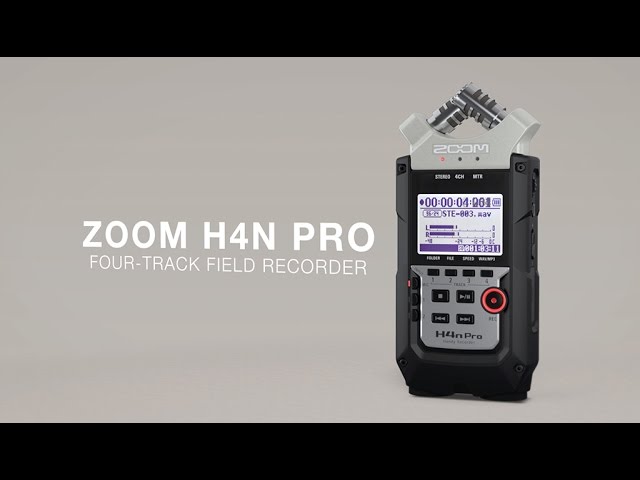
If you’re investing in a sound recorder, the Zoom H4n Pro is a good choice for indies.

This Cutscene: Strategies That Paid Off

It wasn’t all bad, though! There were some strategies I employed that paid off in the end. Either they worked better than expected, or they allowed me to create a passable product so I could move on from this. 10 / 10 would do again:

Zoom Recorder: I recorded the sound for this demo cutscene using a Zoom H4n Pro field recorder. It’s a lightweight microphone the size of an old Gameboy that I used a lot in college. Now that I have my own (or rather, the company has its own) I have to say I’m quite pleased with it. If we don’t hire a dedicated sound team member, I’ll have no qualms about recording everything myself using the Zoom.

Audacity Mixer: Audacity is a free sound mixing program, and it got the job done. It has its quirks and I’d happily switch to another free program if I could find a better one. But for now, I know how to use it and it didn’t give me too much trouble. The final game’s audio will be made in Audacity unless I switch to an Adobe sound program since I’m paying for that whole suite anyway.

3DS CAT and Unity: The pipeline from 3DS Max to Unity worked as intended. I never experienced any problems getting Finale.FBX out of my animation program and into the Unity scene. This is promising, and it means 3DS Max will remain my tool of choice as we head into the final game.
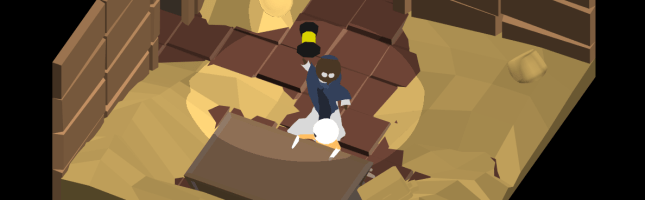
 

Rekt

Coming To A Build Near You

I can’t exactly say when, but this cutscene will be added to the demo build at some point in the future. We’re trying not to do too much more to the demo build since it won’t make us any money and may not even guarantee future sales of the real game. Still, it should put to bed any questions people have about whether or not Where Shadows Slumber will have a story when it is released next year. It will hopefully also give us insight into how people might react to the final game’s narrative. If we see a massive spike in bad reviews right after we patch this into the demo, we’ll get the message loud and clear.

Thanks for reading this series! I hope it was an informative look behind the scenes. Feel free to send in any questions you may have – it’s possible I’ll do a third one of these at some point where I just answer questions from fans.


= = = = = = = = = = = = = = = = = = = = = = = = = = = = = = = = = = = =

Looking for something about cutscenes that wasn’t addressed? You can find out more about our game at WhereShadowsSlumber.com, ask us on Twitter (@GameRevenant), Facebook, itch.io, or Twitch, and feel free to email us directly at contact@GameRevenant.com.

Frank DiCola is the founder of Game Revenant and the artist for Where Shadows Slumber.

Where Shadows Slumber: Testing

This week marks the deployment of our first batch of test levels, assuming I haven’t totally screwed up and delayed them. Throughout the past few months, we’ve been building a list of testers, and it is finally time to put it to good use!

If you’re on the list and you have an iOS device, you should have received an invitation to our TestFlight over the weekend. If you’re on Android, you can expect a similar email later this week. If you’re not on the list (or don’t know if you are), just let us know! We haven’t hit the limit on testers yet, and every pair of eyes helps us make a better game.

Frank already wrote about our testing, and why we’re doing it. This post touches on a lot of the same things, but I want to delve a little bit more into the benefits of testing.


Mommy, look what I made!

A child returns home, an exuberant look on her face. “Mommy, look what I made!” she exclaims, holding up a piece of construction paper covered in marker lines and dried macaroni. Her mother reaches down and takes the paper. “Isn’t it great?”

“Why, yes, darling, it’s the most beautiful piece of art I’ve ever seen!”

macaroniwithjack

The original concept art Frank made for Where Shadows Slumber

Now, you and I know that the mother in this story is not telling the truth. Obviously, Where Shadows Slumber is the most beautiful piece of art she’s ever seen. But her daughter doesn’t know that – her daughter planned out the art, decided exactly how she would approach the task, and executed flawlessly.

Frank and I are the daughter in this metaphor, and Where Shadows Slumber is the macaroni masterpiece. We look at our game and we see something beautiful – but who knows what it actually looks like?

You do! You, our adoring public, are our mother. However, we need you to tell us the truth! We will never grow up to be a wonderful artist if you tell us that our macaroni levels are beautifully designed when they’re not.

This is the concept behind a lot of what we have been doing over the past year. We created a demo for the sole purpose of showing it to people and getting feedback about the game. We’re sending out test levels to get feedback about our level design. We even write this blog, in part, to get feedback about our process!

We use all of this feedback to help make Where Shadows Slumber a better game. That is the benefit of testing.


The Power of the POC

If you’re a game developer, and your friends and family know you’re a game developer, then there is a phenomenon I’m sure you’re quite familiar with. If not, allow me to explain.

Most people don’t understand the amount of time and effort that goes into the development of a game. Therefore, if someone thinks of a half-decent game idea, they come to you with it. If I had a dollar for every time someone has said “Jack, listen to this idea for a game – you’ll be a millionaire!”, I actually would be a millionaire.

So, you end with a lot more game ideas then you can possibly make. Some of them might actually be pretty good, but you’re just one person – how can you tell if an idea will end up working out? Do you have to just pick a concept, make the whole game, and then just hope that people like it?

This is exactly what proof of concept projects are for! Can you imagine if we had spent two years making the full game for Where Shadows Slumber, only to release it and find out that nobody enjoys shadow-based puzzles? What a waste! But spending two months working on a project that could become something big is totally worth it, even if people don’t like it.

POC

A shot from one of our earliest POCs

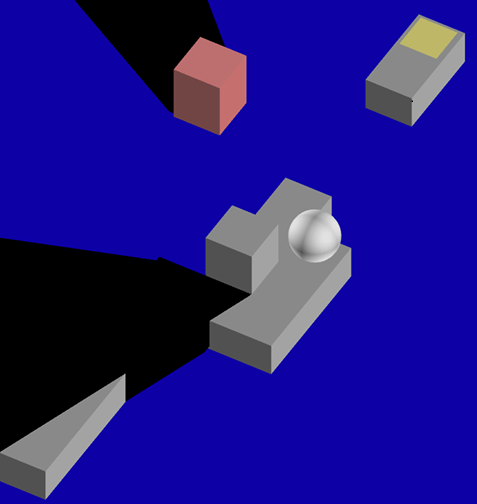
That’s exactly how Where Shadows Slumber started. I came up with the idea, and I immediately spent two months or so developing a POC, a very, very basic version of the game, that would just be used to tell if the game had any merit. I showed it to Frank and a few other friends, and they liked it, so we decided to make the full game. If they hadn’t liked it, then we would have scrapped the project. I would have wasted two months, but I would have known that it was a project not worth pursuing, without wasting even more time.


Testing Design

In my opinion, the hardest part of game development is design. Programming is easy enough, once you know what you want to program. Art, on the other hand, would be the hardest part if it weren’t for Frank, but that’s just because I’m bad at art.

Once you know what you want to make, programming and art are mostly execution on that vision. Coming up with that vision is the hard part. What is your game mechanic? How does it work? How do you explain how it works to the player? What does your difficulty curve look like? On and on, there are thousands of questions like this that you can apply to game design, and they’re all important.

This is one of the main reasons we try to get as many people as possible to play our game. There are certain realizations about design that you can only get by showing it to a lot of people and getting feedback. We never would have discovered how much people dislike ‘randomness’, which is something that could have played a major part in our game, if we hadn’t shown it to a bunch of people.

But even once you’ve made all of the decisions regarding your game’s mechanics, you still need that feedback on the last giant piece of the game design puzzle: level design. If you have an awesome mechanic, but your levels are boring and easy, or way too hard, nobody’s gonna want to play.

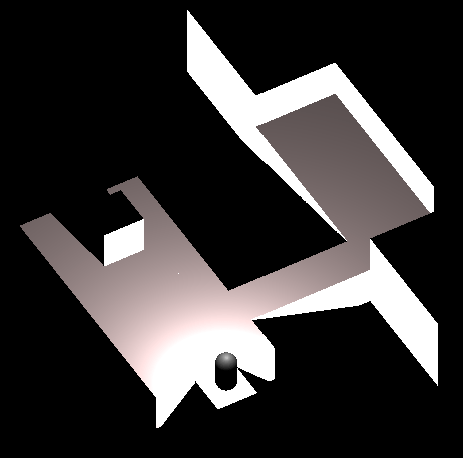
In order to prevent this, we’re doing some alpha testing! We have all of the levels designed, and we have all of the mechanics half-implemented, so we’re sending out test levels!

Crumble

This is what it would look like if I were in charge of the art…

These levels are ugly – but we’re not testing the art! These levels are buggy – but we’re not testing the code! These levels just might be poorly-designed, and that’s what we want to know. Our testers will tell us what they like and don’t like about these levels, and we will update them accordingly.

The important part of this process is that it’s happening as early as possible. If we sent out fully-complete levels, and then we had to change one, we would end up either scrapping the art, which is a huge waste, or trying to change the level without changing the art, which just makes it look weird. That’s why these levels look all dull – it’s all part of the plan!


Testing Philosophy

The last thing you want is to work hard for two years on a project, only to release it and find that it’s not as great as you thought it was. In particular, no matter how great you think it is, your audience might not enjoy it. While there will always be people that don’t like your game, it’s important to make sure that your target audience does like it. And how do you ensure that will happen? Testing!

It’s not a great experience to hear someone say they don’t like your game, and it’s perfectly natural to shy away from that. However, hearing that from a dozen people and still having time to make changes is a whole lot better than hearing it from a thousand people after you’ve already released the game.

Whether it be unit tests (small tests to make sure that one part of your code works) or beta testing (sending an almost-complete game out to fans to look for small bugs and last-minute fixes), testing is an important part of development. Don’t get caught up in your own little game-dev world; make sure you find out what the people want!

As always, let us know if you have any questions or comments about testing (or anything else)! You can always find out more about our game at WhereShadowsSlumber.com, find us on Twitter (@GameRevenant), Facebook, itch.io, or Twitch, and feel free to email us directly with any questions or feedback at contact@GameRevenant.com.


= = = = = = = = = = = = = = = = = = = = = = = = = = = = = = = = = = = =

Jack Kelly is the head developer and designer for Where Shadows Slumber.
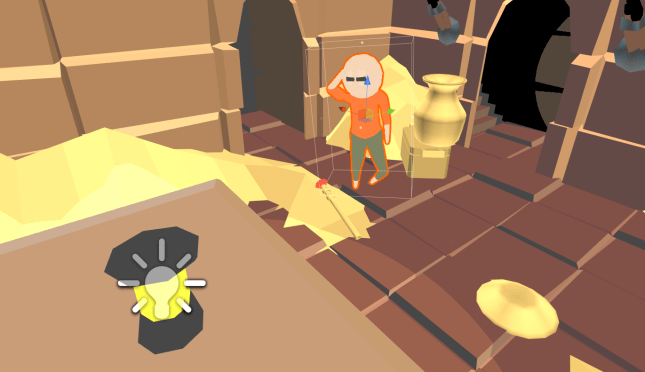
Big Changes Coming To The Game [April Fool’s Day!]

Just earlier this morning, Jack and I sent out some bare bones level from the final game. We wanted players to try them out and let us know about their design. Aesthetics aren’t important at the moment, which is why the levels look blocky and have no sound. Right now, we’re just trying to settle on the best design for the game’s first few levels. This is a critical period where players generally make up their mind about a game. Hero, or zero?

Well, Jack and I have been floored by the response we got! Almost the instant we sent out the levels, we received a tsunami of feedback. After a quick brainstorming session, we’ve mapped out our dazzling new plans for the game.


A New Way To Pay

The “premium” model is going the way of the do-do bird. People just aren’t buying it anymore, if you’ll excuse the pun. One of the biggest pieces of feedback we get constantly is to modernize our payment model to adapt to a changing marketplace.

We couldn’t agree more. That’s why we’re dropping the planned premium price of the final game all the way down to $0.00. That’s right — Where Shadows Slumber is going free-to-play!

GoldOnGround.png

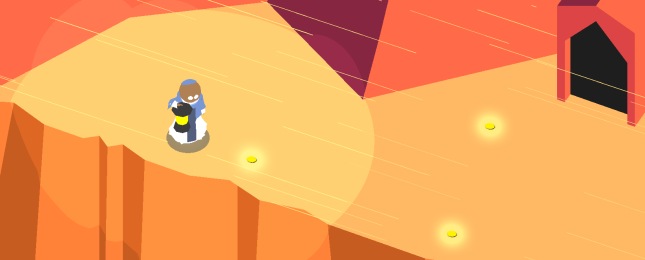
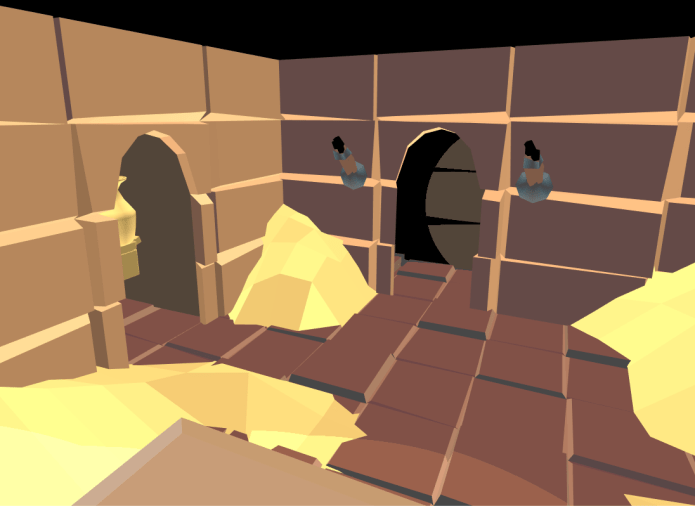
Our new in-game currency, Gold, can be found on the ground during levels.

After downloading the game and completing the first few levels, you’ll notice our new in-game shop module that we’ve been working all morning on. A new currency has been added to the game called Gold. Gold can be found on the ground during levels, and you collect it by simply walking on it (see image above). Of course, it can also be purchased with real money (USD or regional equivalent) if you have a credit card associated with your App Store / Google Play account.

SHOP

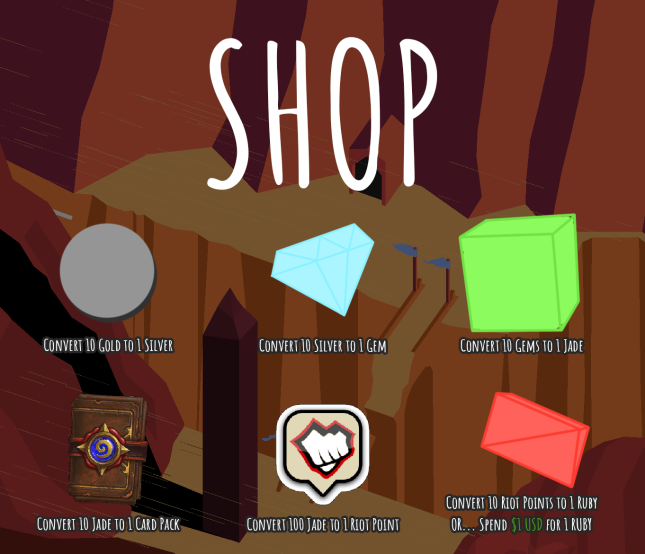
The Shop can be pulled up at any time during the game.

The main purpose of Gold is to buy Silver. Silver is mainly used to buy Gems. Gems are used to purchase Jade, which is the only currency in the game that can get you Card Packs. Card Packs, when opened, have a chance to give you Riot Points. Riot Points are important since they can be used to buy Rubies. Rubies are the main currency the game will be using from now on, as they are used to buy Energy.


Energy – Balancing Player Anxiety and Fun

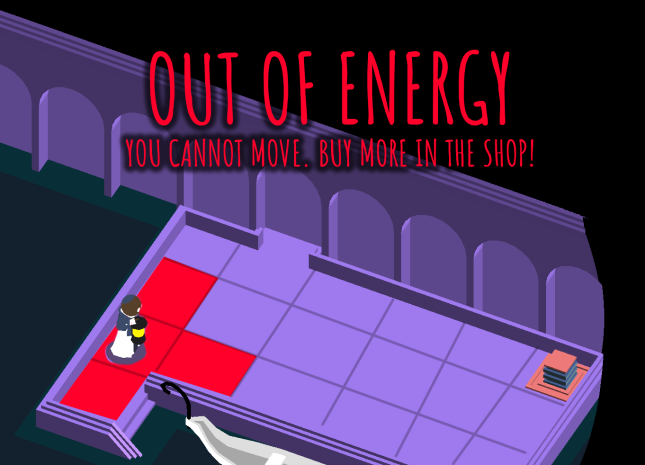
But what is Energy, exactly? Energy is a new way to play that adds gritty realism to the game. It also adds an important anxiety-checkup cycle to the game that urges players to keep checking their phone habitually to succeed in Where Shadows Slumber.

In order to move a single space in the game’s grid-like path-finding system, you need to spend 3 Energy. When solving a puzzle, you need to ration out your Energy. Spend too much time walking, and you’ll run out of Energy for the day.

OutOfEnergy

Never fear, however. Within 24 hours, your Energy bar will be refueled back up to 24, and you’ll be ready for another exciting few minutes of puzzle solving! If you’d like to speed up this process, you can buy Rubies in the Shop.


Challenge Your Friends In Multiplayer

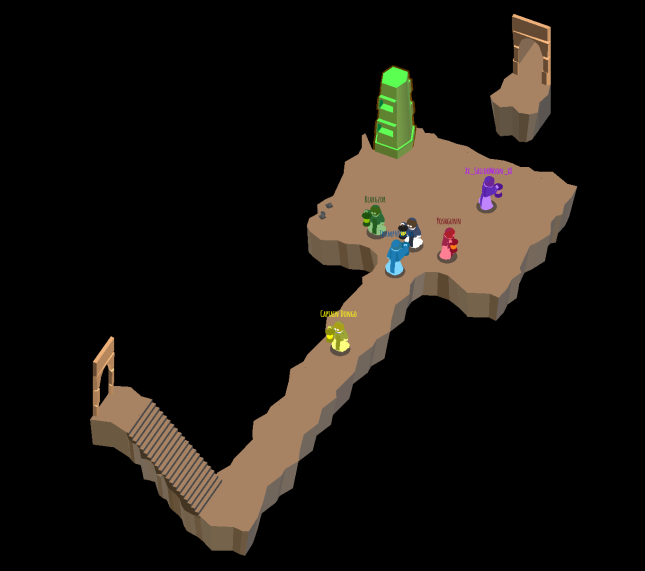
The final piece of feedback we hear constantly is to add multiplayer to the game. We think this is a fantastic idea, so we’re proud to announce that the final game will allow you to solve puzzles with friends and strangers alike! Advances in technology have allowed us to create a real-time multiplayer solution that we hope everyone will enjoy.

Multiplayer

Work with your friends to solve the puzzle, or trap them behind a veil of shadows forever! We hope multiplayer will expand the replayability of the game and the amount of money players invest. We’re also well aware of the criticism that this completely breaks everything about the game’s shadow mechanic, and we are working to remedy that.


We hope you enjoyed taking a look at our bold plans for the future. Our goal is to produce a game that appears free, but costs close to $1,000 to really enjoy. Due to these changes, we expect we’ll have to push the game’s release date back to the year 2020. We appreciate your understanding!


This post was last updated on April 1st, 2017.


= = = = = = = = = = = = = = = = = = = = = = = = = = = = = = = = = = = =

We hope you believed this satirical post! If you’d like the truth, starting tomorrow you can find out more about our game at WhereShadowsSlumber.com, find us on Twitter (@GameRevenant), Facebook, itch.io, or Twitch, and feel free to email us directly with any questions or feedback at contact@GameRevenant.com.

Frank DiCola is a professional Grongus, and the artist for Mass Effect: Andromeda.

Art Spotlight: Cutscenes, Part I

For the past few weeks, Jack and I have been working on transitioning from the Demo Version to the Final Version of Where Shadows Slumber. One of the finishing touches I’m committed to adding to our demo is a short cutscene that plays when you beat the game. Our fans are always asking us if the game will have some kind of a story. The answer is yes, it absolutely will! But the nature of mobile entertainment and puzzle games in general dictates that we tell a certain kind of story in a certain kind of way.


860e6bef748f96c0bfd4d8d5b79626a4

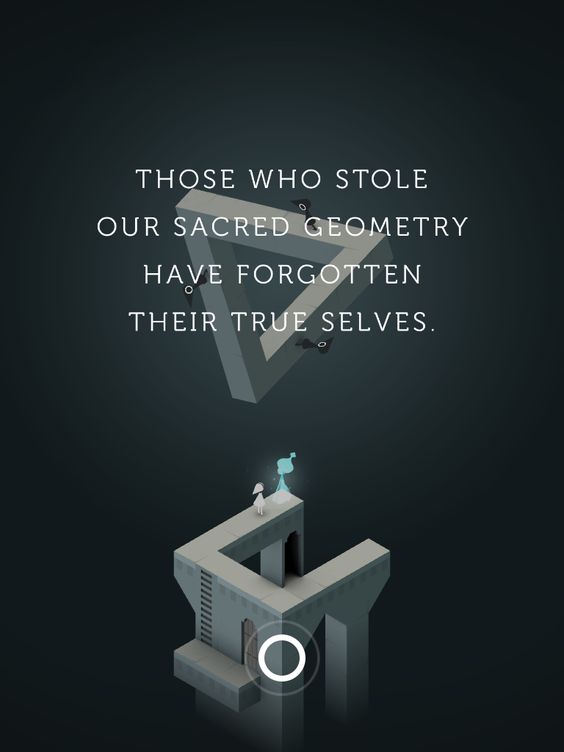
Screenshot from one of Monument Valley’s cutscenes.

Why Cutscenes?

When we decided we wanted the game to have a story, we looked at other successful mobile games (see Monument Valley, above) as well as the games Jack and I usually like to play. It seemed that short cutscenes, placed directly after the player “achieved” something notable, were the best way to hold people’s attention. Jack loves listening to all of the audio books in Diablo 3, and I loved reading entire libraries in games like Morrowind and Skyrim. However, for a casual gamer, massive amounts of text can seem like an information overload. Not to mention, that creates a lot more work for our translator – which translates into a serious cost for us.

It’s also worth mentioning that mobile gamers don’t often play games with the sound on. Clearly, investing our time in fully voice-acted content wouldn’t be worth it. Who would ever hear it? When you think about it, given these constraints, we didn’t have many options.

  1. Mobile gamers can’t hear your game
  2. Casual gamers want a story, but not an epic saga
  3. Mobile gamers play the game in short bursts
  4. The more voice over work and text we have, the more we need to translate

Since the above four points are a given, we decided to have short cutscenes at the beginning and end of every World in our game to serve as end-caps. The action in each of these animated scenes will be completely wordless and textless, and tell a story through body language alone. Sound will be present, but it won’t be important. The cutscenes themselves each tell a unique piece of the story, and may even seem disconnected. This is all by design!


3Ds

3DS Max is used to animate the actors, and the file is then interpreted by Unity.

The Technology Being Used

All of the artwork in Where Shadows Slumber is done in a program called Autodesk 3DS Max. I’ve used many studios in my years as an animator, but this was one of the first I ever tried and something about it called me back.

3DS Max is used to create characters (modelling), paint them (texturing), give them bones and animation handles (rigging), and make them move around (animation).

Then, these animations play in real-time within Unity. So when you’re watching a cutscene, you’re really watching the game – not something that was rendered ahead of time as a series of images and played back like a film. It was important to me that we use Unity to its full potential, and always kept players “in the game world”.


regret

Within Unity, the actors are given color and lighting.

Process: The Inverted Cone of Cutscenes

When working on a large project like this cutscene, it’s important to work in stages and have clear checkpoints. And make no mistake, even a cutscene that is 1 minute long is a large project! I have spent close to 30 hours on it so far, and I’m not even finished. The problem with stuff like this is that if you want to change something, usually you have to undo or throw out a ton of work. It’s important to make sure that doesn’t happen, and that you start with a wide range of possibilities but eventually focus in on what the cutscene is going to be.

For some insight into how a cutscene begins wide and then narrows to completion, look at this graph:

CutsceneBlog

The further you go down the inverted cone, the more work you lose if you change something.

See the arrow – I am currently at the end stage of Principal Animation. That means the actors all have their general motions and you can tell what’s going on in the scene. But it still isn’t finished! Look at all of the other stuff that has to be done.

The reason things like cloth motion and sound come last is because, should we decide to change some of the Principal Animation, we would have to throw out all of that “detail work” anyway. So it just makes sense to save it for last and only work on it when the work at the top of the cone has been checked and locked.


skirt.PNG

The player’s cassock (the white tunic) is animated using 30 individual bones!

Regrets So Far

You don’t work on a game without having some serious regrets. Every regret I have so far regarding this process has to do with time – something I did, did poorly, or did not do, that cost me precious time and made us push our deadlines back.

Giving the character cloth robes: I love robes. I love cloth. But I foolishly decided to give our main character cloth robes that must be painstakingly controlled via spider-leg-like bone tendrils. This process is maddening, takes forever, and never looks good. I regret not using Cloth simulation, something 3DS Max provides and Unity supports.

His dumb hand bones: This is something you would never know from watching the in-game cutscene, but the main character’s hand Bone (an invisible puppet-string object) is stupid, dumb, too big, and I don’t like it. I should have made them smaller. Also I think his left arm bends the wrong way. Let’s just say I ought to re-do his entire rig.

Link To World broke everything: I used a parent-child relationship to allow the characters in the scene to hold objects (i.e. the lantern, the urn, the chest, the scepter, the bowl). This worked perfectly! Except… for some reason, the first time I set up linking on my character’s IK hand setup, it wigged out and sent his hands flying off screen for every single frame of animation I had done previously. This was clearly some kind of offset error, but I never found a good solution. I ended up reanimating his hands halfway through!

People would rather have more levels anyway: The sad truth is, this is a puzzle game. People want puzzles. (“More levels!” – The Proletariat) As much as they may say they want a story, the truth is we’ll get more mileage out of working hard on puzzles instead. It may be that the cutscene is there for a different purpose. My own ego? Winning artsy indie game awards?

Everything mentioned here made me lose time and work on this far longer than I should have, making us weeks (if not months) behind schedule for a demo that was supposed to be done already. Perfect is the enemy of good enough! Live and learn, right? That’s the beauty of working on a demo first. I now know what not to do for the final game! Let’s just hope the damage hasn’t already been done by now.


Next Blog Post

By the time I have to write Part 2 of this blog, I should be finished with the cutscene. I can show it to you in full and we’ll do a bit of a postmortem on it. I can give you the short version of the postmortem now: the cutscene is a lot of work, there’s very little payoff (I assume), and the subject matter is controversial. Nevertheless, here’s a sneak peek at it to tide you over until then…


= = = = = = = = = = = = = = = = = = = = = = = = = = = = = = = = = = = =

Interested in hearing about the game, now that you’ve peeked behind the scenes? You can find out more about our game at WhereShadowsSlumber.com, find us on Twitter (@GameRevenant), Facebook, itch.io, or Twitch, and feel free to email us directly with any questions or feedback at contact@GameRevenant.com.

Frank DiCola is the founder of Game Revenant and the artist for Where Shadows Slumber.