Level Design

We’ve put a lot of work into designing, building, and testing our levels. In particular, now that we’ve got a lot of the other pieces in place and a good amount of user-testing done, we’ve been focusing quite a bit on level design. After all, as a puzzle game, the most important part of our gameplay is the puzzles themselves. An incredible game can end up flopping due to bad puzzle design, and a mediocre one can actually do really well, if the level design is good.

But how does level design actually happen? We have a bunch of levels, but how did we come up with them? What’s the process?


Design Process

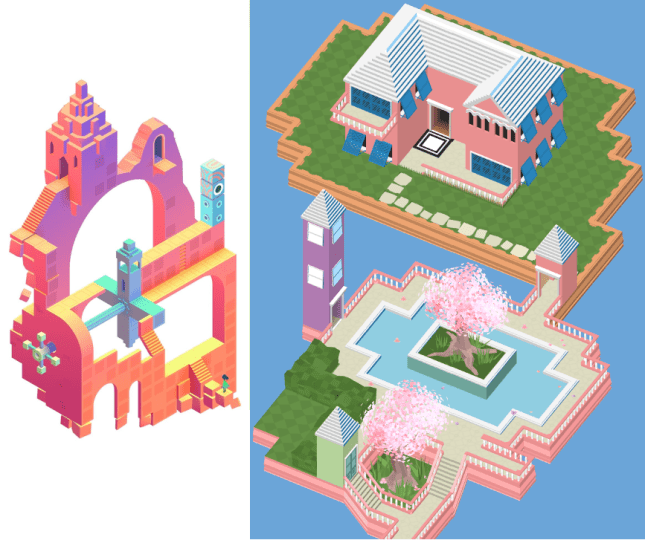
4-3 design

Design of an upcoming level, Fountain!

The problem with level design is that it’s an inherently creative endeavor. I’ve always had trouble with this type of task – if I sit down and work on something for an hour, I want to see some measurable progress. But if I try to work on level design for an hour, I could literally just be sitting there thinking the whole time, with nothing to show for it. This (at least for me) is one of the reasons that level design often gets pushed to the proverbial back burner. I always want to work on game features, because I know I can make some progress on them, so I opt to do that rather than level design. However, this can be a dangerous prospect, as this is a great way to end up scrambling for levels, putting too little thought into their design, and releasing a great game with bad puzzles.

You can’t just say “I’m gonna go design a level!” I mean, you can (and sometimes I do), but that’s not the best way to go about it. Unfortunately, you’re really at the whim of your own brain – you have to be struck with inspiration. The best levels I’ve designed didn’t happen during a ‘level-designing brainstorm’. They happened when I was walking down the street, or sitting down at dinner, or pretty much anywhere, when I noticed something that made me think of a cool level. Inspiration isn’t something you can schedule, work hard at, and then just do. It has to come to you, which, for me at least, is terribly annoying.


Designing for Where Shadows Slumber

All of this gets even more difficult when it comes to designing puzzles specifically for Where Shadows Slumber. Any innovative puzzle game has a sort of quirky concept, a hook to get users to take notice and to make the puzzles more unique and interesting. For us, of course, it’s the shadows and the ever-changing nature of the world, and those aspects of the game are what make it the hardest to design for.

So you sit down and design a level. It looks pretty cool, it’s got a nice flow, it seems challenging and fun. You show it to your team, or you start to implement it, and suddenly you realize – it just doesn’t work. There’s one small thing that prevents the level from working, whether it be a light in the wrong place, an object that should cast shadows but can’t, or maybe it’s just too difficult for a user to get. These aren’t great examples, but this type of situation comes up all the time. We designed around 30 levels for Where Shadows Slumber at the beginning of the year, and now we only have around 15. What happened to the other half? There was something small that prevented them from being good levels – and it’s hard to notice any of these issues until you implement the level and test it out.

The other difficult part of designing these intricate levels is actually communicating them to each other. Every level design, no matter how great, needs to withstand the feedback of its peers. The problem is – how can we show these crazy levels to each other?

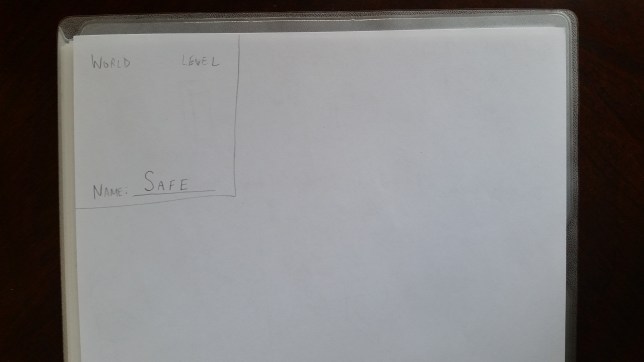
IMAG0625

Notice how my drawing style is a more clinical, overhead view than Frank’s (above)

We’ve tried drawing them and sending them to each other, but they’re often too intricate to really ‘get’ from a drawing. In the end, the only process we’ve found for sharing levels is to sit down in the same room together and talk through what the level consists of, along with the drawings. Even this isn’t good enough for a lot of the more complex levels – sometimes the only way to show your team the level is to build it! This is very frustrating, especially when you build a level that’s no good, and you have to throw it out, but sometimes it’s a necessary part of the process.


Taking the User into Account

Of course, the real judge of level design is the user. It doesn’t matter if every one of your levels is a masterful blend of elegant design and game mechanics if your users don’t enjoy playing it. This is a pitfall that I continually see people falling into, and, as I recently realized, one in which I lived for a good portion of the development of Where Shadows Slumber. But no longer! Throughout our testing, the users have spoken, and we are listening!
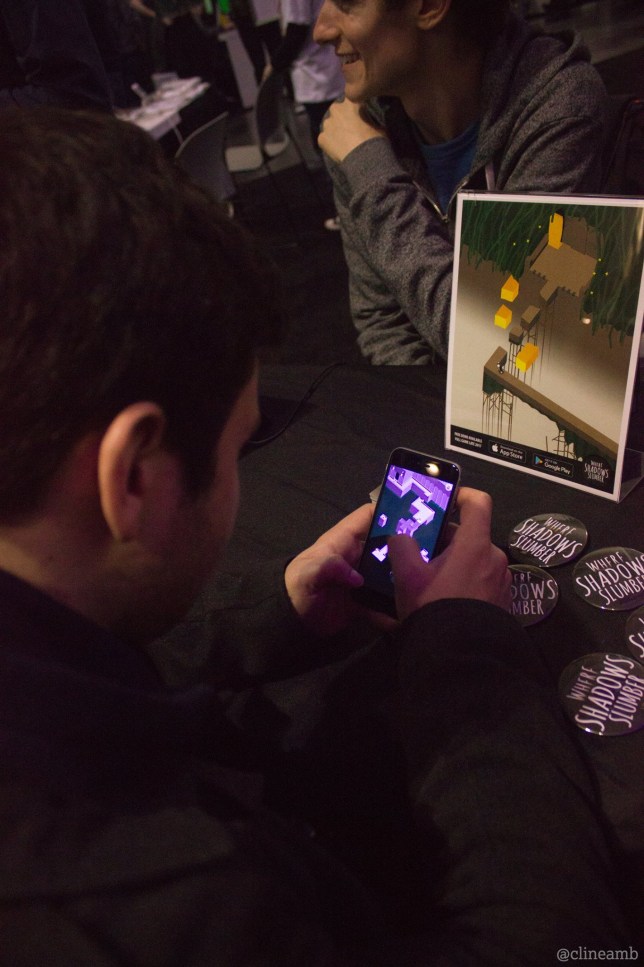
feedback

Getting some feedback on level design!

What does it meant to design for the user? How do we know what they will and won’t like? That’s a difficult question without an easy answer, but I will share some of the tips that I try to stick to.

Listen to your users. This should be obvious, but sometimes it’s not. You have to get your game in the users’ hands, get them playing the game, hear their feedback, and actually listen to it! You’ll never know that users don’t like one of your levels unless you let them test it out, and your level design won’t be good if you disregard their feedback.

Difficulty/learning curve. If your game has a crazy mechanic or concept, the user isn’t going to know how it works – it might seem intuitive to you, but that’s because you’ve been working on the game for so long! You have to make sure that you gently introduce them to the mechanic, in a way that shows how it works while also keeping them hooked. And you have to make sure the difficulty ramps up before too long, or they’ll just get bored of your everlasting tutorial.

Remember that the user doesn’t know what you know. Some people phrase this rule as “treat the user like they’re stupid”, but I think that’s an overstatement. Your users aren’t stupid, they just don’t understand the subtleties of your game the same way you do. They will never do exactly what you expect, and they will never understand the level as well as you do. You need to keep that in mind, examine your level design with an objective eye, and make sure that the experience is enjoyable for the user no matter how they go about solving your puzzles.

Users want to feel smart. The people who pick up and play a puzzle game are usually pretty smart people, and they want to feel smart. This leads to an important design philosophy – make your levels hard, but not too hard. The user doesn’t want to just play an endless parade of easy levels – they won’t feel any satisfaction from beating them. On the other hand, the user doesn’t want to hit a near-impossible level – that’s just frustrating! Beating a level should be easy enough that your users will beat it without getting frustrated, but hard enough that they feel accomplished when they do.

Iterate and Re-use. Sometimes, your users won’t like a level – it happens. In this case, you shouldn’t simply throw the level out. An important part of design is iteration – if your users don’t like a level, figure out why. Figure out what you can do to improve the level. There are parts they don’t like, that you’ll probably end up taking out, but there are most likely some good things about the level, and you don’t want to waste them. Try to fix what the users disliked, and then head back to them and get another opinion.


If I Had to Skimp on Level Design…

Creating a game takes a long time, and there’s a lot to do. Sometimes, you just don’t have the time to pour your heart and soul into every level you design. Sometimes, you just have to put in a few ‘filler’ levels. When is it okay to do that, and what’s the best way to go about doing it?
20170627_124251

“Okay, hear me out: we open on a completely blank screen…”


As much as I’d like to say “all levels are created equal”, I can’t, because it’s not true. Frankly, there are some levels that are a lot more important than others. Which levels are most important? The early ones.

One of the biggest hurdles for a game is what I call the barrier to entry. If I pick up a new game, and the second level is really annoying, there’s a chance I’ll just put it down and never play it again, even if the rest of the game is phenomenal – I have no way of knowing that, and I assume the rest will be just as annoying. However, if I play the exact same game, but it’s the seventh level that’s really annoying, I’ve already played through six awesome levels. The game has earned some credit with me, so I’m willing to let one annoying level slide.

This is doubly true for puzzle games where the user has to learn the mechanics. If you don’t teach the user your mechanics very well in the first few levels, they’re not going to enjoy the rest of the game, because they won’t have learned how to solve the puzzles.

The third argument for this is simply a mathematical one. Every user who plays your game will play the first level. No matter how good your game is, there’s some rate of falloff – some people just stop playing. That means that almost every user plays level two, and most users play level three, and so on. So, the levels that will see the most playtime overall are the first levels, hands down (for any statistics nerds out there, this is basically the same premise as Benford’s Law).

So, if you’re running out of time for level design and you need to skimp on some levels, you should make it levels later in the game. Anyone who has gotten that far already likes the game (presumably), so you don’t need to sell it to them, and they’ll give you a little more leeway.

Now that we’ve tested some of our levels, we’re ramping up into more level design, and I though it would be a good opportunity to show you a little bit of our process. Hopefully you learned something about our level design process, and maybe you can even use it in your own projects!


= = = = = = = = = = = = = = = = = = = = = = = = = = = = = = = = = = = =

If you have questions about our game design process, feel free to contact us! You can always find out more about our game at WhereShadowsSlumber.com, find us on Twitter (@GameRevenant), Facebook, itch.io, or Twitch, and feel free to email us directly with any questions or feedback at contact@GameRevenant.com.

Jack Kelly is the head developer and designer for Where Shadows Slumber.

Monument Valley 2 and Its Implications

On Monday, Apple and ustwo games nonchalantly made an announcement that could forever change the development of Where Shadows Slumber. If you haven’t heard (or figured it out from the title), then I’m glad I get to be the one to tell you – Monument Valley 2 has just been released for iOS devices, with Android coming “soon”!

If you’ve ever played the original Monument Valley, then you’ve probably noticed that it was a big inspiration for Where Shadows Slumber (in fact, you might remember that I mentioned something to that effect in my first blog post). Monument Valley is one of my favorite games of all time, and I’m super excited to be able to return to that world for another round!

As awesome as this announcement is, it’s also a little bit scary. Monument Valley 2 is gonna make a big splash, and people are going to be paying attention to it. The development, production, and eventual release of Where Shadows Slumber will all be happening in its wake, and so this announcement is very important to the future of Where Shadows Slumber.

How does this announcement affect our development, you ask? Well, let’s take a look!


There Can Only Be One

Monument Valley was awesome. I mean, it changed the face of mobile gaming as we know it. It was genre-defining and laid a lot of ground for future games like Where Shadows Slumber.

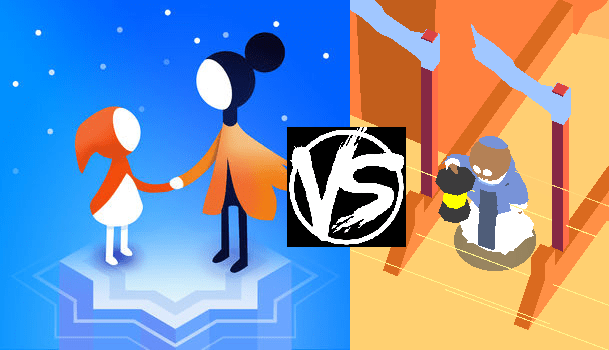
The problem with using a game as inspiration is that your game becomes pretty similar to that game. Since Monument Valley was such a hit, that’s not really a bad thing. Until you consider the fact that two very similar games are inherently competitors. We feel pretty confident in Where Shadows Slumber, and we felt that four years would definitely be enough to set us apart. A new Monument Valley game really changes the equation, for a number of reasons.

screen_263x350_2017-06-06_08-24-37

Ro vs. Grongus: Deathmatch

The first reason is pretty obvious – there are only so many people buying puzzle games. A giant like Monument Valley 2 takes up a lot of that demand. If Joe Puzzlegamer pulls up to the App Store and wants to get an artsy puzzle game, he’ll have a lot of choices. Even if he only had two choices, which would he choose – Where Shadows Slumber or Monument Valley 2?

Monument Valley 2 has a pedigree. It has a wildly successful predecessor. It was made by a studio with a real budget, decently-sized teams, and the know-how to bring a successful game to market. Where Shadows Slumber is awesome, but we’re just two random guys with little money and even less experience. Even if that’s not how we see it, that’s how everyone else will. Monument Valley 2 is the clear choice for the random outside observer.

In addition to losing out on potential sales, there are other things we could lose to Monument Valley 2. For a team without a large advertising budget, one of the best ways for us to get publicity is through conventions and awards. With Monument Valley 2 crowding the beautiful Unity-based puzzle genre, we could also lose chances to attend conventions and win awards. Again, people will have to choose between us and them. Will Unity invite us to represent them at an event? Will Apple shower us with promotions? Will we be anyone’s pick for best puzzle game? Probably not, if they can get Monument Valley 2.


Puzzle Mania

While there are some negative takeaways to Monument Valley 2, there are definitely quite a few positives (in addition to the fact that we have another awesome game to play). As they say, a rising tide lifts all boats.

When Monument Valley first hit the mobile gaming scene three years ago, it made quite a big splash. People absolutely loved it, and they clamored for more – I know when I finished Monument Valley, I wished for nothing but more levels. Imagine if we had been able to release Where Shadows Slumber 8 months or so after that – just when people are done with Monument Valley, but still want a similar experience, we provide them with exactly that!

Monument-Valley-2-Main-by-Ustwo-games

Bringing people back to puzzle games

We’re hoping for a similar situation to unfurl here. People will play Monument Valley 2, and it’ll get their brains working. They’ll (presumably) love the puzzles, the art, the brooding atmosphere. They’ll be all warmed up to the genre, and they’ll be on the lookout for anything similar. We’ll be ready to pounce on that crowd, and hopefully it’ll help us release into a bit more hype than we might otherwise.

Basically, we’re hoping that Monument Valley 2 will revitalize the moody puzzle game market. Not to sound too utilitarian, but we plan to use Monument Valley 2 as a sort of springboard to success!


Timing

There are a few things about this announcement that could be bad for Where Shadows Slumber, as I mentioned, but I think that there is an important factor worth mentioning, and that is the timing. We’re planning on releasing Where Shadows Slumber in early 2018. So, all things considered, I think this timing is just about perfect for us. If Monument Valley 2 had to be released sometime soon, now is probably the best time.

timing

Perfect timing.

If Monument Valley 2 were to be released a month or so after Where Shadows Slumber, we wouldn’t even stand a chance. As soon as people were starting to get excited about our game, a much more acclaimed game would come along and steal all our thunder! A similar story plays out if we release shortly after them – our release simply goes unnoticed.

So why is this the best time? Wouldn’t it be better if they had released a long time ago, to keep our release as far away from theirs as possible? While that makes a lot of sense, I think that Monument Valley 2 will inspire more interest in puzzle games overall, and eight months seems like a pretty good timeframe for the MV2 hype to die down, but for the puzzle fever to still be strong.

Additionally, the fact that Monument Valley 2 has been released in a different calendar year from Where Shadows Slumber works in our favor as well. A lot of awards are of the form ‘game of the year‘, and Monument Valley 2 is a shoo-in for many of those awards. With our biggest competitor releasing in a different year, we won’t have to compete directly with them for ‘of the year’ awards. Not that we expect to win these awards, but it’s always nice to feel like you have a chance.


Changes To Development

So how does this actually change our development plans for Where Shadows Slumber?

Since the timing of Monument Valley 2 is working in our favor, we’ve decided that we’re going to stay the course. We’re still aiming for an early 2018 release, which we feel puts us far enough away from this release. If Monument Valley 2 announced their release in early 2018, we would have no choice but to push our release back a few months. As of now, we aren’t making any changes to our schedule, but we’re definitely keeping our eyes open – if they release an expansion of some sort in early 2018, we might have to reconsider our own release date.

Since Where Shadows Slumber was so inspired by the original Monument Valley, we’re also looking at this as an opportunity to be inspired again. People have, and will continue to make comparisons between our game and Monument Valley, but now they’ll have a newer, sleeker version to compare us to – we have to try and keep up! We get to see another take on the Monument Valley style of puzzler, and we get to see a bunch of new mind-bending puzzles. Perhaps some of them will strike inspiration in our hearts, and help us make Where Shadows Slumber that much better!

inspiration

Can you feel the inspiration?

On the other side of that coin, we’ll also be playing Monument Valley 2 and looking for anything that’s a little too similar to Where Shadows Slumber. If we find that one of our levels is very similar to one of theirs, we may have to change it – even though we didn’t steal it from them originally, that’s what it will look like to the outside observer. We want to be similar to Monument Valley, but not too similar.


Takeaways

Most of the above musings on the implications of Monument Valley 2 are pretty specific, and overall, they’re pretty far beside the point. This is one of the most exciting announcements I’ve heard in a long time, and I can’t wait to get my hands on the new game! That’s the biggest takeaway you should have from this post – no matter what the implications, I’m super excited, and you should be too!


= = = = = = = = = = = = = = = = = = = = = = = = = = = = = = = = = = = =

If you finish Monument Valley 2 and are looking for more puzzle-y goodness, you can always find out more about our game at WhereShadowsSlumber.com, find us on Twitter (@GameRevenant), Facebook, itch.io, or Twitch, and feel free to email us directly with any questions or feedback at contact@GameRevenant.com.

Jack Kelly is the head developer and designer for Where Shadows Slumber.
3 Ways Our Art Changed In May 2017

Last week, Jack wrote a general progress update about the game. We hadn’t done one in a while, and we’re trying to get our audience more informed about the process of game development. Inspired by his post, I’ve decided to dedicate the last post of every month to an update about the visual aesthetics in our game. We’ll review everything that got done in the previous month, with a small glimpse of the road ahead and how it relates to the larger goal of completing the game.


Getting The Ball Rolling On Five Worlds

Our game will feature 8 different Worlds by the time we’re done. Completing the artwork for all of those will take a while, so it’s never too early to get started. I had hoped to get more done this month, but I am glad to report that five of these Worlds have been started. They may never really be “finished” because I’m a perfectionist. Even when the game launches, I’ll still want to change things. But I might as well get them to a place where Jack can say “Frank, stop working! Step away from the computer!”. I’ve included some Work In Progress shots of each World below.

World-0-Forest

World 0 – Forest. This kit needs a lot of work. The bushes are too high-fidelity, and the trees are too low-fidelity. This is a screenshot of the game’s first Level.

World-1-Jail

World 1 – Jail. This kit exceeded my expectations. I wanted to convey the feeling of a claustrophobic, harsh volcanic prison. The brutalist-inspired walls really pull the aesthetic together.

World-2-River

World 2 – River. Inspired by the river styx, this is designed as a swampy, foreboding, gross river. Rickety wooden plank bridges contrast with log-cabin style barricades.

World-6-Summit

World 6 – Summit. One of the toughest to apply modular asset creation to so far. Blurring the grid lines was key to pulling this wintry, icy art kit together.

World-7-Paradise

World 7 – Paradise. This kit is complete, and looks gorgeous. I won’t actively work on it anymore unless something is missing in a Level we’re designing.

Please note that the screenshots included here don’t always reflect actual Levels in the game. Sometimes, to show off how pieces of artwork interact, I design fake Levels in the spirit of the game. Hopefully it gives you a good idea of my progress, and what needs to be done. I also decided to pawn off water effects onto Jack, so that’s why the fluids in these Levels just look like flat planes. (I built them with flat planes) Water will come later. Also coming later – the Worlds I haven’t started yet!

Expect to see screenshots of Worlds 3, 4, and 5 during next month’s update.


TwoHeads

Character Faces

One of the barriers I’ve been trying to break through is my Character Design issue. Every humanoid model I’ve created for Where Shadows Slumber so far has been hastily created for an upcoming deadline. The result is a slipshod model that looks nice from 1,000 feet away, but performs poorly when I need it to do something. In a previous blog post about cutscenes, I lamented at how terribly the Demo protagonist handled when I needed to animate him. His clothing had to be key-framed by hand, and his arms were bent out of whack.

But one of the biggest problems was his face. I modeled it the quick and easy way, and as the saying goes, you get what you pay for. I found it impossible to give him good facial expressions when the situation called for it.

HeadAnimations

The protagonist’s new head uses Morphs to smoothly transition between preset facial poses.

Flash forward to this month: I’m taking a new approach where I model character heads separately from their bodies so I can focus on facial animations using Morphs in 3DS Max. As long as no one notices that these heads are disconnected from their torsos, the effect works. Morphs allow me to model facial animations (frowns, smiles, surprise, anger) and move a slider from 0 – 100 to set the Intensity of the animation. How sad are you? Are you 35 sad, or 100 sad?

So far I modeled the main character’s head, along with a mysterious Wolf that no one knows about. The main character’s facial animations are done. In the future I’ll model two other mysterious figures that need facial animations… but I won’t give them away now!

Expect to see more character head animations during next month’s update. I’ll also do a more in-depth blog post about Facial Animation Using Morphs.


EveryUI.png

Main Menu User Interface

This piece of artwork is still in the planning stages. Unfortunately, I ran out of time this week and had to resort to paper-planning. I would have preferred to mock this up in Photoshop, but my computer died on me before I got around to it (more on that below).

HammerUI.png

Left: The main menu splash screen you see when loading up the game on your device. Right: The Settings and Junk page you see when you press the hammer button on the splash screen.

The plan for the UI is to make it as minimalist as possible, and refrain from using unnecessary text. To that end, I’m currently envisioning a bare bones splash page that just has the protagonist relaxing by a campfire and two buttons on it – a hammer and an arrow. The hammer is meant to indicate “Settings and Junk”. When pressed, it takes you to a side page where you can toggle various togglers™, such as the game language, in-game sound, and auto-skipping cutscenes. Team credits will be displayed there as well. An “X” at the bottom represents “go back” and I’ll try to keep that consistent throughout the whole game.

20170530_143221.jpg

Left: A screen of World 0. Center: A screen of World 1. Right: Half of a screen of World 2, which is locked and cannot be accessed.

The World menu is more involved. Pressing the arrow moves the camera to the right, where we see a 2D view of the first World, Forest. From there, players can swipe left and right to see the other Worlds. Worlds that they aren’t ready to play yet will be locked behind a padlock icon. (No need to reinvent the wheel there) When you’re looking at a World, I want the sounds of that World to play quietly in the background.

20170530_143238.jpg

Tiny overworld map of World 0, which begins with a cutscene “Level” and then has three real Levels. Some are blocked by the shadow.

Pressing the big juicy button with a number on it will take you to the Level Select menu for that World. This will look like a top-down map, with little circles representing the levels each connected by solid black pathways. As you beat more Levels, this map floods with more light. Pressing on a circle will take you to that Level.

That’s the flow I have in mind for the game’s menu. This doesn’t even cover menus that appear INSIDE the game’s Levels, such as when you press the pause button. But in any event, I believe I’ve covered everything the outer menu needs. I just hope this isn’t too much fiddling for a casual audience that isn’t used to games. Getting casual players over these hurdles is always a struggle!

Expect to see a digital version of this UI during next month’s update.


DAxOPKeVoAAK6FY

And now his watch is ended.

Tempus Fugit: Memento Mori

Normally in these blog posts, I showcase my cheery optimistic attitude. But not this time.

Late last week, my laptop suffered a blue screen crash and would not reboot to Windows when I tried turning it back on. I’ve been having rolling blue screen crashes for a while, but it usually restarted afterward. Now my computer is in the repair shop, and I’m getting the impression that it doesn’t look good. Probably because the technician told me “this doesn’t look good.” That’s what I get for ignoring the crashes all this time and refusing to pay for cutting-edge anti-virus software.

As I write this blog post on my old college ASUS laptop, I have mountains of artwork to do and very little time to do it. This laptop crash is going to set me back. The worst part is, it’s a waste of time that didn’t need to happen. Fortunately, no artwork was lost because everything is always on GitHub. I’m mostly worried about losing time.

My next update may be a little scarce, but hopefully it will include good news about my computer’s physical (and mental) health. Always back up your work online, kids! You never know when your next blue screen of death will be your last.


= = = = = = = = = = = = = = = = = = = = = = = = = = = = = = = = = = = =

We hope you enjoyed this update about the game’s artwork. Have a question about aesthetics that wasn’t mentioned here? You can find out more about our game at WhereShadowsSlumber.com, ask us on Twitter (@GameRevenant), Facebook, itch.io, or Twitch, and feel free to email us directly at contact@GameRevenant.com.

Frank DiCola is the founder of Game Revenant and the artist for Where Shadows Slumber.

Progress Report

Frank and I have worked hard on Where Shadows Slumber, and we continue to do so every day. As a team of two, designing a game at our own whims, it’s very liberating. No one tells us what to do, and there’s no bureaucratic red tape forcing us to work on any specific part of the game.

Unfortunately (for us), that red tape does have an actual purpose. Without anyone telling us what to do, we have to figure out what to do! I just touted this as a good thing, but it’s also terrifying! How do we know if we’re doing the right thing? We’re trying to get to a release of a completed game, and we’re the ones who have to decide how to get there! With success comes ultimate glory, but any failure rests on our heads. Given how likely failure is in this industry, we have to make the right decisions at every point of the way. How are we planning on doing it?

Well, despite the fact that I just really scared myself with that last paragraph, we’re going to take a deeper look into what we’ve done so far, and what we’re going to do next, from a project planning perspective.


How Far We’ve Come

evolution

The evolution of Grongus

Frank and I are just two normal duders. (Note: technical term)

We’re also two normal duders who happened to be perfectly suited to approach a project like this. He has some sort of degree related to art and technology, and I have some sort of degree in computer science. We both have the resources to survive without depending on the income from what will end up being a ‘pet project’, and yet we’re both driven enough to dedicate ourselves to that project, even though we’re not dependent on it. We’re close enough to be willing to work together, but not so close that we just end up bickering the whole time.

When the idea for Where Shadows Slumber came up, we knew we had something awesome on our hands. We came up with  a plan, developed a schedule, and started working!

Now, that plan and that schedule have changed a lot in the past two years. Features have come and gone, level design has gone through a lot of iterations, and even our day-to-day process has changed. But, through this flexibility, we’ve managed to stay somewhat on-track. We’re still here, we’re still working on our game, and we’re still in a position where we can have a timely release.

Those of you who have never worked on an indie game are probably wondering why that seems like an accomplishment, while those of you who have are dying to know how we did it. And, if I had to choose a word to describe how we got here, it would be introspection.

in·tro·spec·tion
noun
  1. the examination or observation of one’s own mental and emotional processes.

What I mean by this is that we are constantly looking at our process, looking at what we’ve done, the mistakes we’ve made, and the road ahead. We have to asses our project as often and as accurately as possible, and we have to be completely honest with ourselves, if we want an accurate plan of action.

We’ve done this many times throughout development, and last week, we sat down and did the same thing again. So, let’s take a look at that process!


Where we are now

In my experience, when working on a game, there are usually three mindsets you’ll fall into:

  • ‘Future me will take care of that’ – This happens when your target release date is far enough in the future that the time left and the remaining tasks haven’t formed into a concrete plan, but you have so much time that you know you’ll be fine. This is often accompanied with phrases like ‘I’ll still have  plenty of time for X once I’m done with Y’. Be careful with this thought process – in my experience, you always have more work and less time than you think!
  • ‘I’m behind schedule, and I didn’t even realize it’ – This might be the most stressful mindset, but it’s probably the best one. This starts to crop up as your release date is no longer ‘in the distance’, and the enormity of your remaining tasks really hits you. You start thinking things like ‘I don’t know if I can finish all this work in that amount of time’. If you’re here, then fear not! This is a great place to be – there will always be a lot of work to do, but at least you’re not in the final mindset…
  • ‘Finishing on time is literally impossible’ – This is where you don’t want to end up (obviously). If you put tasks off for too long, or underestimate how long things will take, or just don’t realize that your release date is approaching, one day you’ll wake up in this mindset. You’ll realize that, no matter how hard you work, there’s simply too much work left to do, and you’ll curse your former self for not working harder. Again, please don’t let yourself get here!

The first thing you’ll notice about these mindsets is that none of them really seem great! There’s no ‘everything is on track – lookin’ good!’ The first one kind of feels like that, but it’s usually just a trap. There’s a period of time, I think it’s usually like 6-8 months, beyond which it’s hard to see how a schedule will play out. You can end up in the first mindset, even if you’re incredibly far behind, just because it’s hard for us to instinctively schedule that time.

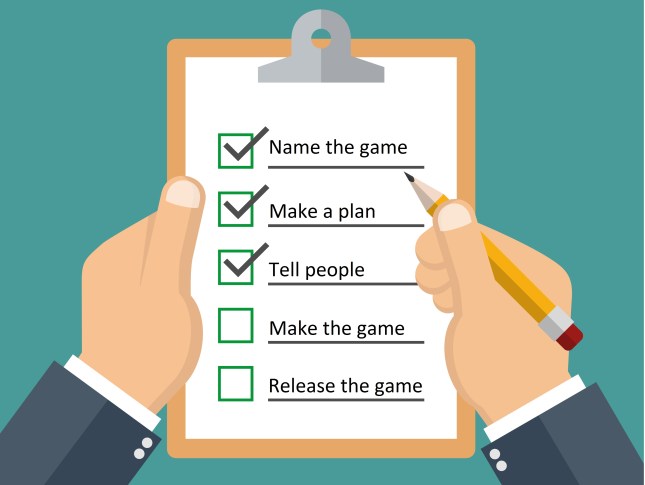
Checklist

It’s okay – the only thing left to do is everything!

But, either way, it’s okay! Nobody gets into indie game development for the relaxing schedule and numerous spa days – we expect to be behind the 8-ball. The reason I bring this up is so that I can describe where Frank and I are in the process. And you know what?

We’re behind the 8-ball. We have a lot of work to do. In particular, in the past month, we’ve moved from the first mindset to the second. When we had more than 6-8 months left, it felt like we had all the time in the world. Now that we’ve just crossed the border into the 6-8 month mark, it’s starting to hit us – there’s a lot of work ahead of us. Do we have enough time? Can we get everything done?

These are the thoughts going through our heads now. And there are questions that naturally follow – can we still make it? What do we have to do now? What’s next?


What’s Next?

planning

This is what planning feels like in indie game development

When you find that you’ve fallen behind in development, you have to correct your process somehow. In my experience, you have three major choices:

  • Delay the release – There’s not enough time to do everything. The fix? Just take more time! This approach is fine (especially when your fans are expecting high quality), as long as your fans are somewhat understanding, you’re not racing against anything (like a competitor, or your own funds), and you haven’t already delayed the release by a lot.
  • Reduce the scope – There’s too much stuff to do in that time. The fix? Just do less stuff! This basically means that you’ll make fewer levels, add fewer features, and maybe decrease the quality that you expect from your game. This is useful, but it can be dangerous – just make sure that the game you end up with is still good enough to be worth it!
  • Buckle down – This one is last, but it’s usually the first one we try. We can’t change the release date – we made a promise to our fans! We can’t reduce the scope – we will not sacrifice our game! Sometimes in life, you simply have to work harder. Before you realized you were behind schedule, it was easy to durdle about, not really getting the important things done. Once you know you’re behind schedule, sometimes all it takes is a mental shift to get more done.

These are the three biggest options you have. Choosing what you need to do at any given point is an entirely subjective task, in that it depends on the stage of development, the type of game, the personal lives of the team members, the average annual wind speed, etc. Basically, I can’t tell you what to do here – if you’re already working 50 hour weeks, maybe you simply can’t afford to work harder. If nobody knows what your planned release date was, and there’s no market pressure, maybe you can just move it back a couple of months. Just choose what’s right for you, and don’t be afraid to re-asses that choice as time passes.

The important part is to actually make a choice. If you realize that you’re not going to finish your game on time, you need to do something. The math isn’t lying, and the longer it takes to make a change, the worse off you’ll be. Recognize that there’s a problem, and do something about it.

Right now, Frank and I are behind, and we’ve decided that we’re going to buckle down. We’re going to work harder and get more done. In another week, we’ll asses our progress and take a look at the road ahead. If we’re still behind, then maybe we’ll resort to reducing the scope or delaying the release. Hopefully we don’t have to, but it’s important to be flexible and honest with yourself.

This post, of course, does not get into the minutiae of how this planning process relates to Where Shadows Slumber, but I hope it was either helpful for your own planning process, or at least entertaining. Until next time, may you examine your own progress, and I hope that you always find yourself ahead.


= = = = = = = = = = = = = = = = = = = = = = = = = = = = = = = = = = = =

If you have any questions or comments about our project planning process (or anything else), you can always find out more about our game at WhereShadowsSlumber.com, find us on Twitter (@GameRevenant), Facebook, itch.io, or Twitch, and feel free to email us directly with any questions or feedback at contact@GameRevenant.com.

Jack Kelly is the head developer and designer for Where Shadows Slumber.