The 1st Play NYC Ever Was Incredible!

Back in the winter of 2016, Jack and I were delighted to hear that Where Shadows Slumber had been nominated for the ’16 Bit Awards. We had attended a bunch of Playcrafting’s shows, but had never realized the company also ran an award ceremony. Although we didn’t win the category, our ears perked up at the end of the show when we heard Dan Butchko’s plans for the summer. There was going to be “some kind of show on the Intrepid in NYC” and that everyone should “stay tuned for more information.”

Because of some odd scheduling issues with the Intrepid, the show was moved to Terminal 5 on West 56th Street, and given a name: Play NYC. We knew for the longest time that we were definitely going, no matter what. We gambled on the show, buying an 8 x 4 table slot on the third floor and marking the date in our calendars.

The concept seemed too good to be true: a PAX styled gaming event right in our own backyard, where developers could directly interface with customers, fans, and other devs? How could we miss it? But we knew the risks as well: the first year of any show is always the roughest. We had nightmares about sitting at our table in an empty rock hall, our weekend wasting away right before our eyes.

So… how did it go?


Disco

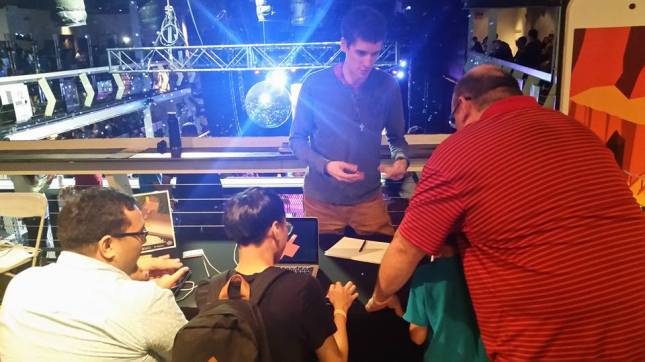
Jack pitches Where Shadows Slumber under the watchful eye of the disco ball of doom.

Play NYC Exceeded Our Expectations

This was a great show, and we thoroughly enjoyed everything about it! Setup was smooth, communication with Dan (the guy running the whole thing) was direct and personal, and we got to show Where Shadows Slumber to existing fans and newcomers alike! As for the various aspects of the show:

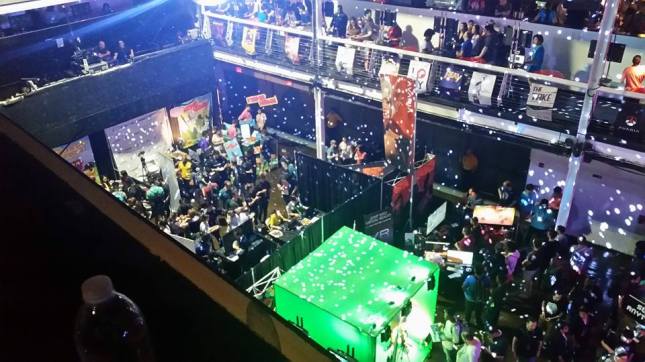
The Venue: Terminal 5 was an odd choice, but I really liked how it turned out. These conventions are often held in single floor, boring, flat convention spaces where everyone gets a 10 x 10 section. But to be frank (ahhh!) I hate those labyrinthine atrocities of pipe and drape. What I loved about using a concert hall was the vertical element of it: from the top floor, we could see everything. And I’m sure it helped out show-goers to know that they could take everything one floor at a time. The building is not modern at all and has some weird layout issues, but we dealt with the quirks just fine. The best part by far was that some gaming kiosks had couches. Every gaming convention in the world should have couches!

Players

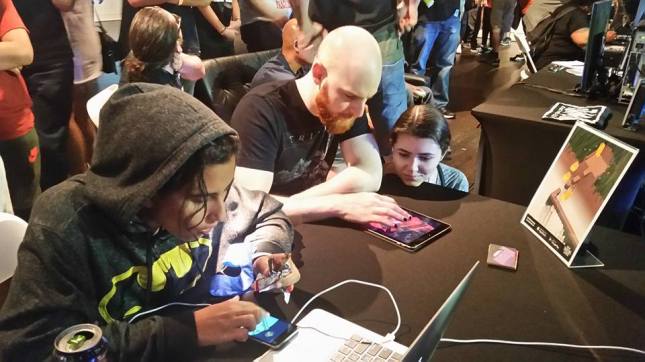
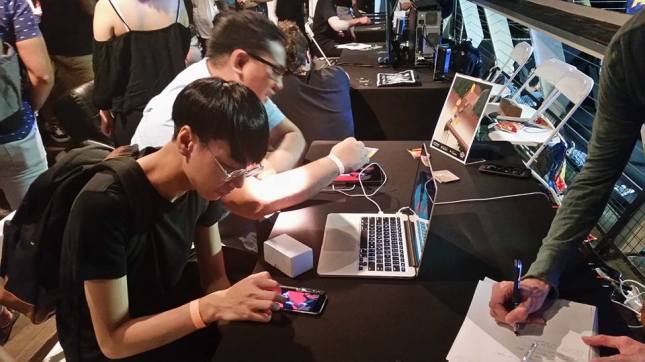
The Crowd: Saturday was way busier than I expected, which was great. At these shows you never want to have the table empty. If someone can be playing your game, you want them there. At the same time, you hate to turn people away, which happens at shows like PAX East where there are just too many people at once. This was a good balance. Considering I was expecting a ghost town, I was blown away! Sunday was more in like with what I expected, definitely slow in the morning. But the afternoon really picked up and we had a strong ending. I have no idea how Dan got so many attendees! Keep up the good work, sir.

Playerz.jpg

The People Attending: Crowd quality is different than crowd volume. Just because a show has a lot of people, that doesn’t mean they are interested in your product or interested in even taking a look. (That’s a dig at you, NY Toy Fair…) As for the people who attended Play NYC, it was a solid mix of young teens and parents, along with fans and developers that were our age. We were really able to relate to everybody and we never felt like people were “brushing us off” for being a mobile game. What surprised me the most was how many cool developers I met! If you’re an audio designer, programmer, or artist, don’t worry – I have your card and you’re in my Rolodex. We’re not hiring anyone else for Where Shadows Slumber, but I’ll consider everyone I spoke to for future projects at Game Revenant. You have time to work on those portfolios!


Green

See You Next Year!

If Playcrafting can deliver a stellar experience next year, we’d love to return to Play NYC for their second show. Hopefully the price doesn’t go up by too much – we’ll see what happens. A lot can change in a year. Perhaps Playcrafting will seek out a larger, more traditional venue (although I liked Terminal 5) and try to bring in more people. I heard rumblings about the convention perhaps going a bit longer each day, or extending to Friday. No confirmation of that yet.

We’ll be there regardless. It’s one of the easiest shows for us to do, and many people in the NYC gaming scene are now eagerly looking for news about Where Shadows Slumber. Returning for Play NYC 2018 is a great way to capitalize on all the hype we’ve built over the past year and a half.

We hope to see you at Play NYC 2018!


= = = = = = = = = = = = = = = = = = = = = = = = = = = = = = = = = = = =

Didn’t get a chance to come by our Play NYC table? You can find out more about our game at WhereShadowsSlumber.com, ask us on Twitter (@GameRevenant), Facebookitch.io, or Twitch, and feel free to email us directly at contact@GameRevenant.com.

Frank DiCola is the founder of Game Revenant and the artist for Where Shadows Slumber.

What We Learned From Testing At AwesomeCon 2017

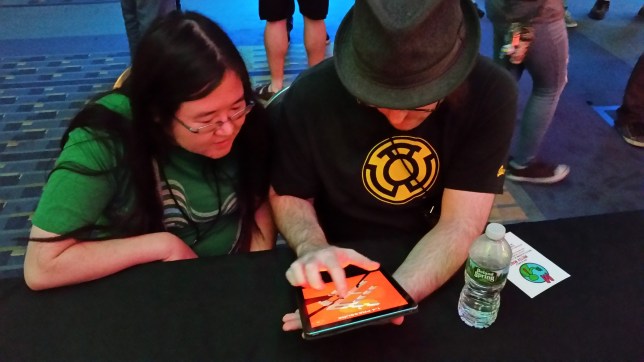
Hey everybody, it’s Frank! I just got back from a trip to Washington D.C. for AwesomeCon 2017, a comic convention that’s expanding its selection of gaming exhibits. We were invited by the wonderful team that hosts the MAGFest Indie Videogame Showcase to take part in their giant indie booth – thanks to Lexi Urell and her team for allowing us to take part in such an awesome con!
 

20170617_211819

Why Did Frank Go To AwesomeCon?

That’s kind of a weird question, right? Is there ever a reason not to go to a convention? Besides, we were invited! Do you even need to ask?

Now that the Game Revenant official coffers are looking a little emptier, it’s important to evaluate every large expense. Travel is certainly one of them. While I’d love to go to every show on planet Earth that’s even remotely related to gaming, we don’t have that kind of cash to spend. Besides that, there’s the time cost involved. If I’m standing at a table showing off Where Shadows Slumber for 3 days straight, that’s 3 days I’m not spending doing animations or environment art for the game. Was it worth it?

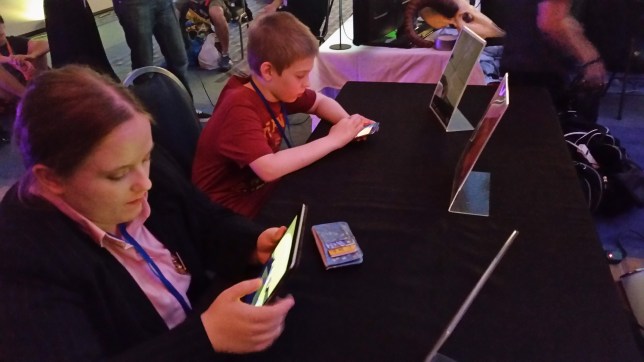
We decided that the best way to get a return-on-investment for our time and money was to focus on one very specific thing during AwesomeCon 2017 – testing. Conventions are a great way to show your game to a lot of people. It may seem like this is purely a marketing activity where indies promote their game, but that’s a shallow view of what conventions can do for you. When you’re given the opportunity to sit down with nearly 100 people and focus on your game, that’s a great time to ask them critical questions about your work and get their honest feedback.

So before I left, Jack created a build of our Where Shadows Slumber alpha that had all 17 of our test Levels in it, along with a basic menu for easy navigation. I resolved to show this early alpha to as many people as possible, with a specific focus on these key issues:

  1. If I don’t tell Players how to play the game, what will they do?
  2. What do Players think of the first three Levels, which are meant as a tutorial?
  3. How far will Players go before they get stuck or bored?
 

20170616_182723

My Testing Procedure This Time Around

As you test your game at a convention, you begin to find a consistent testing method that works. Halfway through the first day (Friday), I had a pitch ready to go once people sat down at the Where Shadows Slumber table.

I was really straightforward with people. I told them that I wasn’t going to teach them how to play because I wanted to see how they performed on their own. (No one seemed to mind!) Then I told them that they could ask me questions if they got really stuck. I told them that the game’s artwork was a placeholder. The only information they were allowed to know was that it was a puzzle game called Where Shadows Slumber. With that, I just watched them play through Level 0-1 and noted their progress. This pitch accomplished a few key things.

This Is Only A Test: Setting up expectations right away is key. By telling people that the game is being tested (and not them) it put them in the proper mindset. They weren’t here to be entertained – they were here to break the game if possible, and try to beat it. I think that increased people’s enjoyment actually, and definitely led to finding some serious bugs.

Ask Me Questions: Getting people to talk while they play is really hard, but it’s very important. You can only glean so much from watching people. I didn’t give anyone that much information, but allowing them to ask questions is helpful. After all, if they ask a question, it means they don’t understand something. That “something” is what Jack and I have to go back and add to our tutorial.

Don’t Tell Me The Art Sucks: It’s important that you tell people what you don’t want to hear. Setting up this expectation decreased the amount of people who would complain about the art. Seeing this alpha next to screenshots of our beautiful demo was probably  a bit jarring, but once I explained it to testers it wasn’t an issue anymore. When you’re testing, you don’t have much time with each person so you need to make it count. Make sure that people know what you already know, so they focus on different issues.


20170616_173920

The Results

To my surprise, people loved the alpha! I only say I am surprised because this is the first time I’ve seen people play it with my own eyes. And although the artwork is all just placeholders and the Levels are brand new, people gave it glowing reviews:

Thor

Having said that, not everything is sunshine and rainbows. We found a few bugs over the weekend, and there are some Levels that may need to be redesigned or cut from the game entirely. Here are all my notes from AwesomeCon 2017:


  • People don’t realize they can’t drag something if the Player is in the way. Draggable objects should smack into the protagonist to give them feedback on this matter.
  • Someone suggested a mechanic where torches (lights) are only on for a fixed amount of time before they shut off.
  • Someone requested a Reset button (which our demo has, but the alpha does not – even though you can just re-select the current Level from the menu).
  • MAJOR ISSUE: People didn’t realize they could drag red objects. Many suggested that they “shimmer” when they are dormant to encourage dragging. Perhaps there should be a handle on the Draggable object to indicate that it is interactive, and show the direction it moves. They should glow when they are being dragged as well.
  • Someone suggested a UI indicator that shows how a Draggable moves, since some objects rotate but others slide across the floor.
  • When the Player is following closely behind a Walker, he stutters and stops, producing an awkward floating animation.
  • The protagonist’s light should grow out from him and stop at the predetermined radius needed to solve this Level.
  • MAJOR ISSUE: Every single Player (with few exceptions) dragged-to-move if I didn’t tell them the controls. Our game is tap-to-move, so dragging is not an optimal way to play. People assume the controls are bad, but they’re just doing it wrong. Without a way to correct them, they make it harder on themselves.
  • Someone suggested charting a path (like in StarCraft) when you drag-to-move, a possible solution to those who find that way more comfortable. This would basically be like connecting the dots between every space you dragged over.
  • IDEA FOR A LEVEL: Level 1-3’s “Lock”, but the Light Switches are connected to some of the Rotating Draggable blocks.
  • MAJOR ISSUE: People tried to drag the purple blocks, but couldn’t. This stopped them from trying things in the future.
  • Glyphs are really just buttons that can be pressed infinite times, right?
  • Draggable Light Switches need to be turned off when they’re off. They still appear on, which is impairing people’s understanding of the light mechanic.
  • The age when players seem able to understand the game is 12 – younger children could trudge through it by trial and error, but with limited understanding.
  • MAJOR ISSUE: “Why is there a shadow?” People do not realize the main character has a lantern with a massive radius and it’s the only light in the scene. This is understandable because our game is super weird. We need to find a way to show this constantly, or they’ll think the shadows have a mind of their own.
  • Someone suggested a mechanic where the main character’s lantern is a spotlight, instead of a point light, for a few Levels.
  • Someone suggested a mechanic where the main character can lower their lantern’s light radius and then reset it, for a few Levels.
  • A businesswoman with knowledge of the Indian market suggested that we lower the price from $5 for that particular market. She felt strongly that Indian mobile gamers wanted free games or something much cheaper.

Here are my notes that are specific to each Level in the alpha.
 

0-1.PNG

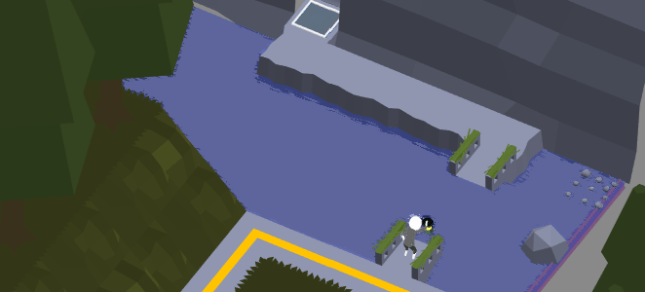
Level 0-1, Fallen

There’s a bug in this level where there bridge (which should fall after you press a trigger) stays exactly where it is. Players who drag-to-move skip right over the trigger, and they never trigger the bridge sequence, so basically they miss the puzzle.

The Draggable box on this level doesn’t have much weight to it. People fling it around like crazy. They also really want to drag it down (onto the dirt path), up (onto the dirt path), or onto the bridge to drop it into the water as a makeshift bridge. None of that is possible but there’s no feedback for that and they don’t know how shadows work yet so it doesn’t register.

Half of the people who play this Level don’t quite understand that the shadow makes the bridge appear.

It’s possible to walk past the Goal Space, and go to a spot on the Level that is beyond the door.

This level is not idiot-proof, like the first Level in our demo.

I think this is our weakest Level. I suggest cutting it and replacing it with a walking tutorial similar to the first Level in the demo. This Level is just throwing way too much at Players all at once.


0-2

Level 0-2, Bridge

An excellent Level. This serves as a perfect introduction to 3 key mechanics: walking, shadow revelation, and dragging.

The Rotatable bridges here should probably wobble after a while to indicate they can be dragged. I can also make a circular pivot point in the center, cut into the stone. That would be a good indication that these are on a swivel.

Draggables can also have parts on them that suck in when Players hold them down. Having parts of the stone depress inward is a good sign that you’re controlling the object with your finger.
 

0-3.PNG

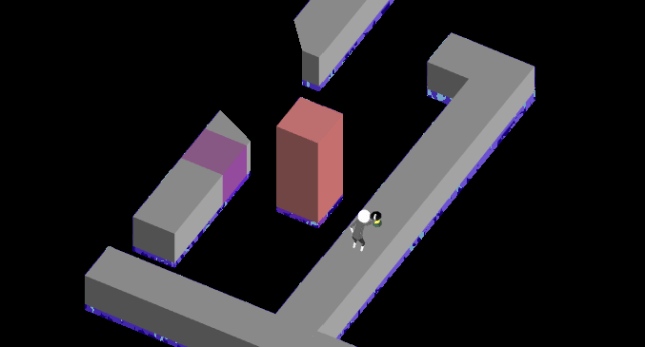
Level 0-3, Monolith

This Level is perfect teaching. It’s a great gateway – you will never beat this if you do not understand how shadows work in our game.

“The purple box moved!” We need to make sure people don’t think the shadows merely move things. They make things appear and disappear… the visual style of the purple box makes it seem like it’s jumping around.

Why can’t Players make the farthest purple block appear if they are standing all the way at the entrance of the Level?

The Draggable Block here should be on some kind of a flagpole so that the vertical movement appears to be a natural fit to Players. (Many tried to move it horizontally.)


1-1

Level 1-1, Recovery

The name of this Level ought to be “Protection” or even just “Light”.

Why is the Light Switch casting a shadow? Does that shadow do anything? That may be a visual error.


1-2.PNG

Level 1-2, Detour

This Level can be broken to make both Goal Spaces appear at the same time. Players usually move the Draggable Block back and forth so rapidly that it causes both to be visible. However, the fake Goal Space does not work. If we can’t fix this bug… we should make it work! Why not reward Players for their trickery?

If there was a Light Switch near the space where the Goal Space is revealed, this Level would be a bit harder. You’d have to make sure the Light Switch was off. That may make it more interesting for the Players who figure it out in two seconds – and it keeps the World’s atmosphere consistent, since we use a lot of lights here.

The shadow needs to change more of the Level when it swipes across the screen, to give Players a clue that something weird is going on.

There ought to be two Shadow Eyes on the Draggable Block.


1-3.PNG

Level 1-3, Lock

Let’s make the sides of the Rotating Blocks sloped here, or at least spiked. People consistently try to walk on the sides of them when they are down, but that would break the Lights. It must appear unwalkable.
 

1-4.PNG

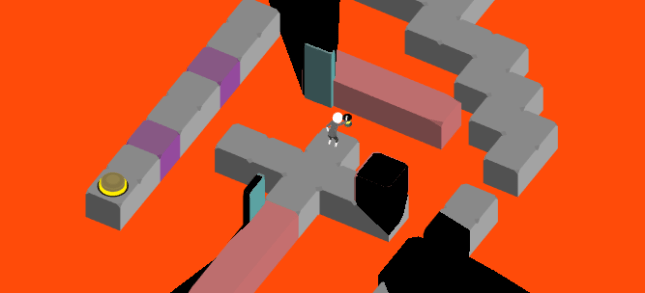
Level 1-4, Pressure

Extremely hard Level. That’s a good thing to have at this point in the game.

“I didn’t know I could stand on the box and rotate it.” Are we being consistent with when Players can do this and when they cannot?

How will Shadow Eyes work here? How can we align them with the object they are changing?

Someone found a bug where both buttons were pressed and they beat the Level, but they could not walk on the green path. (This is a soft crash I guess, since the Level is broken but the game still works fine.)


1-5.PNG

Level 1-5, Wolf

This Level should be renamed to something that indicates how to solve the puzzle, like “Doors” or “Black” or “Pitch”.

People don’t know they can drag these pillars.

The effect of pressing a Button here was not always obvious. I need to make an animation and we ought to have a clear sound attached to it.

On the iPhone, there was a bug where the sliding pillars could not be dragged. We had to reset the Level. I suspect Glyphs have something to do with this.


2-1.PNG

Level 2-1, Docks

Literally every tester thought the Walkers would hurt them and everyone called them “zombies”. My use of the color green was foolish!

We should start this Level with a Walker coming toward you that you can’t avoid, so people see that they aren’t bad.

People LOVE the reveal with the pillar sweeping across the Level. We should do more.

People tried to reverse the reveal and they couldn’t do that, which upset them. I think they wanted to see it more than once. When we get it set up properly, let’s consider this. It’s about consistency and Players enjoying the game for its toys rather than its puzzles.


2-2.PNG

Level 2-2, Test

We can call this Level “Elevator” or something. Maybe “Switch”, because you press a switch, but you also need to change places with the Walker.

Walkers flip around when you rotate Draggable Bridges, and this really annoys Players who are trying to guide his path. Also sometimes the Walkers float, breaking immersion.


2-3.PNG

Level 2-3, Guide

Pressed Buttons really ought to look pressed. I need to redo the art and then I’ll need help setting the states properly. We can also drain them of color once pressed.

For some reason I think buttons should be octagons. Why did I write this?
 

2-4.PNG

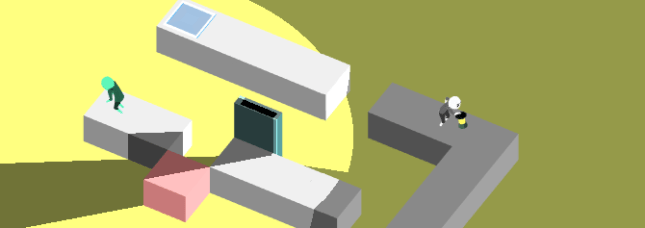
Level 2-4, Ebb

These Walkers cast a light, but they don’t have an obvious light source. I can make them holding torches, but what happened to their little light bulbs? Did I delete them?


3-2

Level 3-2, Tradeoff

The main light in this Level looks like it’s off because it’s so dark. The Player’s lantern doesn’t always need to be the brightest light in the scene! This sliding light is way more important to the mechanics of the Level. We can dim the Player’s light in favor of the other one.


3-3

Level 3-3, Anchor

Rectangles can pass through each other.

The right side Button node was briefly unwalkable, due to a multiple reality error.

After leaving a node, the state of a Button was still pressed. This made the Level unbeatable.
 

3-4.PNG

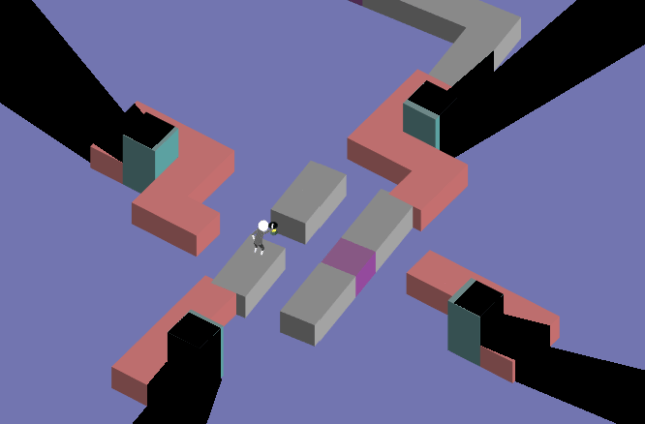
Level 3-4, Torus

“Is that it?” Torus looks more intimidating than it is. Can we bring up the difficulty on this one somehow? I think people are disappointed that you don’t need to find a way to navigate back and forth using the rotating segments. It is solved quite easily.
 

3-5.PNG

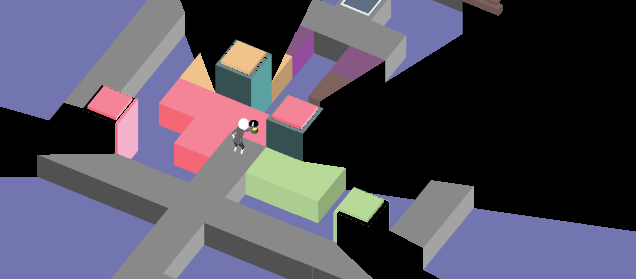
Level 3-5, Island

This Level can be broken by drag-dashing back and forth until the pillars remain upright. Then, walk into the island, the pillars lower, and you beat the puzzle without really solving anything.


It’s incredible how much insight you can get from just a few days of testing! These kind of testing moments are hard to come by, so it’s important to make the most of them. I hope you appreciated seeing how your feedback will impact the game, and this gave you an insight into what indie developers are looking for from testers.

We’ve got a lot of work cut out for us this month, so expect to see these changes reflected in my post at the end of June where I update you on the state of the game’s artwork.


= = = = = = = = = = = = = = = = = = = = = = = = = = = = = = = = = = = =

We hope you enjoyed this insight into our testing methods. Do you have any feedback for us about the game’s alpha? You can reach out to us at WhereShadowsSlumber.com, tweet at us on Twitter (@GameRevenant), message us on Facebook, leave a comment on itch.io, jump into chat on Twitch, and email us directly at contact@GameRevenant.com.

Frank DiCola is the founder of Game Revenant and the artist for Where Shadows Slumber.

3 Things I Learned at GDC 2017

I’ve just returned from a whirlwind trip to this year’s Game Developers Conference (GDC), and I have a lot to tell you! Unfortunately, most of what I learned is top secret. You hear a lot at these conventions, so between secret news and talks with undisclosed mobile publishers there isn’t a lot I can disclose. More on that later this year…

But I can certainly reveal my impressions as a first-timer to help you out if you’re planning on going to GDC 2018. Here are three things I learned my first time at GDC!


Calendar with pushpins

Lesson 1: Schedule Meetings Months Ahead of Time

My number one priority at GDC 2017 was to talk to someone from the App Store about Where Shadows Slumber. My number two priority was to talk to someone from Google Play. Specifically, I’m looking for the people that make promotions and “features” happen. Being featured on an app marketplace can sometimes be the difference between relative obscurity and worldwide fame. It’s that important.

Certainly it can’t be your only strategy, but it’s at the top of my list. Sadly, I failed! Since I was so late to the game (I only found out about GDC when two people mentioned it at MAGFest 2017 earlier this year) I never scheduled times to meet with them. Naively, I assumed there would be some kind of Apple booth and I could meet them there.

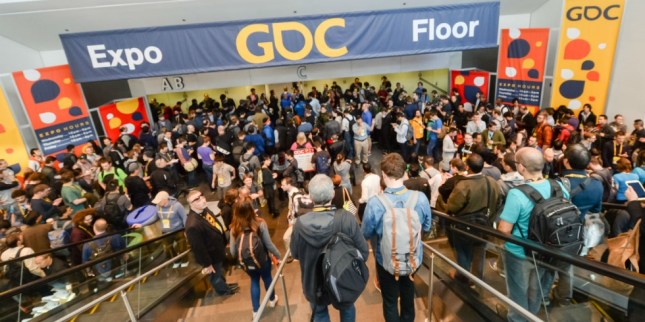
No way. Although the major players (PlayStation, Oculus, Facebook, Microsoft, Unity) had large presences at the show, Apple did not have a booth. They probably assume they would just get inundated by indies and it wouldn’t be worth the expense. If you wanted to talk to them, you had to get on their calendar months in advance. They met with business partners in secret rooms during the show, protected under heavy guard. The same is true for Google – they had a booth, but it was specifically to show off Daydream, their mobile VR peripheral. The Google Play team was nowhere to be found.

I learned the hard way – don’t make my mistake! It’s crucial that you do your homework ahead of time and get on the calendar of a major player like Apple, Google, Nintendo, or whoever you want to meet. Don’t leave this stuff to chance!


20170303_101342

GDC talk about Chinese localization pitfalls, given by Jung-Sheng Lin of Taiwan.


Lesson 2: The Talks Are Great, But You’ll Get Tossed Out

I went to GDC primarily to make connections in the industry. I wasn’t expecting to enjoy the seminars as much as I did. It turns out there are a lot of talks, panels and seminars at GDC and they run the full week. (I arrived on Wednesday, since I was mostly concerned with the Expo – but there are talks and parties beginning on Sunday) The lectures were great! I enjoyed pretty much every one that I went to. The panels weren’t as interesting as the talks because less work went into preparing them. But overall, I was impressed.

One thing bugged me though. I should have seen this coming, but when you buy a pass for GDC you’re effectively selecting what access you’ll have during the show. They have all kinds of “tracks” – Art, Music, VR, All Access, Mega Golden God Status, etc. I got an Expo Pass, which is the cheapest option. This lets you into the Expo and a small smattering of talks.

What this meant was that often I would see a talk advertised (“Nintendo Reveals All About Breath of the Wild!”) and get really excited for it only to be turned away at the door. The paper pocket guide doesn’t warn you about the access required for a talk, it just says where the talk is and who is giving it. To see a filtered view, you need the app. Once I filtered the talks available by the Expo Pass using the GDC app, it become clear that there really wasn’t too much I was interested in. Fortunately I snuck into at least one restricted talk (it was about early access and Ark) and the talks I was able to get into were pretty good. Still, it’s a bad feeling.

So, again, plan ahead! Before you buy a badge, look at the talks available. Filter the list. Ask yourself – are the seminars worth the price jump from $299 to $999? If so, take the plunge. You’ll appreciate getting the access. Otherwise, just deal with the consequences and don’t be surprised when ushers show you the door.


20170307_134433

Lesson 3: Don’t Take No For An Answer

The theme of the first two Lessons is quite clear: plan ahead. Having said that, I should also mention that just because you didn’t plan ahead doesn’t mean you shouldn’t muscle your way in anyway.

Rules only matter if they’re enforced, right? Once they stop being enforced they might as well not even apply. Although I don’t believe this is true when it comes to objective morality (don’t go burning down houses because you think you’ll get away with it), it certainly works when it comes to event admissions.

For example, I went to the Big Indie Pitch at GDC 2017 after some urging by Craig Barnes (I owe you one, man!). This is a pitching contest where you show your mobile game to publishers and industry professionals. You get 4 minutes with 5 different groups each, and they judge your game based on its aesthetics, mechanics, marketability, and overall quality. But I never formally applied for the contest because I missed the submission cut-off by one day. Feeling dejected, I almost didn’t even attend! It was 3 pm on a Thursday, I was already exhausted, the event wasn’t close to the convention center, and I very nearly bailed to go to other events instead.

Something told me I’d regret it if I didn’t at least show up, so I took an Uber over. As the event began, I begged the event coordinator Simon Drake of Steel Media to put me on a Waitlist. If people didn’t show up, I could take their slot! There were four others like me so Simon agreed, and to our surprise the Waitlisters were given a chance at the tail end of the contest to make our case to the judges. (OK, this isn’t really “muscling”, more like “pleading”… but you get the point!)

To my utter shock, Where Shadows Slumber received third place at the Big Indie Pitch! Jack and I now have $1,000 in marketing money to use on any of Steel Media’s owned platforms, and we’ll put it to good use. Another awesome thing: the second place winner, Louard of Suzy Cube, was also on the Waitlist! The moral of the story? Plan ahead, and plan for everything.

Then, expect your plans to go wrong, and don’t give up when they do!


I’m going back to GDC next year for sure. We may exhibit at the show, or just walk the show floor. I definitely want Jack to see this, because it’s an awesome experience. Where Shadows Slumber will hopefully be commercially available by GDC 2018 so the timing should be perfect… but you know what they say about plans.


= = = = = = = = = = = = = = = = = = = = = = = = = = = = = = = = = = = =

Were you at GDC 2017? Tell us about your experience in the comments below! You can find out more about our game at WhereShadowsSlumber.com, find us on Twitter (@GameRevenant), Facebook, itch.io, or Twitch, and feel free to email us directly with any questions or feedback at contact@GameRevenant.com.

Frank DiCola is the founder of Game Revenant and the artist for Where Shadows Slumber.
Heading to GDC 2017 Today!

As I type this, I’m packing to go to GDC 2017 – The Game Developers Conference at the Moscone Center in San Francisco, California. The convention actually already started, believe it or not. Monday and Tuesday are incredibly expensive lectures and talks, with an expo that runs Wednesday through Friday.

Since I’ve never been to this before, I didn’t want to break the bank. Transportation to San Francisco was expensive enough, especially when you consider I’m staying in a hotel near the convention center. So I’m just going to the expo, where indie devs will be showing off their games and large companies will be holding meetings with business partners.

I have three main goals in mind for GDC 2017: scope out the convention for 2018, meet publishers and distributors, and plan the future of my company.


gdc

Case The Joint for 2018

This is a huge show, and it always happens right around this time of the year. I predict Where Shadows Slumber will be released at some point next year during this time, so it’s highly likely we’ll be attending GDC 2018 as exhibitors.

I want to ask these indie devs if they feel like it was worth the price, the trip, the time, and other costs. You never know which shows are going to give a return on your investment. This also gives me a convenient excuse to actually have fun at a trade show!

I’m so used to going to these things as an exhibitor, I forgot what it was like to be able to freely move about the show floor and talk to people. What a treat!

Also I need to make sure I get details on how to sign up for contests. GDC has a few award shows that run (two, I think?) and I know next to nothing about them. But I know that I want Where Shadows Slumber to win everything forever, so it’s time to get some information. I’ll return next week with contact people!


idreamsky


Meet Publishers and Distributors


It can be difficult to make a connection to someone completely online. But Jack and I need people to distribute our game in China, Japan, Korea, Russia, India, and other foreign countries. We don’t speak the language or understand the market. For a cut of the proceeds, these publishers can make our game a hit in their region.

I’m not looking to promise these people anything just yet. Mostly I want them to take a look at the game and get a conversation going. If the game is “on their radar”, then my follow up email over the summer might get noticed.

But first they need to see it. I’ll shove my iPad in their face if I have to! (I swear to God I will do this once before the show ends) I already have a hit list on my phone of who I need to hunt down at GDC, and I won’t rest until I find them!

This took a violent turn… so let’s go to the final section!


maxresdefault

Plan For The Future

I already talked about GDC 2018, so why do I need to plan for the future? Well, you can’t work on one game forever. Even Blizzard will need to say goodbye to its beloved properties one day. Where Shadows Slumber is a beautiful game, but I have a lot more game ideas in the pipeline. Planning for what comes next is important. We may be talking as far as 2019 or 2025 here, but I plan to build this company into something great. That takes foresight.

I want to make a good first impression with some big-wigs at the largest game companies and bluntly ask them what it takes to make third-party games. There’s a lot of exciting stuff happening around VR (which I am still skeptical of), Nintendo’s Switch, and the growing PC gaming market. Now is the time to forge some professional bonds to be used at a later date. There are some technology companies in particular that I want to visit, so I can ask them some “is this possible with your tech?” questions.

I’ll try to do a recap of all this when I return, but PAX East is next week so… gah! It’s going to be a busy life, I suppose >:)


I have a taxi to the airport to catch, so see you next time! Thanks for reading.


= = = = = = = = = = = = = = = = = = = = = = = = = = = = = = = = = = = =

Don’t miss updates while I’m at GDC. Share our game at WhereShadowsSlumber.com with the GDC hashtag, find us on Twitter (@GameRevenant), Facebook, itch.io, or Twitch, and feel free to email us directly with any questions or feedback at contact@GameRevenant.com.

Frank DiCola is the founder of Game Revenant and the artist for Where Shadows Slumber.