Slumber by Southwest (SXSW)

Jack and I have just returned from our first trip to the South By Southwest Music Festival (SXSW), a week-long party that consumes the city of Austin, Texas every year around this time. Although “South By” lasts a full week, we were only in town for the SXSW Gaming part of the festival, which ran from Thursday, March 15th to Saturday, March 17th.

According to pretty much everyone we met, the gaming portion has really grown over the past five years. SXSW didn’t have a gaming section of the show for a long time, but recently it’s gotten so large that they had to put us in the Austin Convention Center just to hold all the video games!

I’ve been to Austin once before, when I went to Unite 2017. I was happy to return! The food is hearty, the locals are friendly, the weather is summery, and seeing hundreds of thousands of people flood into Austin was truly a marvel to behold. But how did it stack up as a gaming convention?


20180317_134331.jpg

High Traffic, High Engagement, No “Crowding”

SXSW might be the best show we’ve been to so far in terms of crowd size and crowd management. Let me explain…

One way a show can go wrong is if there aren’t enough people. When we went to Gameacon 2016 in Atlantic City (back when we launched our free Demo), we encountered this problem. If there aren’t enough people at a show, you end up sitting at a table bored for extended periods of time.

Another way a show can go wrong is if there are too many people! This isn’t really terrible, but it does make things hectic. I remember last year’s PAX East showcase being insane. It becomes a madhouse, trying to hand out iPads to everyone, charge every device, give everyone the pitch in a loud convention hall, and give out business cards. In other words, you want a table full of people playing your game without the excessive crowd traffic.

That’s where SXSW Gaming really excelled. From the time the show opened at noon on a Thursday, there were people in the hall playing our game at the table. Yes, you read that correctly – noon on a Thursday. I’ve never seen a show pull people in right away like that, and I assume it’s because SXSW is such a dominating event that people take off from work and see everything the festival has to offer.

The icing on the cake was that since Jack and I were selected for the Gamer’s Voice portion of SXSW Gaming, they gave us two free 3-day pass wristbands for us to give to our friends. How thoughtful! The staff was wonderful, and the experience of exhibiting at the show was effortless. We thoroughly enjoyed every part of the experience.

 

20180317_195933.jpg

Gamer’s Voice at the SXSW Gaming Awards

They did something really unique at SXSW that I haven’t seen at too many other conventions. During the three days of gaming, con-goers could vote for their favorite indie video games on iPads strewn about the show floor. Instead of the way these things usually work, where an academy of faceless judges votes on their favorite games, the idea was to create a “Gamer’s Voice” award for the various categories: mobile, tabletop, VR and PC/console. After three days of voting, the winner was announced at a ritzy award show Saturday evening.

These kinds of events are perfect for us since we don’t have a ton of money for booth fees. We applied to this contest back in December of 2017, and I think the entry fee was $50 or something trivial. Then we were selected to attend the show and given a 10 x 10 space on the show floor, as well as two Platinum badges which run $1,650 a pop. So it’s almost like we won $5,000 if you add together the cash value of all of these things [ 0_0]!

I love the idea of Gamer’s Voice, although Jack and I were a bit unprepared for the voting process. The attendees seemed a bit unprepared too, since most of them didn’t realize there was a competition going on. The whole thing seemed like an odd test of our political “get out the vote” skill rather than a focus on the quality of our game. We tried everything we could, including bribing people and busing in voters from out of town, but we didn’t win! You can watch the recorded stream here.
TinyBubbles.JPG

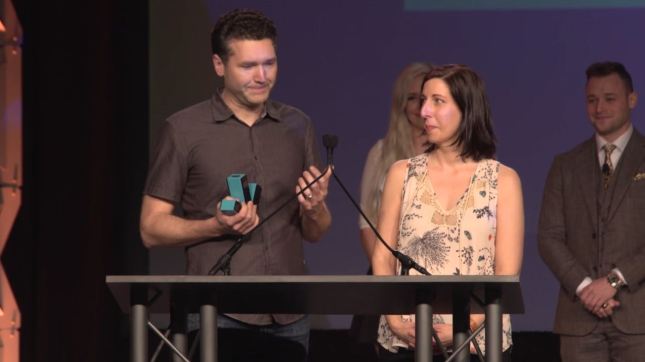
Stu and Paulette Denman accepting the award for Gamer’s Voice: Mobile!

At the award show on Saturday night, our friends at Pine Street Codeworks, Stu and Paulette Denman, took home the grand prize! Congratulations to them and their team for their work on Tiny Bubbles. They deserved the award – Tiny Bubbles is a very pretty game, it’s super polished, and the mechanics are very creative! The game launches on iOS in a little over a month, so go check them out and support our indie brethren! This also marks the second time so far that Where Shadows Slumber has lost to Tiny Bubbles in direct competition, so we have a new rival! The results of the award show can be seen here.


Header-Party.png


Sweet Rave Parties!

As guests of SXSW, we were always invited to their crazy parties. We had to skip out on the Thursday night party they threw for the gaming exhibitors because we were so exhausted from our travels. But we were happy to go to the SXSW Gaming Awards, as well as the afterparty.

It felt so weird being in the audience of the SXSW Gaming Awards. It finally hit me that I was a part of the same award ceremony where they were handing out awards to games like PlayerUnknown’s Battlegrounds and The Legend of Zelda: Breath of the Wild. I’ve attended these before as an audience member, like when I was at GDC last year and watched the IGF awards. But now Where Shadows Slumber was actually one of the games in the running, so I was a participant rather than a spectator. What a rush!

IMG_20180318_003032.jpg

This isn’t a photo – it’s the book cover from my upcoming cyberpunk RPG system.

After the show, our indie enclave congratulated the Tiny Bubbles team and decided to all go out for dinner together. Then we went to the last SXSW party of the whole festival, which was a gaming rave they threw in this outdoor club called The Belmont. They had this crazy DJ system called WaveVR where someone was on stage mixing the music in virtual reality.

IMG_20180318_012805.jpg

Left to right: Frank DiCola, Jack Kelly, Jai Bunnag, Paulette & Stu Denman, Mattis Folkestad

It was fun hanging out with our fellow indies, watching Jack’s sweet dance moves, and chugging refreshing Waterloo™ watermelon sparkling water. 10/10, would go again! We hope to see this crew again sometime soon.


02.jpg

Post-Show Slump

I have no idea how Jack had the strength to actually go to work on Monday. I spent most of the day suffering from a post-Austin hangover, sifting through the pictures that went into our Facebook album. Regrouping after these shows is always the hardest part. I’ve been reflecting on a few reasons why that may be the case…

  • We met a bunch of cool indie people, but we have no idea when we will see them again.
  • We’re super pumped from the hype of the show, so going back to drudge work is a bit depressing.
  • Lots of people gave us good feedback on our build, so I’m torn between fixing that stuff or moving on to finishing the rest of the game.
  • We also promised we’d send out this build over TestFlight and Google BETA, but it still has a bunch of the same errors that it had at SXSW.

The worst part is that since PAX East 2018 is right around the corner, I’m going right back into “ramp up for a show!” mode. Hopefully I get some meaningful progress on the art done in the next few weeks! Preparing for shows always makes me anxious.

Feel free to send in your “post-show slump” advice in the comments below or on Twitter! We could use the pick-me-up. Thanks for reading this blog post about our travels to SXSW – if this looks like your idea of a fun time, signups for SXSW 2019 have already opened up to the general public!

Being invited to the show was a great honor, and the traffic at the show was great. This is a show that I hope we can return to one day, once the game is released. If we make enough money from the game to return to Austin for SXSW, I think it would be a good investment. If you are in indie and you can make it to Austin next year, I strongly recommend that you apply for Gamer’s Voice as well.


= = = = = = = = = = = = = = = = = = = = = = = = = = = = = = = = = = = =

Thanks for reading our business trip blog! You can find out more about our game at WhereShadowsSlumber.com, ask us on Twitter (@GameRevenant), Facebookitch.io, or Twitch, and feel free to email us directly at contact@GameRevenant.com.

Frank DiCola is the founder of Game Revenant and the artist for Where Shadows Slumber.


State of the Art – March 2018

Welcome to State Of The Art, March 2018 edition! This monthly progress report is written by Frank DiCola and is focused entirely on how the game’s visuals have improved in the past month.

Missed last month’s State of the Art? The February edition is right here: click me!

SPOILER WARNING: This post contains screenshots, GIFs and videos of later sections of the game. If you want to experience them in all their majesty for the first time on your mobile device when the game launches, don’t read on!


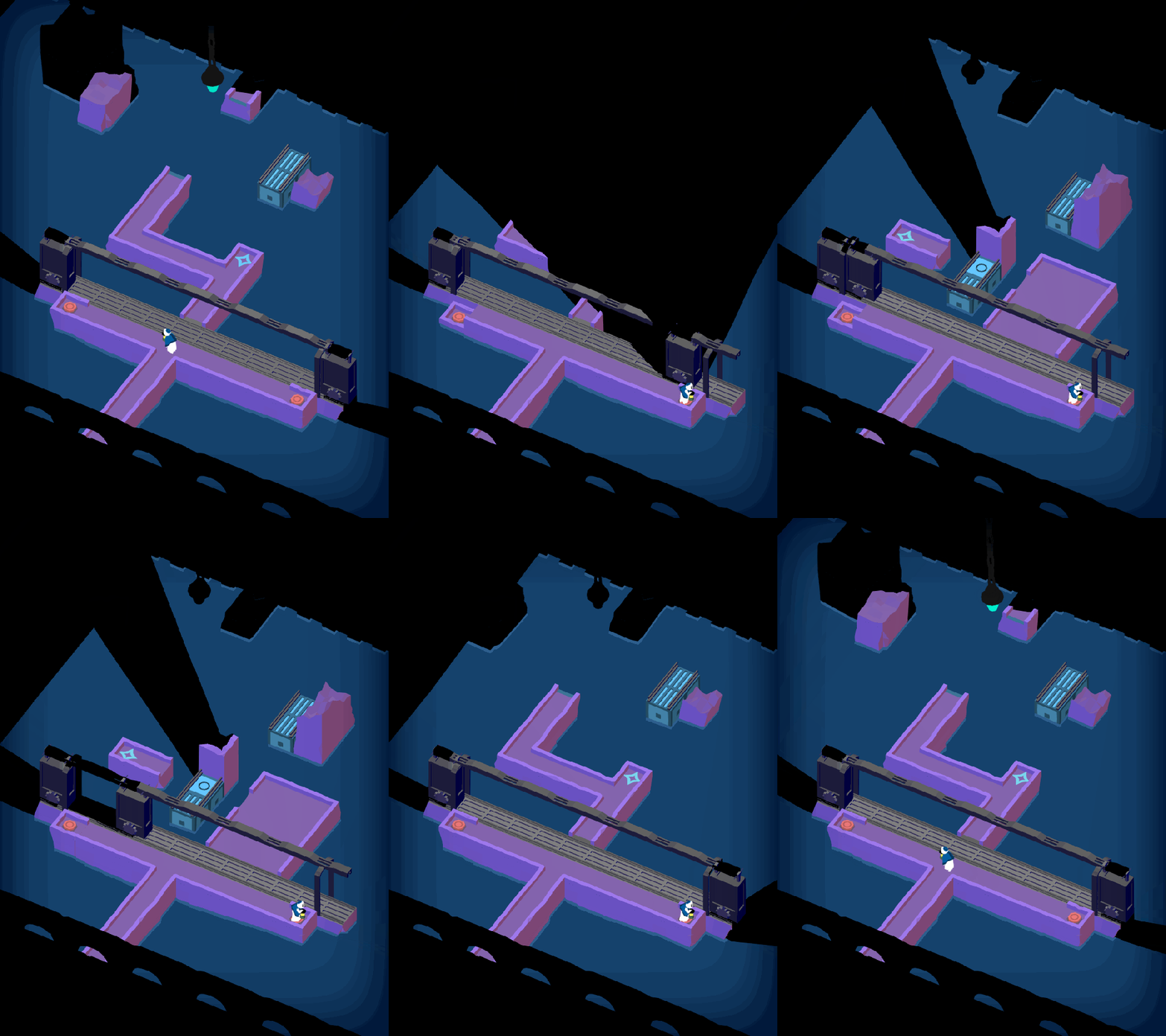
3-1-Noria

A Whole New Aqueduct

Like the other unfinished Worlds in Where Shadows Slumber, the Aqueduct used to look pretty dumpy. It was passable, but the colors were lifeless and the geometry was too perfectly straight. There was nothing about it that made me love it. As the game’s artist, that’s a pretty bad feeling. I never want any section of the game to make me recoil in disgust. My goal, as I’ve said before, is to make every Level my favorite Level. When it comes time to add screenshots of this game to the App Store, I should think to myself: “How can I possibly choose!? All thirty-eight Levels are so perfect and photogenic!”

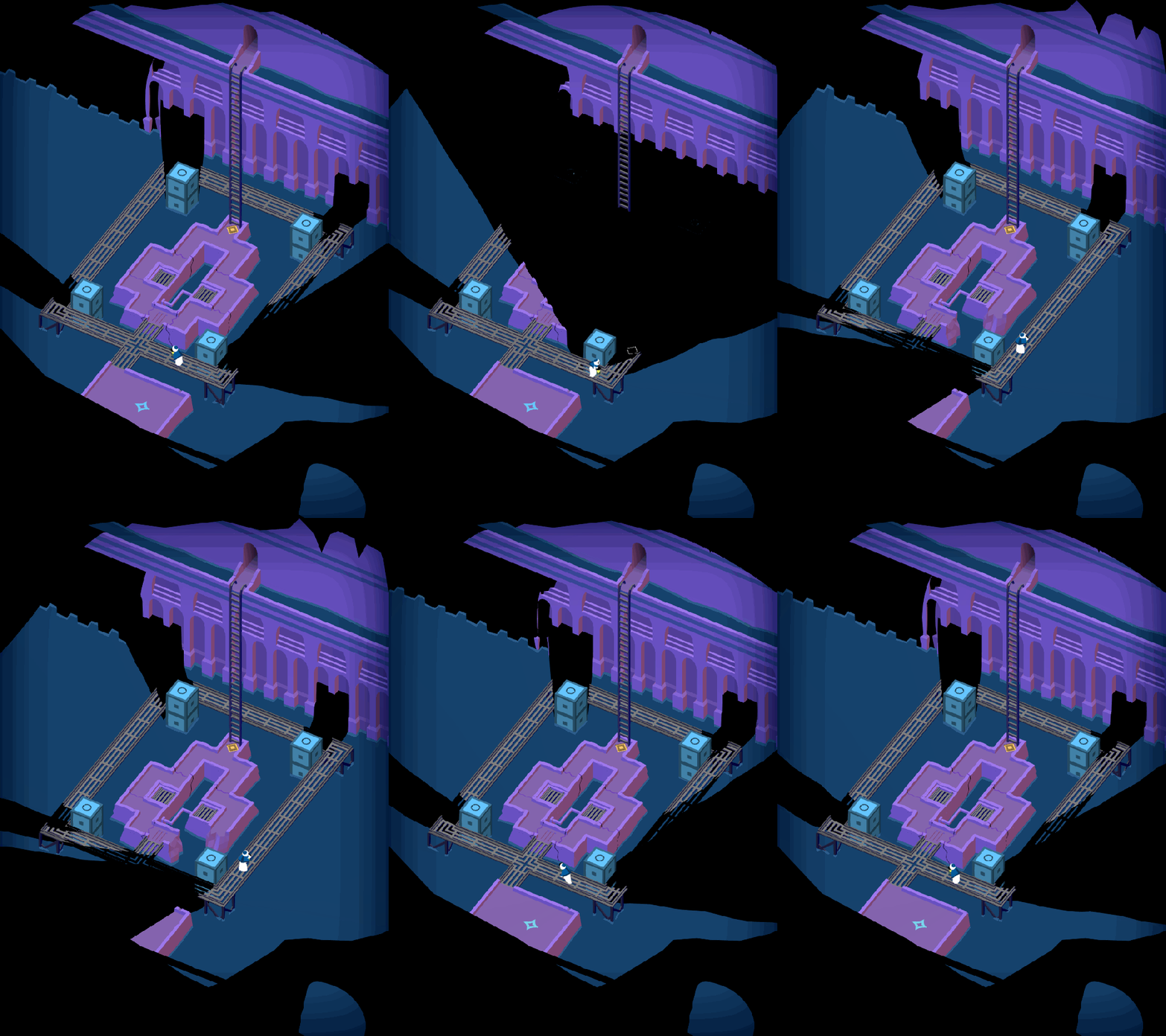
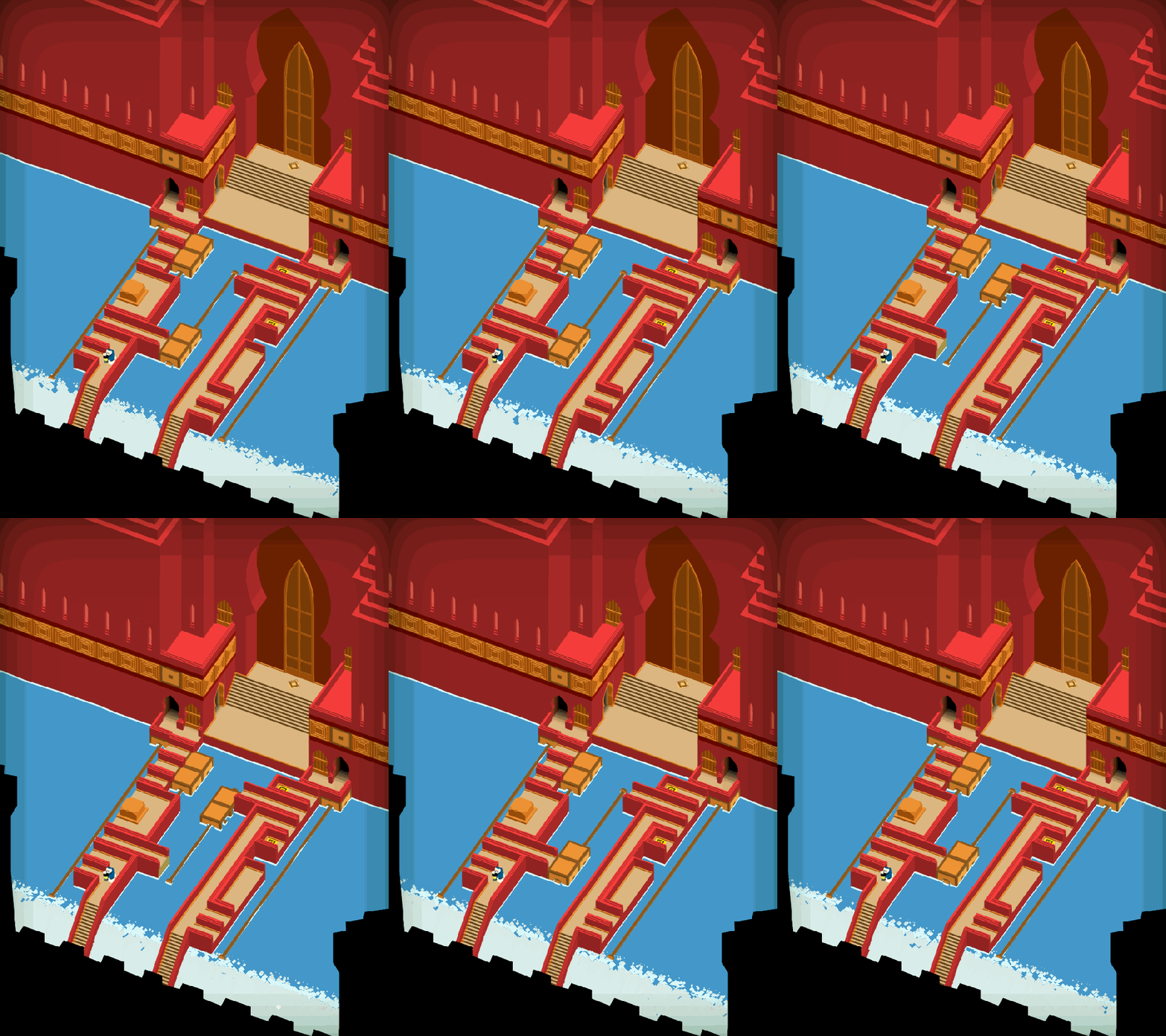
If you read last week’s piece, titled Creating a Level: From Concept to Finished Product, the GIF above will look familiar. I chronicled the entire development of this Level (called Noria), from the time it was just a pencil sketch in Jack’s notebook all the way to our finished awesome Level. Here’s a look at the rest of the Levels in World 3, the Aqueduct.


3-2-Tradeoff.gif

Level 3-2, “Tradeoff”

3-3-Anchor.gif

Level 3-3, “Anchor”

3-4-Torus.gif

Level 3-4, “Torus”

3-5-Island.gif

Level 3-5, “Island”

I won’t return to the Aqueduct before launching the game, but if you really have a critique that’s valid and you absolutely must make your voice heard, comment below this post and I will read it! Who knows – you may change how the final game comes out!


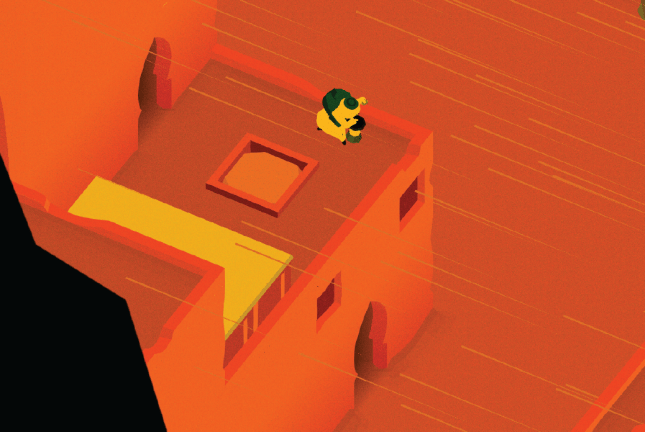
Card_City.png

The Dust Storm Is Here!

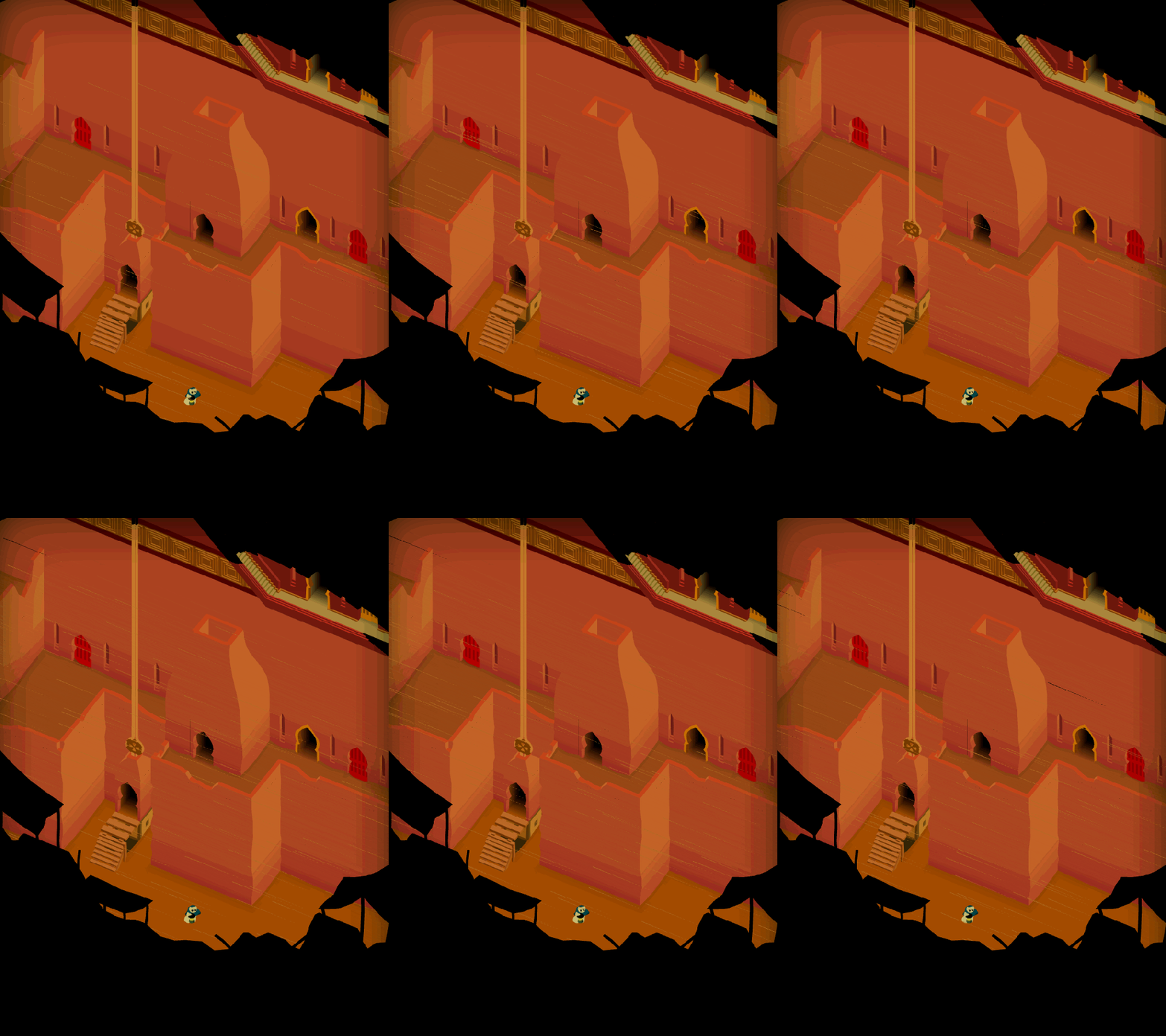
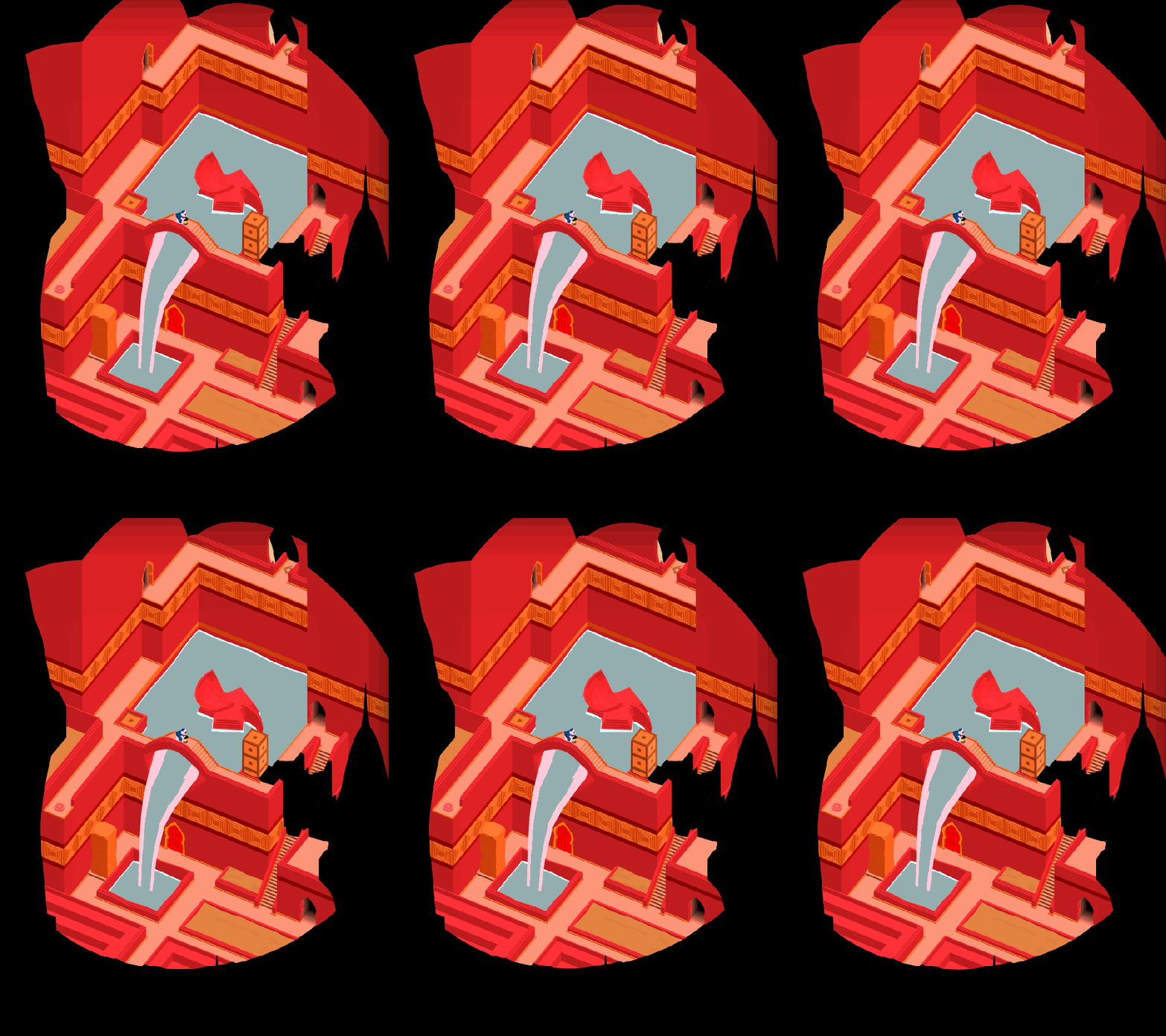
They say you should never have a favorite child, and I think that’s probably good life advice. But I think I do have a favorite World, and it’s the City. I really wanted to include something like this in the game, and I put a lot of love into these Levels. It’s a crazy World where we go through a ton of locales in just five Levels, from the “bad part of town”, to a military tower, to a luxurious palace. And this is all during a sandstorm!

4-1-Slum.gif

Level 4-1, “Slum”

4-2-Alley.gif

Level 4-2, “Alley”

4-3-Tower.gif

Level 4-3, “Tower”

4-4-Fountain.gif

Level 4-4, “Fountain”

4-5-Labyrinth.gif

Level 4-5, “Labyrinth”

What do you think of these Levels? We are bringing these Levels to SXSW, so your advice is more than welcome! Slam that comment section with your sweet, sweet critiques. I need them to survive o_o


River Header.gif

Hell Revisited

I’ve just begun polishing World 2, the River. We aren’t bringing this one to SXSW next week, so I won’t get a chance to keep working on it for a little while. But so far I think it’s really cool! It needed a modest redesign in order to make the aesthetic work and I believe I finally nailed it.

The biggest change is that the ugly Lincoln Log wall setup I had is now going away. I was never really in love with it to begin with. There was something too neat and orderly about it. This is a swampy river that leads right back to the hell-jail you just escaped from! It should feel gross, a bit disordered, and disorderly. To achieve that, I’m working with a toolkit of gnarly trees, rickety boardwalks, and custom ashen rocks.

screen_1460x1948_2018-03-05_17-03-44.png

Here’s a sneak peek! What do you think… too much vignette, or not enough?

Still to do: redesign the Walkers to look like swamp denizens, add more motion to the clutter and plant life, and finish the remaining four River Levels. Expect that and more next time, in the April edition of State of the Art.

Thanks for reading!


= = = = = = = = = = = = = = = = = = = = = = = = = = = = = = = = = = = =

We hope you enjoyed this update about the game’s artwork. Have a question about aesthetics that wasn’t mentioned here? You can find out more about our game at WhereShadowsSlumber.com, ask us on Twitter (@GameRevenant), Facebookitch.io, or Twitch, and feel free to email us directly at contact@GameRevenant.com.

Frank DiCola is the founder of Game Revenant and the artist for Where Shadows Slumber.

Creating a Level: From Concept to Finished Product

For a long time, I’ve wanted to write a post about how we make Levels when working on Where Shadows Slumber. The only problem was a lack of documentation. I forgot to take screenshots of the early stages of the Levels we’ve completed so far. What I really wanted to do was show our audience the growth of a Level, from it’s earliest conception and then show the various stages of the design process along the way.

When I thought of this idea, I tabled the blog and decided to wait until I started on a new batch of Levels… and here we are! We’re going to take an inside look at Level 3-1, Noria, the first Level of the Aqueduct World.


Maker:S,Date:2017-8-17,Ver:6,Lens:Kan03,Act:Lar02,E:Y

Step 1: Draw The Level

Every Level has a reason for being in the game. Noria is the first Level in the Aqueduct World, which makes it extra special. Whenever we design the first Level of a World, we like to communicate to the Player:

  • Why the World is going to feel different from the other Worlds in the game
  • What mechanics you’ll be dealing with in this World – especially new ideas

For the Aqueduct, we wanted to make it all about mechanical devices, switches, rotating things and whirring machines. Our game doesn’t exactly have a precise historical setting, but it’s fair to say it isn’t modern day. This gives us some leeway with technology. It has to work, but it can look really old.

MVIMG_20171025_141620.jpg

Jack’s notebook!

The Aqueduct World is all about Buttons. Buttons are Nodes that do something when you step onto them. There are all kinds of Buttons, but the most basic Button does a thing every time you step on it, no matter how many times you step on it.

To show that off, Jack designed a Level (above) where the only way to cast shadows and move the light was with a single Button. In addition to that, there are Buttons near each light in the Level to turn them on and off. The proximity of the light to the Button it’s attached to is an intuitive connection. These Buttons work like regular domestic light switches too, so it’s a cheap way of using existing Player knowledge about the real world and transmuting it into knowledge of our game.

When a Level exists in this form, the only thing we can really do is discuss it. Jack will attempt to guide a very confused Frank through the mechanics of the Level. I’ll try to poke holes in it (literally, with my pencil) and find problems with the design. We’ve never shown these sketches to testers because it’s too high-level for them to understand. If we like the idea of the Level, Jack makes a grey box prototype of it in Unity for us to test.


Noria-Greybox

This Level doesn’t look too special yet, huh? Just wait!

Step 2: Make A Grey-Box Prototype Level

With a design solidified, now we’re ready to make a version of the Level that can be played and tested. It doesn’t need to look pretty yet, so we use basic template cubes to represent walkable space. Affectionately called grey box prototypes, this technique is how we prototype every Level in the game. Watch a video of me beating the Level below:

As you can see, it’s playable in this stage, and everything works. You can solve the puzzle, which means testers can assess the strength of our design. (We just tell them to ignore the visuals.) We brought this Level, in this format, to AwesomeCon 2017 looking for feedback from players. When we show grey box prototypes to people, we want to make sure they can complete the puzzle. More than that, we want to make sure that they solved it on purpose instead of just by brute force. If we get good feedback, we proceed to Step 3.


Noria.png

Step 3: Draw Some Concept Art

This might seem backward, but this is the time when I draw a concept image of the Level. Why do I do this after the Level has been prototyped, and not before? It’s because Jack knows best which Nodes need to go where, and I don’t. I need to take cues from him about where everything must be, which often includes the actual length and width of shadow casting objects.

This is actually beneficial. It gives me good constraints to work with. I draw a paper sketch and say, “OK, if everything absolutely has to be in this location, what can I do with it? What makes sense for the setting [Aqueduct] whether it’s man-made or organic?” As you can see in the drawing, the following ideas have been spawned:

  • Obe should enter from a pipe (bottom right) to match the cutscene that plays directly before this Level.
  • The pillar now looks like it belongs – it’s a crumbling structural element of the Aqueduct, a man-made structure in disrepair.
  • The mechanism by which the lamp moves left to right is not just a magical back-and-forth switch. Now it’s a waterwheel! Why a wheel? Google “Noria”…
  • The lights need to look like actual man-made lights since they are powered by Buttons on the ground. Why not lamps?
  • There are stone pathways going horizontally that have crumbled over time. Those need to be repaired by shadows.
  • The bridges going vertically are metal grates that allow water to pass under them. This is an Aqueduct, we can’t just have standing water blocked in!
  • There’s a back wall with a door. I like to give the Player as many visual cues as possible that the finish line is an actual exit.

The concept art phase is another chance for us to critique the design. If we know the puzzle is good, but it produces an awkward-looking Level, we have the opportunity to reconfigure things. Perhaps the exit needs to be in a different place? Maybe objects should be closer or further apart? Now is the time to match the design to the intended context, the Aqueduct. Once I have good concept art to work from, I proceed to Step 4!


DesignBlog-Noria-FirstPass.png

Step 4: First Aesthetic Pass

Now it’s time to take that ugly grey box prototype (sorry Jack) and make it look and sound beautiful! I’m ready to apply my toolkit of Aqueduct paths, walls and bridges to the design. Once the art is laid down, Alba and Noah have their first chance to put some audio effects into the Level and set the mood. It makes a huge difference: now the Level doesn’t sound like it takes place in a silent death vacuum! Creepy chimes and rushing water converge to give the Level a sense of place. Here’s a video of it all in action:

The Level doesn’t look grey anymore! That’s awesome. But… it also doesn’t look finished, does it? This kind of art would pass for a student game or something in a game jam, but we want to be an App Store Editor’s Pick and win a ton of awards. That means the art needs to be worth the price people paid to download the game. It needs to be extraordinary! It needs to be… polished.


DesignBlog-Noria-Polished

Step 5: Aesthetic Polish

Polish is a game design term for taking your finished product and finishing it again so it’s even better – much like shining a shoe with shoe polish. You want to make your Level shine! If you’re making an island paradise, it needs to be the most relaxing paradise the player has ever experienced. If it’s a scummy slum in a city, you need to make that slum as dirty as possible. Everything needs to be pushed to the extreme.

My personal philosophy is that I want to turn every Level in the game into my favorite one. Obviously, I know that can’t happen. But at least while I’m working on it, I can take something boring and give it life. Speaking of which, this is usually where animation enters the picture.

animate (verb)

1530s, “to fill with boldness or courage,” from Latin animatus past participle of animare “give breath to,” also “to endow with a particular spirit, to give courage to, enliven,” from anima “life, breath”

Animation is the most time-consuming part of aesthetic design, and it requires a lot of setup as well. It makes sense for this to come last. But it’s definitely the most important artistic layer. Bad video games tend to feel frozen and stale: great games are always in motion, even when everything appears still. I think our modern brains are conditioned to assume that a screen containing no motion is frozen, as if the app crashed. If you look at games with a high level of polish (Blizzard’s Hearthstone comes to mind), there’s always something moving around to give the player the illusion of life. The goal of polish is to make your game appear to crackle with the spark of life. See for yourself:

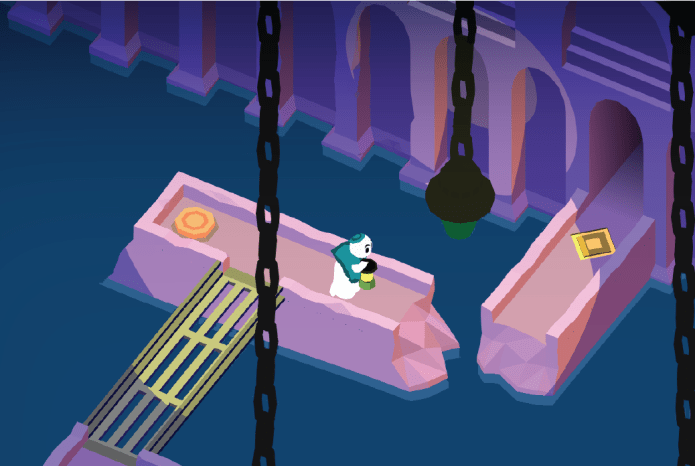
Pretty different, huh? Our water shader adds some much needed liveliness to the water, and makes it feel like a rushing stream. Buttons now move and bounce under Obe’s weight. An animated glyph on the ground lets you know where you’ve just clicked. The lamp posts are now chains dangling from the ceiling, which lets them sway gently on a loop.

The other perk of animation is that it allows you to add a third sense to the game: touch (or, feel). In a very real sense, players can only experience your game using their eyes and ears. But if you do your job right as a game designer, certain elements in your game will make the player feel things. Have you ever gotten hit in a video game and exclaimed out loud “ow!” after seeing what happened to your avatar? You didn’t actually feel pain, but something about the experience was immersive enough that it made you connect with your character. That’s what polish is for. That’s how games rise to the top!


yellow-happy-smile-526968

forever and ever and ever and ever and ever and ever and ever

Step 6: You Never Finish, This Goes On Forever

Here’s the dirty little secret about my strategy for artistic polish: I’ll never be finished. I will never finish this game. I will work on this game every day until I am dead. It doesn’t even matter if I’m improving the artwork, even if I’m actively making everything worse I will never finish anything in this game.

Whoops! That’s not what I meant to say. Where was I?

Eventually, you need to stop working on a Level so you can move on. This is always a heartbreaking moment in game development. If I could choose any superpower, I would choose a very specific one – the ability to do things on my computer without time slipping through my fingers like grains of sand into an endless void.

[  . _ . ]

You have to move on so you can finish the rest of your game, so when do you do that? It’s at the point where your hours of input are only reaping very marginal gains. People won’t spend an eternity looking at your Levels, so you shouldn’t spend an eternity working on them either. If anything looks truly awful at launch, you can always sneakily patch in fixes that you missed. Just say you’re fixing bugs. and blame the programmer!

Besides, I can always improve the artwork again when we remaster Where Shadows Slumber for BlackBerry…


I’ve been working on this blog post for too long, and now my hours of writing input are reaping only marginal gains. Time to end this post. Thanks for looking at this inside scoop into our process! If you’re wondering why game development takes so long, imagine doing this for all 38 Levels in the game. That’s not even including the cutscenes…

Say, that gives me an idea for another blog post!


= = = = = = = = = = = = = = = = = = = = = = = = = = = = = = = = = = = =

We hope you enjoyed this deep dive into our development process. You can find out more about our game at WhereShadowsSlumber.com, ask us on Twitter directly using the handle @GameRevenant, find us on Facebookitch.io, or Twitch, and feel free to email us directly at contact@GameRevenant.com.

Frank DiCola is the founder of Game Revenant and the artist for Where Shadows Slumber.


Just Do It

No, Where Shadows Slumber hasn’t received any funding from a mysterious shoe company. Rather, I want to discuss an aspect of working on a personal project that I’ve seen a lot of people struggle with, and that I’ve had trouble with in the past. Yes, this post touches on a few of the topics that I talked about in a previous blog post about ‘drive’, but today I want to focus more on a specific facet of the process: forcing yourself to work on something that you don’t want to.

Every project is difficult. In particular, every project begins to drag as you get closer and closer to the end. You find it more and more difficult to keep working on it. At the beginning of your project, there’s a whole bunch of stuff you’re excited to work on. As you reach the end, you find that you’ve done all of the fun things, and the only things left are boring tasks and difficult decisions. This is the point where you’re really being put to the test, and in this situation, I have one piece of advice for you – buckle down and just do it.

Let’s take a quick look at the different kinds of things you should just force yourself to do, and how to actually do so.


Doing Things You Don’t Want to Do

The most obvious kind of thing you don’t want to do is, well, something you just don’t want to do. These things are different for everyone, and come up for various reasons. For me, these are the cleanup/polish kinds of tasks. For other programmers, it might be the mathy, trig-related stuff. For an artist, maybe it’s animating hands or something (I hear that’s really hard…). Whatever it is, everyone has something they consider ‘dreg work’, and those tasks start to pile up.

taxes

Tax  season is coming up, and I’m already putting it off

If you’re anything like me, when you come upon one of these tasks, you briefly consider doing it, and then you move on to something easier or more interesting. After all, there’s no shortage of work in your project! This happens a lot with teams as well, especially less organized teams – “if I go work on something else instead, somebody will probably take care of this by the time I get back to it”.

Unfortunately, these two base assumptions fall apart when it comes to indie game development (or any similar venture). In most cases, your project has to come to an end eventually, which means that you can’t simply keep putting these tasks off. And with a smaller, indie-sized team, it’s unlikely that you can just put that responsibility on someone else. It’s pretty cool to be the arbiter of your own success by taking charge of your own game development project, but it also involves other responsibilities.

I know quite a  few people who check their email regularly – until they see that one email that prompts them to do something. They know they have to do it, but they simply don’t want to. Rather than just doing it, getting it out of the way, and having some peace of mind, they close their email and proceed to ignore it for the better part of a week. Inevitably, this doesn’t cause the task to go away, but just gives them less time to do it, and a boatload of stress while they’re avoiding it anyway.

The bottom line is that these tasks must be done – you’ll come across them, and you’ll simply have to do them. The most important thing is to have a positive attitude in these instances. You come upon a task that you don’t want to do – acknowledge that you have to do it, take a deep breath, and just get started. Once you’ve begun, you’ll probably find that it’s not as bad as you thought – simply starting the task is usually the hardest part. And hey, if it ends up being an awful task, at least you got it out of the way!


Committing to an End

Another area where it’s very important to embrace a “just do it” attitude is when it comes to actually finishing your project. As an indie game developer, it’s perfectly natural to be apprehensive of your eventual release. After all, you’re just a small group of people (or even just one!), but your game will still have to compete with games made by giant studios. It makes sense to want to make sure your game is absolutely perfect before committing to a release.

The problem with this plan is the use of the word perfect. Your game will never be perfect. In fact, your game will never even be “good enough”, especially considering your own perfectionist perspective. Waiting for perfection leads you to a phase of endless polish, which can delay your project for years, or even indefinitely. The only thing worse than releasing an imperfect game is not releasing one at all.

There’s a pretty common attitude of “I’ll release it when it’s done”, or “I’ll know when I get closer to the end”. While these make sense at first blush, and are good mentalities to have toward the very beginning of a project, they quickly turn against you, causing your project to become more and more delayed.

duedate

Red marker. That’s how you know it’s serious.

Unfortunately, as introspective as we may consider ourselves, there’s a significant amount of stuff going on under the hood that we’re not even aware of. One of the more annoying of these is that, if there’s no “due date” for your project, your brain will subconsciously de-prioritize working on it. Similarly, there’s a well-known adage that work expands to fill the space its given – if you have twice the time to do something, you’ll just subconsciously work half as hard at it. For example, at the end of November, we were on schedule to release Where Shadows Slumber by April. We recently pushed that date back by a few months, without increasing the project’s scope. You would think that this would give us some breathing room, but the new “deadline” feels like it will somehow be even harder to meet!

Managing the timeline of an entire project is an incredibly difficult task. One important piece of advice I would give would be to pick a target release date. Even if it’s not public, picking a date, committing to it, and doing everything you can to meet it will definitely help you prioritize the work you’re doing, frame it appropriately, and avoid the project stretching into infinity.

Don’t get me wrong, you shouldn’t choose a release date willy-nilly; you should realistically estimate when you can complete the project, and choose accordingly. Similarly, there’s no need to have a specific end date in mind when you start the project. Your target date is a great motivational tool, but it only works if it’s at least somewhat accurate. Even if you miss your release date (or realize you’re going to, like we did), it’s not a problem. You just have to reassess the work that’s left, and choose a new date. As long as you don’t keep extending the project, you’ll be fine.


Decision-Making

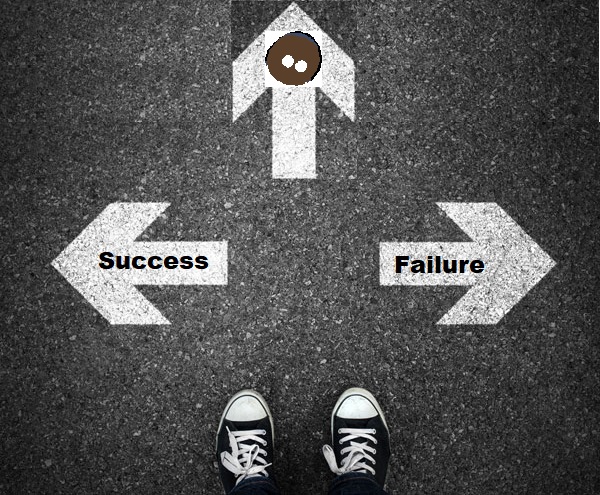
While there are tasks that you don’t want to do because they’re difficult or time-consuming, there are other reasons to not want to do something. In particular, making decisions is a real sticking point for a lot of people. If you implement something incorrectly, you can always redo it, but many of the decisions you have to make for your game have an irreversible effect. This is really daunting, and since decisions themselves don’t take a lot of actual physical effort, the natural response is to simply put off making the decision for a bit.

DecisionMaking

When faced with a choice between success and failure, I hope you’ll always choose Where Shadows Slumber!

This is similar to the “end date” discussion above. While many of these decisions are very important and require a great deal of thought, they still have to be made. It’s important to never forget this fact, as decision paralysis is another great way to destroy your game.

When you find yourself facing one of these decisions, make sure you don’t back off, at least not repeatedly. You have to make the decision eventually, so you might as well do it now. In fact, in the case of some difficult, important decisions, you might even lock yourself in a room until you’ve made the decision. That’s exactly what we did when picking out the name for Where Shadows Slumber – Frank and I sat down, and neither of us was allowed to leave until we had picked a name. It ended up taking a few hours, but we had managed to nail down the answer to a very difficult decision.


Just Do It

There are a lot of places in game development where you find it hard to do what you have to do. These moments are gateways to stagnating development and endless work. When the time comes, you often must act. Don’t make half-hearted decisions or poor implementations, but really force yourself to do what needs to be done. Just do it.


= = = = = = = = = = = = = = = = = = = = = = = = = = = = = = = = = = = =

If you have any questions about any of our development struggles, or if you have any other questions about Where Shadows Slumber, feel free to contact us! You can always find out more about our game at WhereShadowsSlumber.com, find us on Twitter (@GameRevenant), Facebookitch.io, or Twitch, join the Game Revenant Discord, and feel free to email us directly with any questions or feedback at contact@GameRevenant.com.

Jack Kelly is the head developer and designer for Where Shadows Slumber.